

Maddy summaryThis bill updates the Agricultural Foreign Investment Disclosure Act (AFIDA) to strengthen reporting requirements for foreign ownership of U.S. agricultural land. It requires foreign individuals or entities holding at least 1% interest (directly or through multiple ownership layers) to report holdings, and directs the Farm Production and Conservation Business Center (FPAC-BC) to validate data and ensure compliance. The bill also mandates coordination with the Committee on Foreign Investment in the U.S. (CFIUS), updates the Farm Service Agency handbook using GAO recommendations, and analyzes streamlining electronic reporting. These changes aim to improve transparency and national security oversight of foreign agricultural land investments.
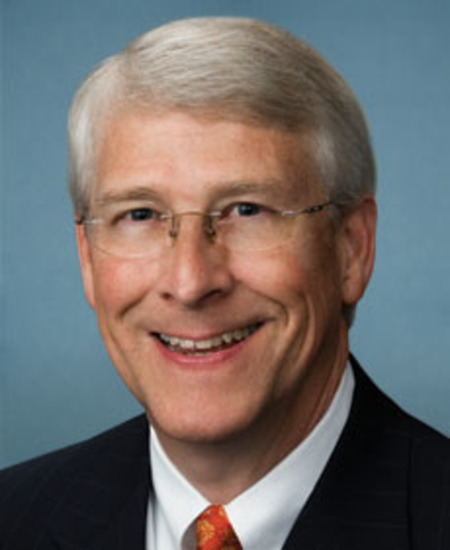
Sen. Roger F. Wicker
Sponsored bills
Maddy summaryThis Senate resolution (SRES 531) formally designates January 21-27, 2024, as "National School Choice Week." It recognizes existing annual events celebrating parental choice in K-12 education options, including public schools, charters, private schools, and homeschooling. The resolution encourages parents to learn about educational choices and urges the public to participate in awareness events during this week. It does not create new laws, funding, or regulations - it is a symbolic recognition of an established observance.
Maddy summaryS.1108, the Death Tax Repeal Act of 2023, repeals the federal estate tax and generation-skipping transfer tax for estates of people who die after the bill's enactment. It also modifies the gift tax by establishing a $10 million lifetime exemption (adjusted for inflation) and creating a new tax rate schedule for gifts. This bill directly affects high-net-worth individuals who would have paid estate or gift taxes on large transfers of wealth. The changes take effect after the bill's passage, with the exemption adjusted annually for inflation.
Maddy summarySRES 523 is a Senate resolution honoring the late Senator Herb Kohl of Wisconsin. The resolution expresses the Senate's sorrow at his death, directs the Secretary of the Senate to communicate it to the House of Representatives and send a copy to his family, and instructs the Senate to adjourn as a mark of respect. This procedural resolution does not create new laws or affect policy, but formally commemorates Kohl's service and legacy. It was introduced by a bipartisan group of Senators and passed unanimously on January 11, 2024.
Maddy summaryThis bill amends the Social Security Act to require states to establish and enforce child support obligations from a biological father for an unborn child, directly affecting mothers expecting a child and the child's biological father. Key provisions include allowing retroactive payments starting from the month of conception (with medical verification), requiring court determination of payment amounts based on the mother and child's best interests, and prohibiting mandatory paternity testing without the mother's consent. It explicitly defines "unborn child" as any human fetus at any developmental stage carried in the womb. The law applies to child support enforcement under federal program rules, with changes effective two years after enactment.
Maddy summaryThe Let Pregnancy Centers Serve Act of 2024 clarifies that states may use Temporary Assistance for Needy Families (TANF) funds to support pregnancy centers and similar life-affirming programs that provide services like counseling, parenting classes, baby supplies, and referrals to health or housing resources - without offering or referring for abortions. It directly affects pregnancy centers, adoption agencies, and maternity homes currently receiving TANF funding in states such as Indiana, Louisiana, Missouri, and Ohio. The bill amends federal law to explicitly permit TANF funding for these programs and prohibits the federal government from discriminating against them or imposing unwarranted requirements. It also establishes legal remedies, including lawsuits for damages, if the government violates these provisions.
Maddy summaryThis bill prohibits federal Medicaid funding from covering administrative costs for health benefits provided to unauthorized immigrants (noncitizens ineligible due to immigration status). It directly affects states that currently provide Medicaid benefits to such individuals by blocking federal reimbursement for related administrative expenses. Key provisions include amending federal law to create a specific funding restriction and requiring a detailed Inspector General report on state compliance, cost separation methods, and financing approaches for these programs. The report must also analyze whether providing covered drugs to unauthorized immigrants affects drug pricing under Medicaid and 340B programs. The bill focuses on altering funding rules and mandating oversight, not on changing eligibility for benefits.
Maddy summaryS 993, the Combating Illicit Xylazine Act, makes the illicit distribution and use of xylazine illegal under federal drug laws. The bill defines xylazine broadly (including multiple chemical variants) and prohibits all human use or non-lici distribution, while allowing only veterinary and pharmaceutical uses approved under existing regulations. It requires the DEA and FDA to report to Congress within a year on xylazine's spread and impacts, with a follow-up report four years later. This directly affects drug traffickers and distributors adding xylazine to illicit drugs like fentanyl, aiming to address a public health threat linked to severe health consequences including necrosis.
Maddy summaryThis bill (SJRES 32) seeks congressional disapproval of a specific rule issued by the Bureau of Consumer Financial Protection (CFPB) on May 31, 2023. The rule, published as Regulation B under the Equal Credit Opportunity Act (ECOA), addressed how lenders must evaluate small business loan applications to prevent discrimination. If passed, the resolution would block this rule from taking effect, meaning lenders would not be required to follow these specific small business lending provisions. The bill directly affects the CFPB's regulatory authority and financial institutions that process small business loans under ECOA.
Maddy summaryS 3551 creates a voluntary "limited accreditation" option for adoption service providers in intercountry adoptions. It allows agencies to seek accreditation specifically for three services: background studies on children, home studies for prospective adoptive parents, or post-placement reports - without requiring full accreditation for all services. The bill amends the Intercountry Adoption Act of 2000 to add this option, clarifying that providers may choose this limited path or maintain full accreditation. It explicitly states this is voluntary and does not change existing requirements for providers or the definition of "adoption service." The law takes effect 90 days after enactment.