

Maddy summaryThis bill requires the Transportation Security Administration (TSA) to streamline enrollment processes for transportation workers needing security clearances, specifically targeting the Transportation Worker Identification Credential (TWIC) and Hazardous Materials Endorsement (HAZMAT) programs. It mandates that TSA allow applicants to use one application and biometric data for multiple programs, reduce fees for multiple applications, and align expiration dates across programs. The bill also requires TSA to conduct an audit of its security threat assessment programs to identify and eliminate duplicative costs while maintaining national security. These changes will directly affect transportation workers, including truck drivers and port workers, who need security clearances to perform their jobs. The bill aims to make the security clearance process more efficient and cost-effective for applicants and the TSA.
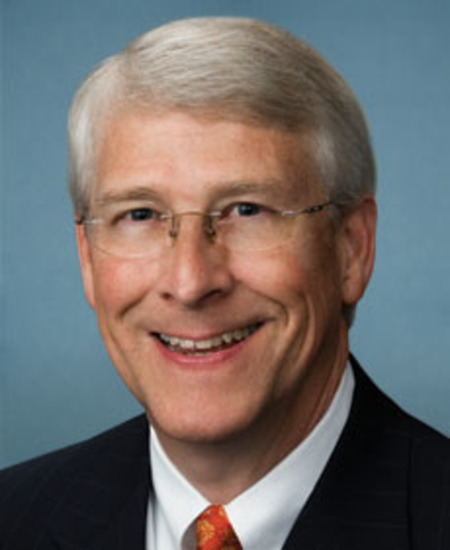
Sen. Roger F. Wicker
Sponsored bills
Maddy summaryThis bill reauthorizes key conservation programs under the America's Conservation Enhancement Act through 2030, extending provisions that were set to expire in 2025. It specifically extends the Black Vulture Livestock Protection Program, allowing public entities or Farm Bureau organizations in each state to obtain permits to manage black vulture populations threatening livestock. The bill also extends funding for Chesapeake Bay restoration efforts, Chronic Wasting Disease Task Force activities, and National Fish Habitat Conservation Partnerships through 2030. It modifies the National Fish Habitat Board to include additional tribal representatives and clarifies reporting requirements for conservation programs. The bill does not create new programs but extends existing conservation efforts and their funding mechanisms.
Maddy summary# Summary of Defense Acquisition Reform Legislation This document presents a comprehensive legislative proposal for reforming defense acquisition processes and policies. The key themes and provisions include: ## Key Reforms 1. **Streamlining Acquisition Processes** - Repeal of numerous redundant budget line items and program elements - Establishment of new acquisition pathways (middle tier, software acquisition) - Simplification of procurement thresholds (increasing from $5M to $50M for simplified acquisitions) 2. **Enhancing Commercial Product Use** - Default determination that products/services are commercial unless otherwise determined - Removal of requirements for traditional defense contractors to follow certain regulations - New "consumption-based solutions" procurement model 3. **Promoting Competition** - Special treatment for nontraditional defense contractors - Program management office competition requiring separate program managers to compete - Modifications to allow greater use of commercial solutions openings 4. **Supply Chain Improvements** - Program for enhancing secondary sources and supply chain management - Industrial expansion program with specific funding requirements (2-3% of extramural budget) - Level of Repair Analysis considering battle damage and logistics factors 5. **Budget Structure Reform** - Review of budget account structure to align with portfolio acquisition executives - Removal of traditional research, development, test and evaluation; procurement; and operation and maintenance appropriations - New budgeting structure based on military service and capability areas 6. **New Acquisition Pathways** - Middle tier of acquisition for rapid prototyping and fielding - Software acquisition pathways for efficient software development - Special provisions for "urgent capability acquisition" and "middle tier of acquisition" ## Major Repeals The legislation repeals numerous existing provisions including: - Separate program elements for various systems (F-35B/C, Joint Light Tactical Vehicle) - Budget display requirements for specific programs (body armor, cyber mission forces, etc.) - Various budget justification requirements for specific programs - Certain intelligence-related budget display requirements ## Key Implementation Requirements - 180-day deadline for Secretary of Defense to issue guidance on preventing unfair competitive advantage - 120-day period for implementation of new contract clause requirements - Specific funding percentages for industrial expansion program (2% in 2026-2027, 3% thereafter) This legislation represents a significant shift toward more flexible, commercial-focused acquisition processes with emphasis on speed, competition, and supply chain resilience.
Maddy summaryThis bill transfers two parcels of federal land within Vicksburg National Military Park to the State of Mississippi for public use. Specifically, it conveys approximately 3.66 acres for a welcome center and 6.48 acres for an interpretive center or museum. Upon transfer, the park's boundary will be officially modified to exclude these parcels from the National Park Service's jurisdiction.
Maddy summaryThis bill authorizes $25.48 billion in funding for NASA for fiscal year 2025, directing the agency to maintain continuous human presence in low-Earth orbit through a transition from the International Space Station to commercial space stations. It requires NASA to develop human-rated lunar landing capabilities for the Artemis program, continue development of the Space Launch System and Orion spacecraft, and establish a Commercial Low-Earth Orbit Development Program to procure services from U.S. commercial providers. The bill mandates a managed transition from the ISS to commercial destinations by 2030, with specific requirements for maintaining ISS operations until commercial alternatives are ready and for conducting in-space testing of advanced spacesuit capabilities. It also includes provisions to support lunar exploration, maintain a balanced science portfolio, and strengthen NASA's role in commercial space activities.
Maddy summaryThe Future of Artificial Intelligence Innovation Act of 2024 establishes the Artificial Intelligence Safety Institute within the Department of Commerce to develop voluntary safety standards, metrics, and evaluation tools for AI systems. The bill creates AI testbeds for research and development, including a foundation model test program, and promotes international cooperation on AI standards through an alliance with like-minded countries. It requires the Comptroller General to identify regulatory barriers to AI innovation and directs the development of public datasets to support AI advancement. The Institute will work with private sector entities, national laboratories, and international partners to promote safe and effective AI development across various sectors. The bill focuses on facilitating AI innovation through voluntary standards and public-private partnerships rather than imposing new regulations.
Maddy summaryThis bill establishes transparency and accountability requirements for high-impact artificial intelligence systems that affect access to housing, employment, credit, education, healthcare, or insurance. It requires deployers of such systems to submit annual transparency reports detailing their systems' design, data usage, safety measures, and risk management processes. The bill creates a certification process for critical-impact AI systems (defined as systems posing significant risk to constitutional rights or safety) and establishes enforcement mechanisms including civil penalties for noncompliance. It also mandates research into content provenance standards to verify AI-generated media and creates a working group to develop consumer education initiatives about AI systems.
Maddy summaryThe PLAN for Broadband Act requires the federal government to create a coordinated strategy to improve broadband access nationwide. It mandates the Assistant Secretary of Commerce to develop a National Strategy within one year of enactment, detailing all federal broadband programs and identifying gaps in coordination across 14 covered agencies (including the FCC and USDA). The bill then requires an Implementation Plan within 120 days, outlining how agencies will streamline efforts, reduce duplication, and lower administrative burdens for states, local governments, and Tribal entities participating in broadband programs. Key provisions include standardizing data reporting for federal broadband funding and establishing regular interagency meetings to accelerate infrastructure deployment. The strategy must address barriers to broadband adoption, particularly on Tribal lands, and be subject to public input and GAO evaluation.
Maddy summaryThis bill authorizes the posthumous award of a Congressional Gold Medal to Shirley Chisholm, the first African-American woman elected to Congress (1968-1982) and the first African American to seek a major party's presidential nomination (1972). The bill directs the Secretary of the Treasury to design and strike a gold medal featuring Chisholm's image and name, which will be presented to her family by congressional leaders. After presentation, the medal will be displayed at the Smithsonian Institution for public viewing and research. The bill also authorizes the production and sale of bronze duplicates to cover costs. This is a commemorative measure honoring Chisholm's historic contributions to American politics and civil rights.
Maddy summaryThe Forgotten Heroes of the Holocaust Congressional Gold Medal Act (S. 91) authorizes the award of a single Congressional Gold Medal to 60 diplomats who risked their careers and safety to save Jewish lives during the Holocaust. These diplomats, representing countries including Sweden, Switzerland, Spain, Portugal, and others, issued visas and provided safe passage to Jews fleeing Nazi persecution despite strict orders from their home governments. The medal will be presented collectively to the next of kin of each diplomat, along with representatives from their home countries, and then permanently displayed at the United States Holocaust Memorial Museum. The act recognizes these individuals' bravery without implying they represent all who performed similar humanitarian acts during the Holocaust. The medal serves as a permanent tribute to their sacrifice and will be available for public display and research.