

Maddy summaryS 74, the Fair Play for Girls Act, requires the Attorney General to submit a report to specific congressional committees within one year of enactment. The report must analyze issues including barriers to fair competition for biological female athletes, the prevalence of biological female athletes losing opportunities when competing against biological males, and the effectiveness of state laws addressing these concerns. It also examines online harassment, sexual harassment, and abuse against women and girls in athletics, along with the effectiveness of existing laws preventing such harm. The report will include policy recommendations to address these issues, but the bill itself does not change any laws or directly affect specific groups.
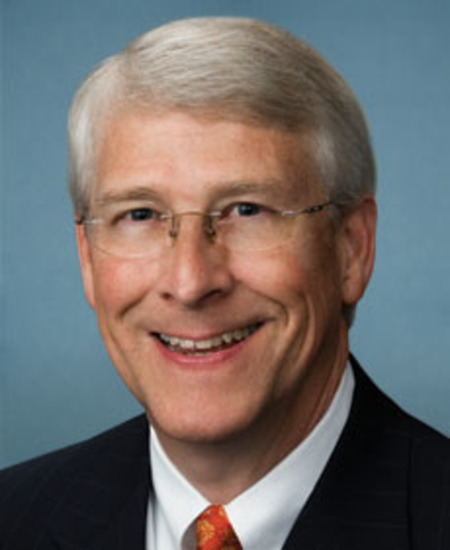
Sen. Roger F. Wicker
Sponsored bills
Maddy summaryThis bill (S 72) changes how Immigration and Customs Enforcement (ICE) releases non-detained immigrants. It requires that aliens only be placed in Alternatives to Detention (ATD) programs after all detention beds are filled, no detention options exist, and all reasonable detention efforts are exhausted (Section 2). It mandates continuous GPS monitoring and a nightly curfew (10 p.m. to 5 a.m.) for all aliens in ATD programs during all immigration proceedings and until removal (Section 3). Additionally, it allows for automatic removal in absentia if an alien fails to comply with release conditions, based on an officer’s affidavit (Section 4). The bill directly affects non-detained immigrants under ICE supervision who would previously qualify for ATD.
Maddy summarySRES 19 is a Senate resolution honoring former President Jimmy Carter's life and legacy, commending his decades of public service, humanitarian work, and diplomatic achievements including the Camp David Accords and founding The Carter Center. The resolution specifically recognizes his Nobel Peace Prize, efforts to combat diseases like Guinea worm, and 30+ years of Habitat for Humanity homebuilding. It formally mourns his passing and extends condolences to his family, while highlighting his role in establishing U.S.-China diplomatic relations and creating the Departments of Education and Energy. As a symbolic resolution with no policy impact, it directly affects no individuals or entities but serves as a formal Senate tribute to Carter's historical contributions.
Maddy summaryThis bill would allow individuals with a valid concealed carry permit from their home state to carry concealed handguns in other states that either permit concealed carry for residents or don’t ban it entirely. It applies to permit holders who are federally eligible to possess firearms, require government-issued ID, and must follow the host state’s specific restrictions (like where carry is prohibited). The bill does not override state laws on issuing permits but ensures reciprocity for those who legally carry in their home state, excluding machineguns and destructive devices.
Maddy summaryThe SAFE Orbit Act establishes a new Office of Space Commerce within the Department of Commerce to manage space situational awareness (SSA) services. It requires the Assistant Secretary of Commerce for Space Commerce to provide satellite operators with free, basic SSA data - including collision risk information and tracking - through a publicly accessible, unclassified database. The bill prohibits the government from competing with private SSA providers and mandates that services avoid undercutting commercial offerings. This directly affects commercial and government satellite operators by providing them with free, standardized data to prevent orbital collisions, while protecting private sector data through cybersecurity and proprietary safeguards.
Maddy summaryThis bill requires the Transportation Security Administration (TSA) to streamline enrollment processes for transportation workers needing security clearances, specifically targeting the Transportation Worker Identification Credential (TWIC) and Hazardous Materials Endorsement (HAZMAT) programs. It mandates that TSA allow applicants to use one application and biometric data for multiple programs, reduce fees for multiple applications, and align expiration dates across programs. The bill also requires TSA to conduct an audit of its security threat assessment programs to identify and eliminate duplicative costs while maintaining national security. These changes will directly affect transportation workers, including truck drivers and port workers, who need security clearances to perform their jobs. The bill aims to make the security clearance process more efficient and cost-effective for applicants and the TSA.
Maddy summaryThis bill reauthorizes key conservation programs under the America's Conservation Enhancement Act through 2030, extending provisions that were set to expire in 2025. It specifically extends the Black Vulture Livestock Protection Program, allowing public entities or Farm Bureau organizations in each state to obtain permits to manage black vulture populations threatening livestock. The bill also extends funding for Chesapeake Bay restoration efforts, Chronic Wasting Disease Task Force activities, and National Fish Habitat Conservation Partnerships through 2030. It modifies the National Fish Habitat Board to include additional tribal representatives and clarifies reporting requirements for conservation programs. The bill does not create new programs but extends existing conservation efforts and their funding mechanisms.
Maddy summary# Summary of Defense Acquisition Reform Legislation This document presents a comprehensive legislative proposal for reforming defense acquisition processes and policies. The key themes and provisions include: ## Key Reforms 1. **Streamlining Acquisition Processes** - Repeal of numerous redundant budget line items and program elements - Establishment of new acquisition pathways (middle tier, software acquisition) - Simplification of procurement thresholds (increasing from $5M to $50M for simplified acquisitions) 2. **Enhancing Commercial Product Use** - Default determination that products/services are commercial unless otherwise determined - Removal of requirements for traditional defense contractors to follow certain regulations - New "consumption-based solutions" procurement model 3. **Promoting Competition** - Special treatment for nontraditional defense contractors - Program management office competition requiring separate program managers to compete - Modifications to allow greater use of commercial solutions openings 4. **Supply Chain Improvements** - Program for enhancing secondary sources and supply chain management - Industrial expansion program with specific funding requirements (2-3% of extramural budget) - Level of Repair Analysis considering battle damage and logistics factors 5. **Budget Structure Reform** - Review of budget account structure to align with portfolio acquisition executives - Removal of traditional research, development, test and evaluation; procurement; and operation and maintenance appropriations - New budgeting structure based on military service and capability areas 6. **New Acquisition Pathways** - Middle tier of acquisition for rapid prototyping and fielding - Software acquisition pathways for efficient software development - Special provisions for "urgent capability acquisition" and "middle tier of acquisition" ## Major Repeals The legislation repeals numerous existing provisions including: - Separate program elements for various systems (F-35B/C, Joint Light Tactical Vehicle) - Budget display requirements for specific programs (body armor, cyber mission forces, etc.) - Various budget justification requirements for specific programs - Certain intelligence-related budget display requirements ## Key Implementation Requirements - 180-day deadline for Secretary of Defense to issue guidance on preventing unfair competitive advantage - 120-day period for implementation of new contract clause requirements - Specific funding percentages for industrial expansion program (2% in 2026-2027, 3% thereafter) This legislation represents a significant shift toward more flexible, commercial-focused acquisition processes with emphasis on speed, competition, and supply chain resilience.
Maddy summaryThis bill transfers two parcels of federal land within Vicksburg National Military Park to the State of Mississippi for public use. Specifically, it conveys approximately 3.66 acres for a welcome center and 6.48 acres for an interpretive center or museum. Upon transfer, the park's boundary will be officially modified to exclude these parcels from the National Park Service's jurisdiction.
Maddy summaryThis bill authorizes $25.48 billion in funding for NASA for fiscal year 2025, directing the agency to maintain continuous human presence in low-Earth orbit through a transition from the International Space Station to commercial space stations. It requires NASA to develop human-rated lunar landing capabilities for the Artemis program, continue development of the Space Launch System and Orion spacecraft, and establish a Commercial Low-Earth Orbit Development Program to procure services from U.S. commercial providers. The bill mandates a managed transition from the ISS to commercial destinations by 2030, with specific requirements for maintaining ISS operations until commercial alternatives are ready and for conducting in-space testing of advanced spacesuit capabilities. It also includes provisions to support lunar exploration, maintain a balanced science portfolio, and strengthen NASA's role in commercial space activities.