This resolution expresses support for the goals and ideals of National Nurses Week.
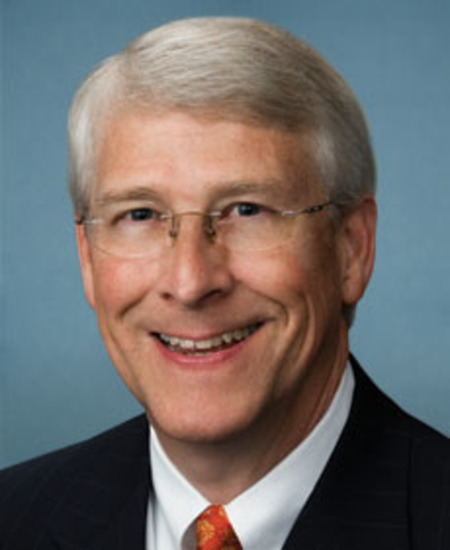
Sen. Roger F. Wicker
Sponsored bills
Transnational Repression Accountability and Prevention Act of 2021 or the TRAP Act of 2021 This bill establishes requirements related to U.S. cooperation with International Criminal Police Organization (INTERPOL) communications. No U.S. agency or department may arrest an individual based solely on an INTERPOL notice without (1) prior verification of the individual's eligibility for extradition, (2) a valid request for arrest from the requesting country, and (3) an arrest warrant. A U.S. agency or department may not use an INTERPOL communication from an INTERPOL member country as the sole basis for certain actions, such as detaining an individual or denying an individual a visa, without independent credible evidence supporting the communication. The bill requires reports on countries that abuse INTERPOL communications for political motives and other unlawful purposes.

Accelerating Kids' Access to Care Act This bill requires state Medicaid programs to establish a process through which qualifying out-of-state providers may enroll as participating providers without undergoing additional screening requirements. Among other things, a qualifying provider must (1) serve minors, or adults whose condition began as a minor; and (2) have previously been screened for Medicare participation or for participation in the Medicaid program of the state in which the provider is located.
Equity in Neuroscience and Alzheimer's Clinical Trials Act of 2021 or the ENACT Act of 2021 This bill sets out activities and requirements to increase the participation of underrepresented populations in research and clinical trials for Alzheimer's disease and related dementias. Specifically, the National Institute on Aging (NIA) must establish and provide technical assistance to Alzheimer's research centers located in areas with higher concentrations of minority groups. These centers must establish diagnostic and treatment clinics designed to serve minority, rural, and other underserved populations; operate clinical trials; and carry out public outreach to encourage members of minority populations to participate in clinical trials and research. Additionally, the NIA must disseminate information to members of minority populations about participating in clinical trials and take other actions to enhance diversity with respect to the Alzheimer's research that it conducts or supports. The bill also directs the NIA to increase diversity among Alzheimer's researchers by encouraging the participation of individuals who are from groups that are underrepresented in clinical, behavioral, and social sciences.
Telecommunications Supply Chain Diversity Promotion Act This bill requires the National Telecommunications and Information Administration (NTIA) to establish an applied research open network architecture testbed at its Institute for Telecommunication Sciences, which shall develop and demonstrate network architectures and applications, equipment integration, and interoperability at scale. In addition, the NTIA must award grants to private sector entities based in the United States to participate in eligible standards-setting bodies (e.g., the Telecommunications Industry Association).
Drinking Water and Wastewater Infrastructure Act of 2021 This bill reauthorizes through FY2026 or establishes a variety of programs for water infrastructure. Specifically, it supports programs to provide safe drinking water or treat wastewater, such as sewer overflows or stormwater. For example, the bill reauthorizes and revises the clean water state revolving fund (SRF) and the drinking water SRF.
This concurrent resolution declares that Congress should not impose any new performance fee, tax, royalty, or other charge relating to the public performance of sound recordings on a local radio station for broadcasting sound recordings over the air, or on any business for such public performance of sound recordings.
This resolution expresses support for National Safe Digging Month, encourages all homeowners and excavators to call 811 before digging, and encourages damage prevention stakeholders to help educate homeowners and excavators about the importance of calling 811 before digging.
This resolution condemns all manifestations of expressions of racism and anti-Asian and Pacific Islander or ethnic intolerance and calls for specified actions by the Senate Judiciary Committee, the Department of Justice (DOJ), and federal law enforcement. The resolution (1) calls on the Senate Judiciary Committee to consider holding a hearing related to the surge in violence against Asian Americans and Pacific Islanders, and (2) applauds DOJ's commitment to conducting a 30-day review of violence against Asian Americans and Pacific Islanders. The resolution calls on federal law enforcement officials, working with state and local officials, to expeditiously and vigorously investigate all reports of hate crimes against Asian Americans and Pacific Islanders in the United States, work to improve the reporting of such hate crimes, and hold the perpetrators of those crimes accountable and bring the perpetrators to justice.
Creating Opportunities Now for Necessary and Effective Care Technologies (CONNECT) for Health Act of 2021 or the CONNECT for Health Act of 2021 This bill expands coverage of telehealth services under Medicare. Among other provisions, the bill allows the Centers for Medicare & Medicaid Services (CMS) to waive certain restrictions, such as restrictions on the types of technology that may be used; permanently removes geographic restrictions on originating sites (i.e., the location of the beneficiary) and allows the home of the beneficiary to serve as the originating site for all services; permanently allows federally qualified health centers and rural health clinics to serve as the distant site (i.e., the location of the health care practitioner); and allows the CMS to generally waive coverage restrictions during any public health emergency. Additionally, the CMS must report on the effects of expanded telehealth services during the COVID-19 public health emergency, including with respect to the utilization, quality, and outcomes of services. The Center for Medicare and Medicaid Innovation may also test alternative payment models relating to expanded telehealth services.