

Protecting Our Well-being by Expanding Russian Sanctions Act or the POWERS Act This bill expands existing sanctions against foreign persons engaged in certain activities related to the Nord Stream 2 and TurkStream pipelines, two Russian pipelines that were constructed to supply natural gas to Europe. Currently, these sanctions apply to foreign persons that (1) provided pipe-laying vessels for the construction of either pipeline, (2) facilitated certain transactions for such vessels, (3) provided certain underwriting services or insurance for such vessels, or (4) provided certain services for such vessels or Nord Stream 2. Under this bill, these sanctions must also apply to any foreign person that engaged in any transaction with such sanctioned persons. The bill also reinstates any sanctions that were previously waived with respect to Nord Stream 2 AG (the company established to construct and operate the pipeline) or any of its corporate officers. Such reinstated sanctions may not be waived except by an act of Congress.
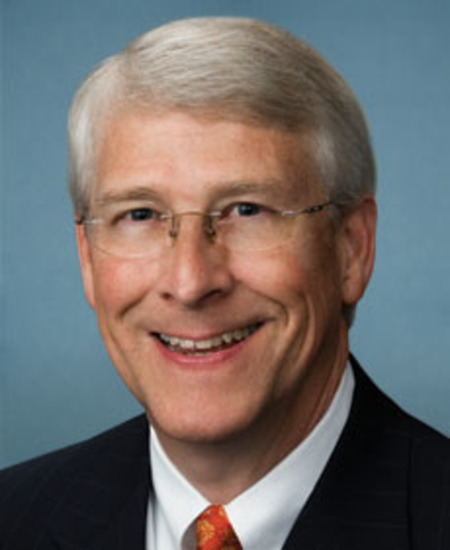
Sen. Roger F. Wicker
Sponsored bills
Medicare Audiologist Access and Services Act of 2021 This bill provides for Medicare coverage of certain audiologist services. Specifically, the bill expands coverage to include diagnostic and treatment services that are furnished by audiologists and that would otherwise be covered if provided by a physician, including incidental services, regardless of whether such services are provided pursuant to a referral from, or under the supervision of, a physician or other health care practitioner.
Don't Weaponize the IRS Act This bill codifies regulations promulgated by the Trump Administration exempting certain tax-exempt organizations from specified reporting requirements. Specifically the bill increases from $5,000 to $50,000 the gross receipts threshold used to determine the eligibility of tax-exempt organizations for the exemption from certain disclosure and reporting requirements; expands the definition of organization to include tax-exempt charitable organizations and organizations with no significant activities relating to lobbying, political activity, and the operation of a trade or business; exempts from disclosure the names and addresses of contributors to an organization in its annual informational return; and extends exemptions from reporting requirements to political action committees (i.e., 527 organizations).
Concentrating on High-value Alzheimer's Needs to Get to an End (CHANGE) Act of 2021 This bill modifies the requirements under Medicare for diagnosing and treating Alzheimer's disease and other cognitive impairments in older adults. Specifically, the bill expands the cognitive impairment detection benefit during annual wellness visits to require the use of validated detection tools and documentation of the results in the patient's medical record. Further, when a cognitive impairment is detected, the patient must be referred to an appropriate diagnostic service provider and other specified supports. Additionally, the Centers for Medicare & Medicaid Services must implement Medicare policies that increase the identification and response to patients' Alzheimer's disease risk factors and incentivize providers to utilize high-quality cognitive impairment diagnosis practices.
Rural Jobs Act This bill allocates an additional $500 million in 2022 and 2023 for new markets tax credit investments in the Rural Jobs Zone (an area comprised of low-income communities with populations not greater than 50,000 that are not adjacent to an urbanized area). The bill also requires that at least 25% of such investments be made in areas that are persistent poverty counties, high migration rural counties, or both.
This resolution recognizes the 150th anniversary of Alcorn State University, which is the oldest public historically Black land-grant institution in the United States.
This resolution designates the week of May 9-May 15, 2021, as National Police Week.
Save Local Business Act This bill provides that a person may be considered a joint employer in relation to an employee under federal labor law only if such person directly, actually, and immediately (and not in a limited and routine manner) exercises significant control over the essential terms and conditions of employment. Such control may by demonstrated by hiring and discharging employees, determining individual employee rates of pay and benefits, day-to-day supervision of employees, assigning individual work schedules, positions, and tasks, and administering employee discipline.
Promising Pathway Act This bill establishes a provisional approval pathway for medicines intended for serious or life-threatening diseases, including illnesses posing a threat of epidemic or pandemic. The period of the provisional approval is for two years and is potentially renewable. The Food and Drug Administration (FDA) must establish a priority review system to evaluate completed provisional approval applications within 90 days of receipt. A provisional approval application may be approved if the FDA determines that (1) there is substantial evidence of safety for the drug; and (2) there is relevant early evidence of efficacy, based on adequate and well-controlled investigations. During the COVID-19 (i.e., coronavirus disease 2019) pandemic, or another epidemic or pandemic, the FDA must accept and review various portions of a provisional approval application on a rolling basis. The manufacturer of a provisionally approved drug must require patients to participate in an observational registry. A manufacturer that fails to comply with registry requirements is subject to civil penalties. A provisionally approved drug must be labeled as such. If a drug that receives provisional approval status is not brought to market within 180 days of the approval, the approval must be rescinded. The bill also limits the liability of a manufacturer of a provisionally approved drug with respect to any claim under state law alleging that the drug is unsafe or ineffective. Private health insurers and federal health care programs shall not deny coverage of a provisionally approved drug on the basis of it being experimental.
Dynamic Glass Act This bill includes electrochromic glass as energy property for purposes of the 30% energy tax credit. The bill defines electrochromic glass as glass that uses electricity to change its light transmittance properties to heat or cool a structure, but only with respect to property whose construction begins before January 1, 2024.