

Maddy summaryS 1445, the Stand Your Ground Act of 2023, amends federal law to expand self-defense protections in certain criminal cases. It creates an affirmative defense for using force (including deadly force) when facing a "forcible felony" (like assault, robbery, or sexual battery) without requiring a defendant to retreat first. The bill directly affects individuals accused of crimes in federal court who claim self-defense, shifting the burden to prove this defense to a preponderance of evidence. Key provisions remove the "duty to retreat" requirement, allowing a defendant to stand their ground if they are not engaged in criminal activity and are in a place they have a legal right to be. This applies only to federal prosecutions commenced after the law's effective date.
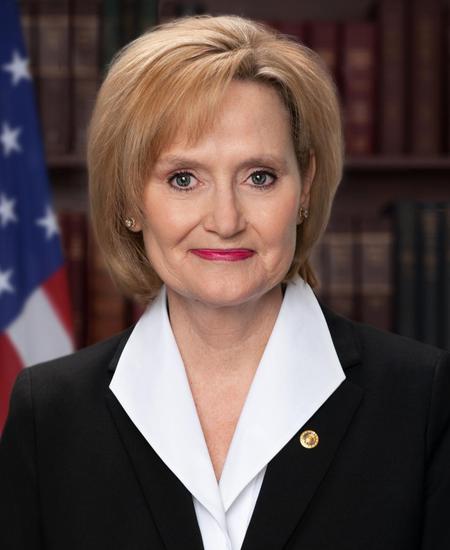
Sen. Cindy Hyde-Smith
Sponsored bills
Maddy summaryThe LEOSA Reform Act (S 1462) clarifies and expands federal protections for qualified active and retired law enforcement officers who carry concealed firearms, directly affecting those who meet specific standards. It updates existing law to explicitly allow these officers to carry firearms in National Park System areas and on public property (even with entry fees), while requiring retired officers to maintain recent firearms qualification standards (within 12-36 months) to retain their rights. The bill also explicitly permits qualified officers to carry firearms in certain Federal facilities open to the public, such as Security Level I or II buildings. These changes streamline federal firearm carry rules for law enforcement personnel without altering state laws or creating new restrictions.
Maddy summaryThe SPUR Act (S 1456) streamlines oil, gas, and mineral development on federal lands by requiring quarterly onshore oil and gas lease sales, allowing states to assume permitting authority for these activities, and limiting environmental review delays for energy projects. The bill reduces royalty rates for oil and gas leases to a minimum of 12.5 percent during its 5-year implementation period, prohibits the President from delaying energy leasing without congressional approval, and expedites LNG export approvals with a 45-day decision deadline. It directly affects oil and gas companies seeking permits, state governments that may take over permitting authority, and federal agencies like the Bureau of Land Management. The legislation aims to increase domestic energy production by making federal leasing and permitting processes faster and more predictable.
Maddy summaryThis Senate resolution designates April 2023 as "Financial Literacy Month" to raise public awareness about the importance of personal financial education and the consequences of financial illiteracy. It cites statistics showing widespread challenges, including 4.5% of U.S. households being unbanked, high credit card debt (47% of adults), and limited school-based financial education (only 23 states require personal finance courses). The resolution calls on federal, state, local, schools, nonprofits, and businesses to observe the month with educational programs. It does not create new laws or funding but aims to highlight existing financial literacy gaps affecting all Americans.
Maddy summarySRES 188 is a symbolic Senate resolution celebrating the 75th anniversary of Israel's founding on May 14, 2023. It formally recognizes Israel's establishment, reaffirms the U.S.-Israel partnership, and highlights shared democratic values, security cooperation, and diplomatic achievements like the Abraham Accords. The resolution has no policy impact or direct effect on individuals or legislation - it serves solely as a ceremonial expression of support. It was introduced by a bipartisan group of senators and passed without implementing new laws or funding.
Maddy summaryThis resolution (SRES 183) is a ceremonial Senate measure celebrating the 151st anniversary of Arbor Day on April 28, 2023. It recognizes April 28, 2023, as National Arbor Day and encourages all Americans to participate in tree-planting activities. The resolution highlights Arbor Day’s history since 1872 and emphasizes community efforts in urban forestry, but it does not create new laws or policies. It directly affects the public by promoting awareness of tree planting and environmental stewardship. As a symbolic gesture, it has no binding effect on government actions or funding.
Maddy summaryThis bill prohibits insurers from denying coverage, canceling policies, or increasing premiums for life, disability, or long-term care insurance solely because someone is a living organ donor, without considering actual health risks. It also updates the Family and Medical Leave Act to include recovery from organ donation surgery as a qualifying condition for leave for private-sector employees and federal workers. Additionally, the bill requires the Health and Human Services Secretary to update public educational materials about living organ donation within six months, covering benefits, risks, and the new insurance protections. These changes directly affect living organ donors, insurers, and employers who must comply with the updated leave and insurance rules.
Maddy summaryThe College Transparency Act requires the development of a new, secure data system to collect and share detailed, aggregate information about college students' enrollment, progression, costs, financial aid, and post-graduation outcomes like earnings and employment. This system will make publicly accessible, non-personally identifiable information through an easy-to-use website to help students and families make informed college decisions. Institutions participating in federal student aid programs must submit data to the system, while the bill prohibits collecting sensitive information like health data, discipline records, or exact addresses. The law also includes strong privacy protections, requires data minimization, and prohibits using the data for federal rankings or selling it to third parties. The system aims to reduce reporting burdens on institutions while improving transparency about college outcomes.
Maddy summaryS 1382, the Protecting Our Supreme Court Justices Act of 2023, increases penalties for obstructing justice near Supreme Court justices' residences or workplaces. It amends federal law to raise the maximum prison sentence for picketing or parading that obstructs justice from one year to five years. This change directly affects individuals who engage in disruptive protests near justices' homes or offices. The bill focuses solely on strengthening criminal penalties for obstruction, not on judicial decisions or court procedures.
Maddy summaryThis bill authorizes the U.S. Treasury to mint three commemorative coins in 2026 to honor Golda Meir (Israel’s first female Prime Minister) and mark the 75th anniversary of U.S.-Israel relations. It specifies $5 gold, $1 silver, and half-dollar coins bearing her image and inscriptions like "Golda Meir, Israel 75, 2026," with surcharges of $35, $10, and $5 per coin respectively. All surcharge revenue will fund Kiryat Sanz Laniado Hospital in Israel, while the coins - minted only in 2026 - will be sold as collectibles with no net cost to the U.S. government.