

Maddy summaryThis bill establishes minimum salary ($45,000 annually for full-time) and wage ($30/hour for part-time) standards for paraprofessionals and education support staff in public schools. It authorizes $25 billion in federal funding for fiscal year 2026 with annual increases tied to inflation or 2%, to help states meet these requirements. States must submit implementation plans to ensure full-time staff meet the minimum salary and part-time staff meet the minimum wage within four years, with 98% of funds going directly to local school districts. The legislation directly affects school support staff, school districts, and state education agencies across the country.
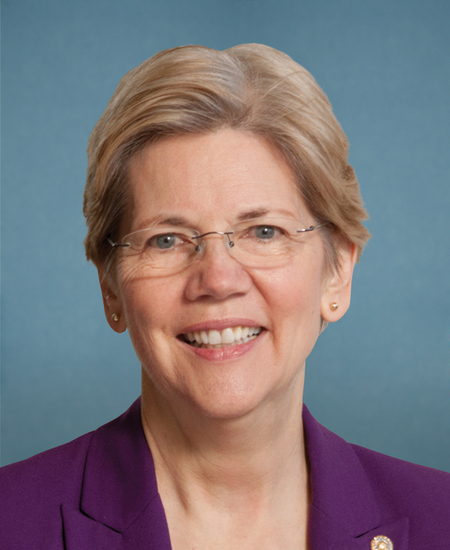
Sen. Elizabeth Warren
Sponsored bills
Maddy summaryThis bill expands health coverage access for military families by modifying the TRICARE Young Adult Program. It directly affects military service members' children aged 21-26 who previously faced eligibility restrictions or separate fees. Key changes include removing a prior age limit that excluded some young adults and eliminating a separate premium for this coverage. The result is simplified access to health care under TRICARE without additional costs for qualifying dependents. These updates apply to existing TRICARE benefits, not new programs.
Maddy summaryThis bill expands Medicare Part B coverage to include specific pharmacist services, directly affecting Medicare beneficiaries and pharmacists who provide these services. It defines "pharmacist services" as evaluations and treatments for illnesses like COVID-19, flu, RSV, or strep throat, or services addressing public health emergencies, requiring collaboration with physicians as state law permits. Medicare would pay 80% of the lower of the actual charge or 85% of the physician payment rate (100% for public health emergencies), and prohibits balance billing for these services. The changes take effect January 1, 2026.
Maddy summaryThis bill eliminates government subsidies for fossil fuel production by increasing royalties for oil and gas extraction, terminating tax credits for fossil fuel companies, and prohibiting government funding for fossil fuel projects. It repeals recent legislation that provided fossil fuel subsidies, including provisions from the Inflation Reduction Act, and requires a study of additional subsidies. The bill affects fossil fuel companies, government agencies, and financial institutions that support fossil fuel development. Key provisions would take effect for production and tax years beginning after the bill's enactment.
Maddy summaryThe Stop the Scammers Act establishes a whistleblower reward program for individuals reporting violations of federal consumer financial law (e.g., scams, fraud). Whistleblowers who provide original information leading to successful enforcement actions by the Consumer Financial Protection Bureau (CFPB) may receive 10-30% of recovered civil penalties (minimum $50,000 if penalties are under $1 million). The bill mandates strong confidentiality protections for whistleblowers, prohibits employers from waiving these rights via contracts, and requires the CFPB to report annually on the program. It directly affects whistleblowers in consumer finance cases and the CFPB’s enforcement process, not the general public.
Maddy summaryS 2377, the EACH Act of 2025, requires all federal health programs - including Medicaid, Medicare, the Children’s Health Insurance Program (CHIP), and the Indian Health Service - to cover abortion services without restrictions based on income or insurance type. It repeals the Hyde Amendment (Section 1303 of the ACA), which previously barred federal funds from covering most abortions, and prohibits state or private insurance plans from restricting abortion coverage. This directly affects millions enrolled in federal health programs, particularly low-income individuals, women of color, and young people, who face barriers to abortion access under current laws. The bill mandates that all federally funded health programs provide comprehensive abortion coverage as a standard benefit.
Maddy summaryThis bill restricts federal law enforcement's use during protests by requiring officers to visibly display their agency and name or rank during crowd control, riot control, or arrests at demonstrations. It limits federal involvement to Federal property or immediate adjacent areas (sidewalks/public streets), with exceptions for written state/local requests or when the Insurrection Act is invoked. The bill also prohibits unmarked vehicles for civilian arrests and mandates public websites publish deployment details within 24 hours, including locations of detained individuals. It makes arrests unlawful if officers violate these identification or location rules. The bill directly affects federal law enforcement officers and military personnel responding to public demonstrations.
Maddy summaryThe Price Gouging Prevention Act of 2025 makes it unlawful for businesses to sell goods or services at grossly excessive prices during exceptional market shocks like natural disasters, public health emergencies, or other major disruptions. The bill establishes specific thresholds (such as $100 million in annual revenue for small businesses) and requires businesses to demonstrate that price increases were due to uncontrollable costs, rather than exploiting market conditions. It creates a presumption of violation for businesses with "unfair leverage" (defined as having significant market dominance or revenue), and requires companies to disclose pricing strategies in SEC filings during market shocks. The Federal Trade Commission and state attorneys general would enforce the law, with civil penalties up to 5% of a company's revenue. The law includes annual inflation adjustments for certain financial thresholds starting in 2026.
Maddy summaryThis bill establishes new requirements for food additives to be deemed "generally recognized as safe" (GRAS) under FDA oversight. Manufacturers must now submit detailed safety data - including evidence showing no carcinogenicity, reproductive toxicity, or developmental toxicity - to the FDA for review, replacing the previous reliance on historical use. The FDA must publicly post submissions, allow 60 days for public comment, and issue written determinations within a set timeline. Additionally, the bill mandates the FDA to reassess the safety of at least 10 food substances every three years, prioritizing those under existing petitions or regulations. It directly affects food manufacturers and the FDA, creating a more rigorous, evidence-based process for food additive safety.
Maddy summaryThis bill requires the Department of Homeland Security (DHS) to keep all personal information from DACA applications confidential. It prohibits sharing this data with U.S. Immigration and Customs Enforcement (ICE), U.S. Customs and Border Protection (CBP), or state/local law enforcement for any purpose other than administering the DACA program. Limited exceptions allow sharing only to prevent fraud, address specific national security threats, or investigate felonies unrelated to immigration status. The law directly protects DACA applicants and recipients by preventing their personal details from being used against them by law enforcement.