

Maddy summaryThis resolution (SRES 93) expresses the Senate's view that the National Institutes of Health (NIH) should not face funding disruptions or operational delays that violate existing law. It specifically highlights the importance of uninterrupted NIH work on research for diseases like cancer, Alzheimer’s, diabetes, and heart disease. The resolution emphasizes that NIH scientists and researchers are essential to medical progress and public health efforts. As a symbolic resolution, it does not change funding laws or create new policies - it solely states the Senate’s position on protecting NIH operations.
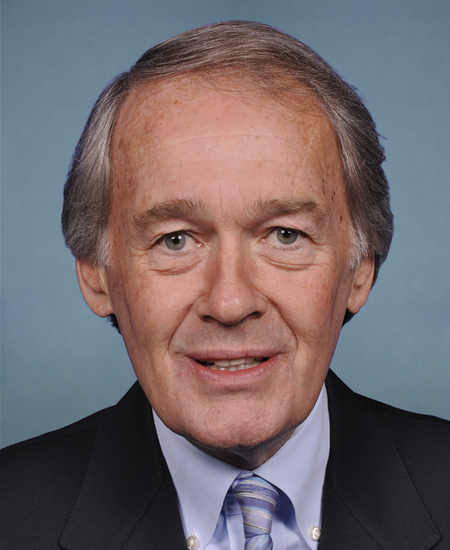
Sen. Edward J. Markey
Sponsored bills
Maddy summaryThe Empowering and Enforcing Environmental Justice Act of 2025 establishes a new Office of Environmental Justice within the Department of Justice to address environmental disparities in low-income, Tribal, and Indigenous communities. It creates a grant program to fund State, local, and Tribal governments for training staff, hiring personnel, and developing community engagement initiatives related to environmental enforcement. The Office will develop a 5-year strategy, coordinate federal and local enforcement efforts, and define "environmental justice" as ensuring equitable protection from environmental harms and access to a healthy environment for affected communities.
Maddy summaryS 726, titled "Ethan's Law," requires gun owners to store firearms securely in homes where minors (under 18) or individuals ineligible to own guns (per federal/state law) reside. It makes unsecured storage unlawful if a person "knows or reasonably should know" access is possible, with exceptions for gun safes, secure locations, or carrying firearms on one's person. Violations incur $500 fines per offense, and enhanced penalties apply if injury or death occurs. The bill also creates a federal grant program to support states with similar secure-storage laws and states that non-compliance constitutes negligence. This law directly affects households with minors or prohibited individuals, aiming to reduce accidental shootings, youth access, and firearm thefts.
Maddy summaryThis bill prohibits federal funding for Executive Order 14160 (and any successor policies), which attempted to deny U.S. citizenship to children born in the U.S. to non-citizen parents. It directly affects the executive branch by blocking financial support for the controversial order, which contradicted the 14th Amendment and established court precedent like *United States v. Wong Kim Ark*. The bill’s key mechanism is a funding ban, ensuring no government resources can be used to implement policies that undermine birthright citizenship guaranteed by the Constitution and immigration law. It does not alter citizenship rules but prevents enforcement of the challenged executive order.
Maddy summaryThis bill (S 634) amends U.S. Code § 4001 to prohibit federal authorities from detaining individuals solely based on protected characteristics. It directly affects anyone detained by federal law enforcement, banning detention based on race, ethnicity, national origin, religion, sex, gender identity, sexual orientation, disability, or any additional characteristic the Attorney General designates. The key provision adds a new subsection requiring that no one be imprisoned or detained "based solely on an actual or perceived protected characteristic," with the Attorney General having authority to expand the list of protected traits. This creates a clear legal standard to prevent discriminatory detention practices under federal law.
Maddy summaryThis bill, the Equal COLA Act (S 624), equalizes cost-of-living adjustments (COLAs) for federal retirees under the Federal Employees Retirement System (FERS) and the Civil Service Retirement System (CSRS). It directly affects current and future FERS retirees, who currently receive less favorable COLAs than CSRS retirees. The key provision amends federal law to apply the same annual COLA calculation method - based on the previous year's price index change - to both systems, effective December 1 each year. This change ensures FERS annuities receive the same adjustment percentage as CSRS annuities, regardless of when the annuity began. The bill applies to all affected annuities commencing before, on, or after enactment.
Maddy summaryThe SAD Act prohibits crisis pregnancy centers (CPCs) from making deceptive claims about offering abortion services, contraception, or licensed medical care. It targets CPCs - anti-abortion organizations that mislead patients with false information, often near community health centers - to prevent them from discouraging access to reproductive care. The Federal Trade Commission (FTC) enforces the law, with penalties up to $100,000 per violation or 50% of a CPC’s revenue, and requires annual FTC reports on enforcement actions. This directly affects CPCs and aims to ensure accurate information for people seeking abortion care, particularly low-income women and women of color facing heightened barriers post-Dobbs.
Maddy summaryThis bill authorizes a Congressional Gold Medal to be awarded posthumously to all African American soldiers and sailors who served with Union forces during the Civil War, specifically recognizing the United States Colored Troops (USCT) and African American Navy personnel. The medal, to be struck by the U.S. Treasury, will be presented collectively to honor their service and bravery, with the original medal then given to the Smithsonian Institution for public display. Duplicate bronze medals may be sold to cover costs, and all medals are designated as national medals under federal law. The bill directly affects historical recognition of approximately 200,000 USCT soldiers and 19,000 African American Navy personnel who served despite systemic discrimination.
Maddy summaryThis bill requires the Secretary of Health and Human Services to develop a national strategy within 180 days of enactment to address public health risks from AI misuse. The strategy must include a framework for preparedness, identify HHS duties and capability gaps, and specifically target risks like AI-facilitated biological weapons development or engineered pathogens resistant to treatment. It mandates coordination with stakeholders developing medical countermeasures and updates existing emergency response protocols to explicitly cover AI-related threats. The strategy will guide public health systems in mitigating these emerging risks, directly affecting HHS operations and federal pandemic response planning.
Maddy summarySRES 64 is a Senate resolution honoring the 67 victims of a mid-air collision between American Airlines Flight 5342 and a U.S. Army aircraft near Washington, D.C., on January 29, 2025. It directly affects the families, friends, and communities of the victims, who were from multiple U.S. states and several countries. The resolution formally commemorates the lives lost, offers condolences to grieving families, and expresses gratitude to the 42 emergency response agencies that assisted in rescue and recovery efforts. As a commemorative resolution, it has no policy or legal effect beyond expressing collective mourning and recognition.