

Maddy summaryS 2122, the Jury ACCESS Act of 2025, amends federal law to prohibit excluding potential jurors from federal service based on sexual orientation or gender identity. It directly affects LGBTQ+ individuals who may be considered for federal jury duty. The bill achieves this by adding "sexual orientation, gender identity" to the existing list of protected characteristics (after "sex") in Section 1862 of Title 28, U.S. Code, which governs jury eligibility. This change ensures federal jury selection systems cannot discriminate against qualified citizens for these reasons.
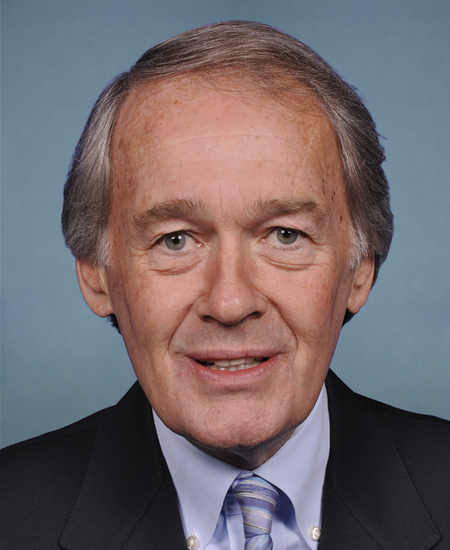
Sen. Edward J. Markey
Sponsored bills
Maddy summaryThe SECURE Act creates a new pathway for certain foreign nationals to adjust to lawful permanent resident status without leaving the United States. It primarily affects individuals who have been continuously present in the U.S. for at least three years and qualify under Temporary Protected Status (TPS), including those who previously had TPS or were granted deferred enforced departure. The bill allows eligible applicants to apply for permanent residency, provides work authorization while applications are pending, and protects the confidentiality of application information. It also includes provisions for spouses and children of qualifying applicants to adjust their status, and requires new reporting for countries whose TPS designation is terminated. The law includes specific eligibility requirements related to criminal background checks and continuous physical presence.
Maddy summaryThis Senate resolution (SRES 285) designates July 16, 2025, as "Glioblastoma Awareness Day." It aims to raise public awareness about glioblastoma, a highly aggressive and deadly brain cancer affecting thousands annually, and honors those impacted by the disease. The resolution encourages greater public understanding of glioblastoma's challenges and supports ongoing research efforts like the Glioblastoma Therapeutics Network.
Maddy summaryS 2087, the "No War Against Iran Act," prohibits the use of federal funds for any military action in or against Iran without explicit congressional approval. It requires Congress to either declare war or pass specific new authorization for such action after this bill's enactment, overriding prior authorizations like the Iraq AUMF. The bill does not block self-defense actions if Congress later authorizes them under the War Powers Resolution, but it maintains existing reporting and consultation requirements for the executive branch. This directly affects the President and Pentagon, requiring congressional consent before funding military operations targeting Iran.
Maddy summaryThis bill requires the Department of Defense's Transition Assistance Program (TAP) and the Department of Veterans Affairs' Solid Start Program to provide servicemembers and veterans with specific, standardized mental health information during their transition from military to civilian life. It mandates inclusion of details on suicide risk factors (like depression, homelessness, and relationship strain), PTSD treatment options, substance abuse resources, and the impact of losing military support networks. Both programs must cover these topics in their counseling materials, directly affecting active-duty service members separating from the military and newly enrolled veterans. The bill also requires the Defense and Veterans Affairs Secretaries to jointly report to Congress within one year on the implementation of these changes.
Maddy summaryThis bill restricts how credit bureaus share consumer credit reports during mortgage applications. It limits sharing with third parties unless the request is for a firm mortgage offer or the recipient is the loan originator, servicer, or a bank holding the consumer's account. The law directly affects consumers (by limiting data sharing), credit bureaus (requiring new compliance), and mortgage lenders/banks (with restricted access). Key provisions require explicit consumer authorization for sharing and prevent broad data use during prescreening for home loans.
Maddy summarySCONRES 14 is a symbolic congressional resolution urging the executive branch to establish a U.S. Commission on Truth, Racial Healing, and Transformation. It does not create the commission itself but calls for its formation to examine historical racial injustices affecting people of color, including slavery, discriminatory housing policies, and systemic inequities in healthcare, education, and voting rights. The commission would aim to address the root causes of racial division and promote efforts to eliminate persistent racial inequities. This resolution is procedural and does not impose binding requirements on the government.
Maddy summaryThe Insurrection Act of 2025 establishes specific conditions under which the President may deploy military forces domestically to address insurrections, rebellions, or widespread violence that overwhelm state and local authorities. It requires the President to consult Congress, issue a proclamation ordering lawbreakers to disperse, and submit a detailed report before deployment, with congressional approval needed within 7 days. The bill specifically protects voting rights by requiring that military deployment to address voting rights violations must comply with the Voting Rights Act of 1965. It also prohibits using National Guard members on training or other duty for domestic deployments. This legislation directly affects the President, Congress, state authorities, and military operations.
Maddy summaryThis bill prohibits colleges and universities from requiring students to waive their right to sue in court through enrollment agreements. It blocks institutions from including forced arbitration clauses or other restrictions (like limiting choice of law, jury trials, or court locations) in contracts with students. The law amends the Higher Education Act to ensure students can pursue legal claims against schools directly in court, rather than through private dispute resolution. It applies to all enrollment agreements between students and institutions of higher education, effective one year after enactment.
Maddy summaryThis resolution designates June 6, 2025, as National Naloxone Awareness Day to raise public awareness about naloxone, a life-saving medication that reverses opioid overdoses. It urges federal, state, local governments, and organizations to improve access to naloxone and educate communities on its use, without creating new laws or funding. The resolution focuses on recognition and education, not policy changes or mandates.