

Maddy summaryThe Enhancing First Response Act requires the Federal Communications Commission (FCC) to issue detailed reports after major disasters that activate the Disaster Information Reporting System for at least 7 days. These reports must track outages in broadband, mobile, and emergency communication services (including 911 systems), estimate affected users, and include public hearings with local officials, providers, and first responders within 8 months. The FCC must publish a final report within 12 months, containing outage data and recommendations to improve network resilience. This bill directly affects communication providers, public safety agencies, and disaster response systems by standardizing outage reporting and accountability.
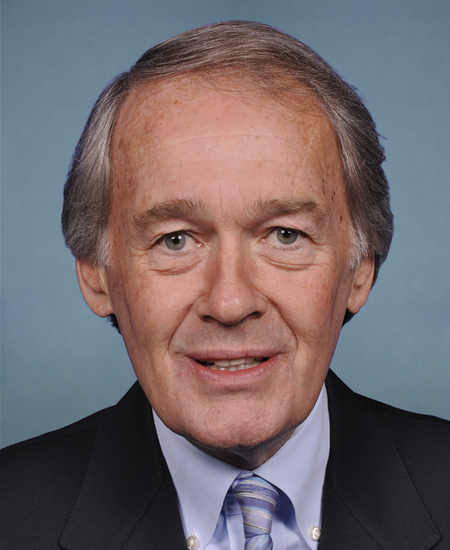
Sen. Edward J. Markey
Sponsored bills
Maddy summaryThis bill would make several administrative changes to the Social Security Administration, including exempting it from the jurisdiction of the Department of Government Efficiency (DOGE) and certain executive orders, restricting political appointees from accessing beneficiary data systems, and preventing closure of field offices while requiring maintenance of staff levels. It also creates new offices within the SSA for civil rights, transformation, and analytics, and provides additional funding for administrative costs and customer experience improvements. These provisions would directly affect how the SSA manages its operations, protects beneficiary data, and delivers services to beneficiaries. The bill's title is misleading as it does not address billionaires or their relationship with Social Security.
Maddy summaryThis bill expands eligibility for family and medical leave under the FMLA for paraprofessionals and education support staff (ESP) in schools. It lowers the required work hours for eligibility from 1,250 hours per year to 60% of the expected monthly hours for their specific role (based on the previous school year’s schedule). Employers must document each employee’s expected monthly hours in a file for the Secretary’s review. The law specifically covers school staff providing services like clerical work, food services, custodial duties, or student health support, aligning with existing definitions from education law.
Maddy summarySRES 374 is a non-binding Senate resolution expressing that Secretary of Health and Human Services Robert F. Kennedy Jr. lacks the confidence of the Senate and American people to serve in his role. The resolution cites specific actions including the termination of $11 billion in public health funding, mass firings of scientists (notably eliminating 8 Offices of Minority Health), replacing all 17 members of the vaccine advisory committee (ACIP) with critics of vaccines, and dismantling programs supporting maternal health, disability services, and chronic disease research. It alleges these actions violated federal law, undermined scientific integrity, and endangered public health during a measles outbreak. The resolution calls for the Secretary’s removal but has no legal effect, as it is a symbolic statement of disapproval.
Maddy summaryThis resolution (SRES 373) is a ceremonial Senate measure recognizing the 50th anniversary of Cabo Verde's independence from Portugal on July 5, 2025. It celebrates the historical contributions of Cabo Verdean-Americans to democracy in both Cabo Verde and the United States, highlighting their role as a cultural and diplomatic bridge between the two nations. The resolution expresses support for Cabo Verde's democratic principles and commends its diaspora community for fostering bilateral ties. As a symbolic gesture with no policy changes or funding impacts, it does not alter laws or obligations.
Maddy summaryThe Nationwide Right To Unionize Act (S 2729) would repeal a federal law provision allowing states to enact "right-to-work" laws, which typically prevent unions from requiring workers to pay dues as a condition of employment. By removing this state-level exception, the bill would make it illegal for any state to have right-to-work laws, meaning workers in unionized workplaces across all 50 states could be required to pay union dues if their union and employer agree. This directly affects workers, unions, and employers in every state, particularly in the 27 states currently with right-to-work laws. The bill does not change existing union security agreements but eliminates state-level alternatives that restrict union dues collection.
Maddy summaryThis bill adds a new tax deduction for student loan payments to the Food and Nutrition Act of 2008. It allows households to deduct monthly student loan payments made by any household member, covering both federal loans under the Higher Education Act and qualifying private loans. The deduction applies at household certification or recertification points for programs like SNAP, but only for payments not covered by third parties. It directly affects households with student loan debt seeking to reduce their taxable income through this specific tax provision. The change takes effect 180 days after the bill's enactment.
Maddy summaryThis bill prohibits U.S. embassies, consulates, and diplomatic posts from hosting fundraising events for foreign political parties or candidates using federal or personal funds of U.S. officials. It specifically bans events intended to raise money for foreign political groups on embassy grounds, including facilitating donor contact. The bill requires the State Department to revise its regulations (DSSR and FAM) to enforce this prohibition and prevent any appearance of favoring one foreign political group over others. It directly affects U.S. diplomatic missions and their staff by restricting the use of embassy facilities and funds for foreign election-related fundraising. The policy aims to maintain U.S. political neutrality in foreign elections, consistent with longstanding diplomatic practices.
Maddy summaryS 1489, the Anti-Racism in Public Health Act of 2025, establishes a National Center on Antiracism and Health within the CDC to address racial health disparities. It directly affects the CDC, public health researchers, state/local health agencies, and communities of color by requiring systematic research on structural racism's health impacts and funding for community-based antiracism initiatives. Key mechanisms include declaring racism a public health crisis, creating regional centers of excellence in minority communities, collecting disaggregated health data by race, ethnicity, and other demographics, and developing interventions to dismantle racist systems in healthcare. The bill mandates the CDC to produce public reports, coordinate with tribal entities, and standardize data collection to advance racial equity in public health.
Maddy summaryThe Lowering Electric Bills Act extends federal tax credits for clean energy adoption through 2034, directly affecting homeowners installing solar panels or heat pumps and businesses producing clean electricity. It modifies three key tax provisions: (1) extends the residential clean energy credit deadline from 2025 to 2034, (2) adjusts the clean electricity production credit to expire based on U.S. emissions reaching 25% of 2022 levels or 2032 (whichever comes later), and (3) simplifies the clean electricity investment credit rules. These changes aim to maintain financial incentives for clean energy projects beyond current law, reducing administrative complexity. The bill does not create new programs but prolongs existing tax benefits to support ongoing adoption.