

Maddy summarySRES 531 is a non-binding Senate resolution celebrating the 50th anniversary of the Individuals with Disabilities Education Act (IDEA) on November 29, 2025. It recognizes IDEA's historical role in guaranteeing children with disabilities access to free appropriate public education in inclusive settings, transforming educational opportunities for millions. The resolution honors students, families, educators, and advocates who advanced IDEA's principles since its 1975 enactment. It does not create new policy but formally acknowledges the law's enduring impact on educational equity.
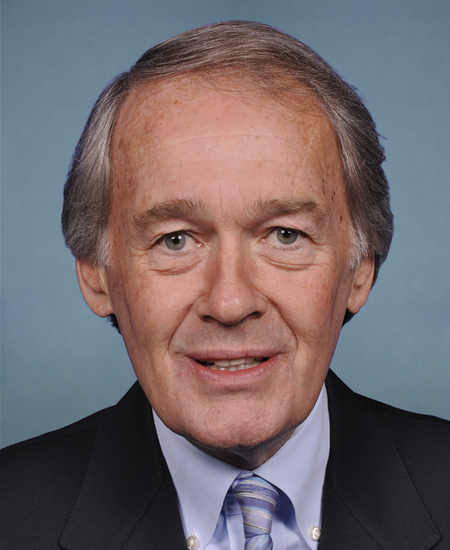
Sen. Edward J. Markey
Sponsored bills
Maddy summaryThe HALT Act of 2025 directs the U.S. government to negotiate a global nuclear freeze, requiring the President to pursue agreements that would halt testing, production, and deployment of nuclear weapons and delivery systems. Key provisions include seeking a verifiable freeze on nuclear arms development, negotiating numerical limits on weapons (based on 2019 levels), promoting "no first use" policies, and pushing for U.S. ratification of the Comprehensive Nuclear-Test-Ban Treaty (CTBT). The bill aims to build on existing treaties like New START and seeks to engage all nuclear-armed nations in these negotiations. It directly affects U.S. foreign policy and international arms control efforts, though it does not mandate specific cuts or binding limits on other countries.
Maddy summaryS 3347, the Flight Delay and Cancellation Compensation Act, requires airlines to provide $750 in cash compensation, free rebooking, meals, and for overnight delays, lodging and transportation when flights are delayed or canceled due to the airline's fault. The bill mandates the Transportation Secretary to form a committee within 90 days - including airline, airport, and consumer representatives - to develop recommendations for these standards, including aligning with international rules like Canada's Air Passenger Protection Regulations. An interim rule implementing these requirements will take effect two years after enactment, mandating the compensation and services for affected passengers. This legislation standardizes passenger protections across U.S. airlines to align with global practices.
Maddy summaryThis bill prohibits U.S. military action against Venezuela without specific new congressional authorization. It blocks funding for Defense Department operations involving "hostilities" (defined as any use of lethal force by U.S. forces) except under two conditions: a new law passed after this bill's enactment, or a congressional authorization meeting War Powers Resolution standards. Key exceptions allow self-defense, protection of U.S. personnel, lawful counternarcotics operations, and humanitarian aid. The bill does not override the War Powers Resolution but requires stricter authorization for military engagement with Venezuela.
Maddy summaryThis bill updates the Social Security lump sum death payment amount from a formula based on the deceased's benefit to a fixed $2,900. The payment will automatically increase each year starting in 2026 based on the Consumer Price Index (CPI), ensuring it keeps pace with inflation. It directly affects survivors who receive the lump sum death payment following a Social Security recipient's death. The change applies to deaths occurring on or after January 1, 2026, replacing the previous "three times" calculation method.
Maddy summaryThis Senate resolution (SRES 525) condemns the Iranian government's ongoing, state-sponsored persecution of the Baha'i minority, citing decades of systemic abuses including executions, job dismissals, education bans, and property confiscations. It references UN reports and Human Rights Watch findings documenting Iran's violation of international human rights treaties, such as the Universal Declaration of Human Rights and the International Covenant on Civil and Political Rights. The resolution calls on Iran to immediately release imprisoned Baha'is, end discriminatory policies restricting their education and employment, and cease hate propaganda, while urging the U.S. President and Secretary of State to impose sanctions on Iranian officials responsible for these abuses.
Maddy summaryThis bill establishes rules for temporary immigration judges who handle cases while permanent judges are appointed. It allows the Attorney General to appoint former immigration judges, Board members, or attorneys with 10+ years of immigration law experience for up to 6-month terms (renewable for a maximum of 4 terms, or 24 months total). Temporary judges must complete 8 weeks of initial training plus weekly 1-day sessions unless recently retired (within 2 years), and their work is overseen by the Chief Immigration Judge. The law emphasizes that temporary judges should not replace permanent judges and requires them to have deep expertise in U.S. immigration law.
Maddy summaryS 3324 (FERC Greenhouse Gas and Environmental Justice Policy Act of 2025) requires the Federal Energy Regulatory Commission (FERC) to evaluate environmental justice impacts and greenhouse gas emissions when reviewing natural gas pipeline projects. It mandates FERC to assess whether proposed projects disproportionately affect environmental justice communities (defined as communities of color, indigenous groups, or low-income areas facing pollution burdens) and to quantify emissions, including downstream effects from gas combustion. Projects with 100,000+ metric tons of annual CO2 equivalent emissions must undergo stricter review, and applicants must submit mitigation plans to address environmental effects. FERC must explain in writing if it approves projects without sufficient mitigation or if environmental effects outweigh benefits. This directly affects pipeline applicants, FERC, and communities near proposed projects.
Maddy summaryS 3302, the Mikaela Naylon Give Kids a Chance Act of 2025, requires drug manufacturers developing cancer treatments to conduct pediatric-focused research for certain drugs targeting pediatric cancer mechanisms. It amends FDA drug approval processes to mandate molecularly targeted pediatric cancer investigations for drugs with new active ingredients or specific approved combinations, ensuring studies address dosing, safety, and efficacy for children. The bill also extends priority review vouchers (which expedite FDA reviews) for rare pediatric disease treatments until 2030 and mandates GAO studies to evaluate how effectively these incentives spur new pediatric cancer drug development. These changes apply to new drug applications submitted three years after the law's enactment, with reports due to Congress at 6, 8, and 10 years.
Maddy summaryThe Artificial Intelligence Civil Rights Act of 2025 regulates AI systems that make decisions affecting people's lives, such as employment, housing, healthcare, credit, and education. It requires developers and deployers to conduct pre-deployment evaluations and annual impact assessments by independent auditors to prevent discrimination and harm. The law mandates clear consumer disclosures about AI use, provides the right to human alternatives for AI-driven decisions, and creates enforcement mechanisms through the Federal Trade Commission and state attorneys general. It also includes whistleblower protections for employees reporting violations and requires transparency about how AI systems operate.