

Maddy summaryThis bill establishes a new annual wealth tax on individuals with net assets exceeding $50 million, effective in 2027, targeting ultra-wealthy taxpayers by taxing the total value of their taxable assets rather than income. The tax uses a tiered structure with a 0% bracket up to $50 million, a 2% rate between $50 million and $1 billion, and a 3% or 6% rate on assets above $1 billion, with the higher rate applying if a universal health insurance program is enacted. It includes special rules for married couples filing jointly, trusts, and non-resident aliens, while also adding stricter information reporting requirements and increased IRS funding for enforcement.
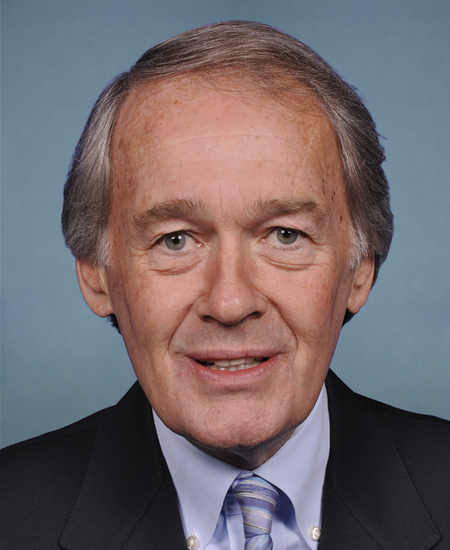
Sen. Edward J. Markey
Sponsored bills
Maddy summaryThis bill, the End Polluter Welfare for Enhanced Oil Recovery Act of 2026, removes tax incentives for enhanced oil recovery projects that use carbon dioxide as an injectant. It directly affects oil and gas companies and energy producers who build qualified facilities after the law is enacted. The legislation eliminates the tax credit for carbon capture and storage when the captured carbon dioxide is used to extract more oil from existing wells. Additionally, the bill repeals the federal enhanced oil recovery tax credit that previously allowed companies to deduct certain costs related to extracting additional oil from mature wells. These changes apply to taxable years beginning after the bill is enacted.
Maddy summaryThis bill establishes a policy requiring Saudi Arabia to give up uranium enrichment and reprocessing capabilities on its soil and agree to an International Atomic Energy Agency inspection protocol before the U.S. can approve a civilian nuclear cooperation agreement with the country. It mandates that the President submit a detailed report to Congress outlining Saudi Arabia's commitments on these nuclear restrictions before any agreement can proceed. Additionally, the legislation requires Congress to pass a joint resolution explicitly approving the agreement before it can take effect, ensuring legislative oversight over the deal. The bill also directs the U.S. to oppose nuclear technology sales to Saudi Arabia through the Nuclear Suppliers Group until these conditions are met.
Maddy summaryThis concurrent resolution formally recognizes Congress's duty to protect the rights and economic security of working women in the United States. It highlights concerns about wage gaps, workplace discrimination, and recent policy changes that the bill's sponsors claim have disproportionately harmed women in the workforce. The document calls for federal action to ensure equal pay, workplace safety, access to healthcare, and the right to unionize, while affirming the importance of women's contributions to the economy. As a non-binding statement of principle, it does not create new laws but serves to express congressional intent and guide future legislative priorities.
Maddy summarySJRES 103 is a congressional disapproval resolution targeting a Department of Veterans Affairs (VA) rule on reproductive health services for veterans. The resolution, if passed, would block the VA rule from taking effect by invoking the Congressional Review Act (Chapter 8 of Title 5, U.S. Code), meaning the rule published in the Federal Register (December 31, 2025) would have no legal force. This directly affects the VA’s ability to implement new guidelines for reproductive health services at its facilities, preserving existing policies instead. The resolution does not create new policy but halts a specific administrative rule.
Maddy summaryThis bill, known as the Plastic Pellet Free Waters Act, directs the Environmental Protection Agency to ban the discharge of pre-production plastic pellets and related materials into wastewater and runoff from specific industrial facilities. It requires the EPA to issue new rules within 60 days that prohibit these discharges from factories that make, use, package, or transport plastic pellets, as well as from facilities regulated under existing federal water pollution regulations. The law mandates that these new restrictions be included in all wastewater and stormwater permits issued by the EPA and state programs, as well as in performance standards for affected industrial point sources. This legislation directly impacts manufacturers and distributors of plastic pellets and aims to prevent plastic pollution from entering water systems during the production and packaging stages.
Maddy summaryThe WIPPES Act (S 1092) requires manufacturers and retailers to label specific wipes with a clear "Do Not Flush" notice and symbol. It directly affects producers of baby wipes, antibacterial wipes, cleaning wipes, and personal care wipes (like makeup remover or feminine hygiene wipes) that could be flushed. The law mandates precise labeling on packaging - ensuring visibility, high contrast, and specific placement depending on package type - while banning all claims that these wipes are flushable. Enforcement falls to the Federal Trade Commission under existing consumer protection laws, and the federal standard preempts conflicting state regulations.
Maddy summaryThis bill amends the Marine Mammal Protection Act to create new provisions specifically for sea turtles. It establishes a dedicated $5 million annual grant program (2025-2030) for sea turtle rescue and rehabilitation, funded through a new "Sea Turtle Rescue, Rehabilitation, and Rapid Response Fund" with $500,000 yearly. Eligible applicants include coastal organizations with Endangered Species Act authorizations or cooperative agreements, required to follow specific care standards and data reporting. The law directly affects wildlife rehabilitation groups and coastal communities handling stranded sea turtles by providing targeted federal funding and clear grant eligibility criteria.
Maddy summaryThis resolution honors the USS Massachusetts (SSN-798), a Virginia-class nuclear submarine, and its crew on the occasion of its commissioning on March 28, 2026. The bill formally recognizes the historical significance of this vessel as the eighth U.S. Navy ship to carry the Massachusetts name and acknowledges its connection to the state's maritime tradition. It expresses the Senate's best wishes for the submarine's service and confirms that its official service begins with its commissioning ceremony in Boston Harbor.
Maddy summaryThis bill, known as the SHIELD Act, authorizes the Attorney General to provide grants to states, local governments, and organizations to help recruit, train, and retain staff needed to support legal representation for individuals facing immigration removal proceedings. The program would fund workforce development initiatives such as hiring new lawyers and accredited representatives, providing technical training, improving language services, and building administrative infrastructure in areas with high unmet legal needs. Eligible recipients must use funds to supplement existing resources rather than replace them, and they would be required to submit regular reports on how the grants improve access to legal services. The legislation allocates $100 million for fiscal years 2026 and 2027 to support these efforts while maintaining oversight through audits and compliance requirements.