

Maddy summaryThe CASC Act establishes a network of National and Regional Climate Adaptation Science Centers to help communities and organizations address climate change impacts on natural and cultural resources. These centers will provide scientific expertise to Federal, State, tribal, and local governments, as well as universities and other partners, on climate adaptation strategies. The National Center, administered by the US Geological Survey, will coordinate with nine regional centers across the country that will work with local partners including Tribal Colleges, Historically Black Colleges, and Native Hawaiian organizations. The bill creates a five-year review process for regional centers to ensure they meet performance standards and continue receiving funding. The centers will focus on research, education, training, and sharing climate science to help decision-makers protect ecosystems, natural resources, and cultural heritage.
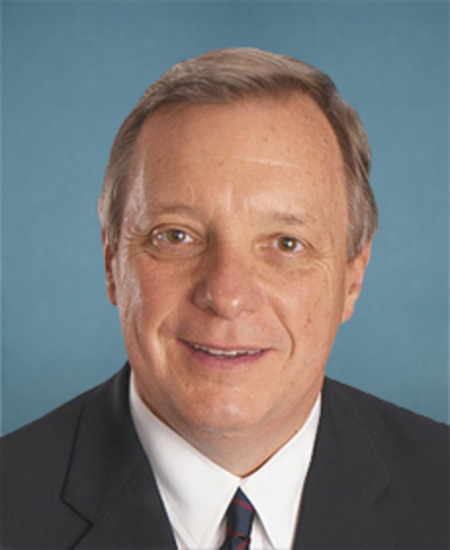
Sen. Richard J. Durbin
Sponsored bills
Maddy summaryThe Protecting Employees and Retirees in Business Bankruptcies Act of 2024 strengthens worker and retiree protections during business bankruptcies by raising the priority for wage claims from $10,000 to $20,000, creating new claims for lost pension and retirement benefits, and requiring courts to prioritize job preservation in asset sales. The bill restricts bankrupt companies from modifying or rejecting collective bargaining agreements without meeting specific criteria, limits executive compensation upon exit from bankruptcy, and establishes mechanisms to recover excessive executive payments made before bankruptcy. It ensures severance pay is deemed earned upon layoff, prioritizes WARN Act damages, and creates new requirements for preserving retiree benefits and maintaining employee benefits during bankruptcy proceedings. The legislation focuses on ensuring bankruptcy proceedings prioritize the financial security of workers and retirees over executive compensation and other considerations.
Maddy summaryThis bill extends funding for existing reentry programs through 2029, updating previous expiration dates from 2023 to 2029. It specifically adds new provisions requiring funded programs to address substance use disorders through peer recovery services, case management, overdose education, and access to reversal medications, as well as provide reentry housing services. The bill directly affects state and local reentry demonstration projects, family-based substance abuse treatment programs, prison/jail educational initiatives, job training grants, and nonprofit mentoring services. These changes maintain current program structures while expanding access to critical health and housing supports for individuals reentering communities after incarceration.
Maddy summaryThis bill reauthorizes $500 million annually for the Great Lakes Restoration Initiative (GLRI) program during fiscal years 2027 through 2031. It directly affects the federal program responsible for cleaning up and protecting the Great Lakes ecosystem, including addressing pollution, invasive species, and habitat restoration. The key provision adds a specific, multi-year funding level to the existing law, ensuring consistent financial support for ongoing restoration projects in the Great Lakes region.
Maddy summaryThe National Quantum Initiative Reauthorization Act of 2024 reauthorizes and expands federal efforts to advance quantum information science, engineering, and technology across multiple government agencies. It establishes new initiatives including quantum centers at the National Institute of Standards and Technology, a Quantum Reskilling, Education, and Workforce (QREW) Coordination Hub, and quantum testbeds to accelerate practical applications development. The bill strengthens international cooperation on quantum research, enhances workforce development through education and training programs, and addresses quantum supply chain vulnerabilities. The reauthorization will run until December 30, 2034, with specific funding allocations for agencies like NIST and the National Science Foundation to support these efforts.
Maddy summaryThis bill prohibits bankruptcy courts from approving or ordering the release of liability for entities other than the debtor (nondebtor releases) in Chapter 11 bankruptcy cases. It specifically prevents courts from discharging, releasing, or modifying claims against non-debtors (like companies or individuals not in bankruptcy) or blocking creditors from pursuing claims against them. The law applies to all pending or future bankruptcy cases and includes limited exceptions, such as when non-debtors consent in writing after receiving clear notice. It directly affects creditors who might lose claims against third parties and businesses that previously relied on such releases in bankruptcy plans. The bill aims to ensure victims of harm can pursue liability against responsible parties, not just the bankrupt entity.
Maddy summaryThis resolution designates December 2, 2024, as "World Nuclear Energy Day" to commemorate the historical milestones of nuclear energy development, including the first controlled nuclear chain reaction (1942) and the first commercial nuclear power plant (1957). It recognizes nuclear energy's role in providing nearly 20% of U.S. electricity, supporting over 70,000 direct jobs, and contributing to carbon-free power and national security. The resolution encourages public acknowledgment of nuclear energy's contributions to clean power, innovation, and global energy leadership, without creating new laws or affecting specific groups.
Maddy summaryThis bill authorizes the U.S. Mint to produce three commemorative coins honoring Roberto Clemente: $5 gold, $1 silver, and half-dollar clad coins, with specified quantities (50,000 gold, 400,000 silver, 750,000 half-dollars). The coins must feature Clemente’s image and include inscriptions like "Roberto Clemente" and "2027," with surcharges ($35, $10, and $5 per coin respectively) funding the Roberto Clemente Foundation for youth sports, education, and disaster relief. All coins must be sold between January 1, 2027, and December 31, 2027, at face value plus surcharge, with the foundation audited for fund use. The legislation affects no citizens or policies - it solely creates a commemorative coin program.
Maddy summaryThe PREVAIL Act (S 2220) aims to strengthen the U.S. patent system by making patent challenges more reliable and reducing repetitive proceedings. It requires Patent Trial and Appeal Board reviews to be heard by at least three members, prevents members who decided to institute a review from hearing it, and establishes rules to prevent multiple challenges to the same patent in different forums. The bill also changes the burden of proof in patent challenges, requiring petitioners to prove unpatentability by "clear and convincing evidence" for original claims, and mandates that all patent fees be used specifically for USPTO operations rather than diverted to general government funds. These changes directly affect patent owners, challengers, and the Patent Trial and Appeal Board, aiming to make the patent system more effective for inventors and innovators.
Maddy summaryThis resolution designates November 2024 as "National Lung Cancer Awareness Month" and includes specific observances: the first week of November as "National Women's Lung Cancer Awareness Week" and the second Saturday of November as "National Lung Cancer Screening Day." It expresses support for increasing public awareness, education, and research on lung cancer screening, treatment, and disparities - particularly for high-risk groups like veterans, Black men, and non-smokers. The resolution does not create new laws or funding but aims to encourage public health efforts to address low screening rates (currently 3-7% of at-risk individuals) and improve early detection. It directly affects the public, healthcare providers, and advocacy groups by promoting educational activities during this designated period.