

Maddy summaryThis bill, titled the Stop Militarizing Our Streets Act of 2026, would prohibit the Department of Defense from selling or purchasing certain weapons and ammunition in the commercial marketplace. It directly affects the Department of Defense, private contractors, and firearms dealers by restricting access to military-grade assault weapons and high-caliber ammunition. The law requires dealers to meet strict background check standards, maintain detailed electronic records, implement security measures, and complete mandatory training on recognizing illegal activity. Additionally, the bill mandates annual reporting to Congress on government-owned plants that produce firearms and ammunition for commercial sale.
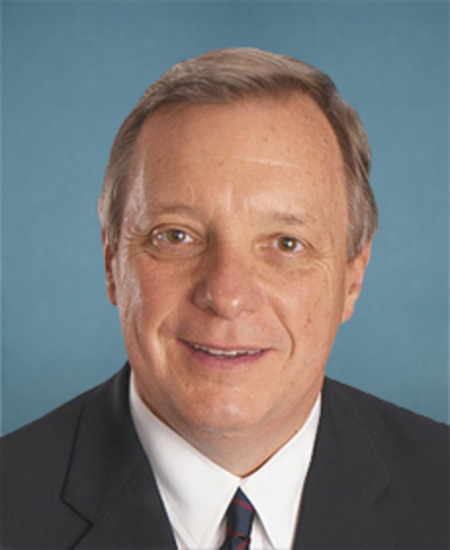
Sen. Richard J. Durbin
Sponsored bills
Maddy summaryThis bill, titled the Family Grocery and Farmer Relief Act, aims to increase competition in the U.S. meatpacking industry by requiring the Federal Trade Commission to break up large companies that control multiple types of meat processing. It prohibits major meatpacking firms from operating in more than one protein line (beef, pork, or poultry) and mandates divestiture of assets for companies that exceed market concentration thresholds. The legislation also targets foreign-owned meatpacking companies by requiring them to divest U.S. operations and includes provisions to prevent vertical consolidation between packers and feedlots. Additionally, the bill directs the FTC to use existing authority to address unfair pricing practices and authorizes funding for farmers' cooperatives and small businesses to acquire divested meatpacking facilities.
Maddy summaryThe Promoting Dental Health Act extends federal funding for oral health programs through 2031, directly supporting community dental health initiatives and disease prevention efforts. The bill updates the authorization periods for two specific programs under the Public Health Service Act, shifting coverage from previous years to the 2027-2031 timeframe. This reauthorization allows continued government support for oral health promotion activities without requiring new legislation to maintain existing funding streams.
This joint resolution directs the President to remove U.S. Armed Forces from hostilities within or against Iran unless a declaration of war or authorization to use military force for such purpose has been enacted. The resolution specifies that it shall not be construed to prevent the United States from defending against an attack on the United States or its personnel or facilities in other nations.
Maddy summaryThis resolution designates March 6, 2026, as "National Speech and Debate Education Day" to recognize the value of speech and debate programs in schools. It does not create new laws or funding but encourages educational institutions, businesses, and communities to celebrate and promote these programs. The resolution highlights how speech and debate education develops communication, critical thinking, and civic skills for students. It directly affects schools, teachers, and students participating in these programs by raising awareness of their importance. The Senate formally designates the date and urges nationwide participation in honoring this educational focus.
Maddy summaryThis bill, the PrEP Access and Coverage Act of 2026, requires most health insurance plans to cover HIV prevention medication without charging patients any cost-sharing fees. It directly affects people enrolled in private insurance, Medicare, Medicaid, and other government health programs by mandating that these plans cover the medication, related lab tests, and follow-up care without requiring prior approval. The law also prohibits insurance companies from denying life, disability, or long-term care insurance to individuals taking HIV prevention medication and requires a public education campaign to increase awareness about the medication.
Maddy summaryThis bill, known as the DISCLOSE Act of 2026, strengthens campaign finance transparency by requiring corporations, labor organizations, Super PACs, and other entities to disclose more information about their spending and funding sources. It closes loopholes that allow foreign nationals to contribute to U.S. elections by expanding disclosure requirements and prohibiting foreign money in ballot initiatives and referenda. The legislation also mandates that certain advertisements include lists of top funders and requires reporting of spending related to federal judicial nominations. Additionally, it streamlines administrative processes for challenging campaign finance laws and ensures coordination between the Federal Election Commission and financial authorities to enforce these rules.
Maddy summaryThis bill, called the BRAVE Burma Act, extends the existing sanctions law on Burma by ten years and requires the President to annually assess whether specific Burmese entities and individuals should face sanctions. It mandates the creation of a Special Envoy for Burma with ambassadorial rank to coordinate U.S. diplomatic efforts, including working with international partners to impose sanctions and arms embargoes on the Burmese military. The legislation also directs the Treasury Department to limit Burma's shareholding benefits at the International Monetary Fund if the State Security and Peace Commission remains in power, while allowing the President to waive this restriction for national interest reasons.
Maddy summarySRES 624 is a symbolic Senate resolution designating the week of March 2-6, 2026, as "National Social and Emotional Learning Week." It recognizes the role of social and emotional learning (SEL) in supporting students' academic success, well-being, and long-term outcomes, citing research on SEL's benefits. The resolution does not create new laws or funding but encourages federal agencies to advance SEL initiatives. It directly affects no specific group, as it is a non-binding expression of support. The resolution was introduced by Senators Durbin, Kaine, Van Hollen, and others.
Maddy summaryThe Smarter Sentencing Act of 2026 reduces mandatory minimum prison sentences for certain federal drug offenses involving couriers who only transport or store drugs or money. Under the bill, couriers face reduced minimum sentences of 5 years instead of 10 years for major drug offenses, and 2 years instead of 5 years for lesser offenses, while maintaining longer sentences for repeat offenders or those with serious prior convictions. The law applies to cases sentenced after enactment and allows courts to reduce sentences for past cases upon motion. The bill also directs the Sentencing Commission to update sentencing guidelines within 120 days and requires the Attorney General to report on how cost savings from reduced sentences will be used to address prison overcrowding and improve law enforcement spending.