

Maddy summaryThis bill, known as the Fair Wages for Home Care Workers Act, would change federal labor rules to require overtime pay and minimum wage protections for certain babysitters who currently do not receive these benefits. It specifically targets casual babysitting jobs that are irregular or intermittent and not performed by individuals whose primary occupation is babysitting. The law would also clarify that trained medical professionals like nurses and home health aides remain exempt from these new requirements, ensuring the changes apply only to casual domestic caregivers. By amending the Fair Labor Standards Act of 1938, the bill aims to extend wage protections to a specific group of home care workers while maintaining existing exemptions for professional medical staff.
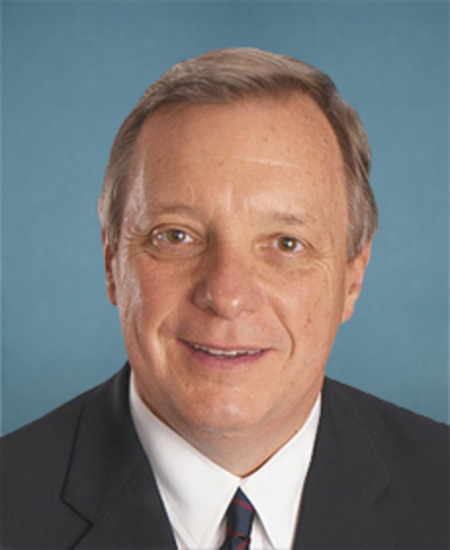
Sen. Richard J. Durbin
Sponsored bills
Maddy summaryThis bill requires the Attorney General to seek the return of any payments made to the President that are tied to their official position and would not have been paid to a private citizen. It defines covered payments as settlements or judgments paid from federal funds after January 20, 2025, that relate to the President's status or authority. The law directs courts to consider factors like whether government officials involved had personal ties to the President or whether the payment exceeded normal amounts for similar claims. Any recovered funds would be transferred to the Public Integrity Section of the Justice Department, and the Comptroller General must report on significant payments over $1 million within 180 days.
Maddy summaryThis bill, titled the Working Americans' Tax Cut Act, proposes two main tax changes: it creates an alternative maximum tax rate of 25.5% for low- and middle-income individuals earning less than 175% of a cost-of-living exemption, and it imposes a progressive surcharge on high-income individuals earning over $1 million. The low-income provision calculates taxes based on income above a living expense threshold that adjusts annually with inflation, while the high-income surcharge applies rates of 5%, 10%, and 12% to income brackets above $1 million, $2 million, and $5 million respectively. Both provisions use modified adjusted gross income as the base for calculations and apply to taxable years beginning after December 31, 2025. The bill would directly affect individual taxpayers by altering how their income is taxed under the Internal Revenue Code.
Maddy summaryThis bill would prohibit the Social Security Trust Funds from investing in cryptocurrency or any crypto-related investments. It directly affects the Social Security system by amending the Social Security Act to ban digital assets and related financial products from the fund's investment portfolio. The legislation defines "digital asset" using the existing definition from the GENIUS Act and includes various crypto-related investments such as funds tied to digital asset futures, stocks of companies deriving value from digital assets, and other assets whose value depends on cryptocurrency. This change would remove cryptocurrency from the list of allowable investments for Social Security's trust funds.
Maddy summaryThis bill provides temporary funding to ensure Transportation Security Administration (TSA) employees continue receiving standard pay and benefits during a potential government funding gap between February 14, 2026, and when regular fiscal year 2026 appropriations are enacted. It directly affects TSA employees who might otherwise face pay interruptions if Congress fails to pass a full-year budget by that date. The bill authorizes using Treasury funds for standard pay, allowances, and benefits during this interim period, with these costs later charged to the appropriate future appropriations. The funding expires automatically on September 30, 2026, or when regular appropriations are passed, whichever occurs first.
Maddy summaryThis bill creates a new Proprietary Education Interagency Oversight Committee composed of representatives from multiple federal agencies including the Department of Education, Consumer Financial Protection Bureau, Department of Justice, and others. The committee will coordinate oversight of for-profit colleges that receive federal student aid, share complaint information among agencies, and publish an annual report on institutional performance and enforcement actions. The bill also establishes a 'For-Profit College Warning List' that would publicly identify institutions facing lawsuits, settlements, or federal assistance suspensions, requiring written responses from schools before publication.
Reclaim Trade Powers Act This bill repeals the statute that directs the President to take certain actions, such as imposing a tariff of up to 15% for up to 150 days on articles imported into the United States, when necessary to address large and serious U.S. balance-of-payments deficits or certain other situations that present fundamental international payments problems.
Living Donor Protection Act of 2025 This bill prohibits life insurance, disability insurance, and long-term insurance carriers from denying or otherwise restricting coverage for living organ donors. Specifically, carriers may not deny, cancel, vary premiums, or otherwise impose conditions on policies based on an individual's status as a living organ donor. The bill also expressly specifies that recovery from organ-donation surgery constitutes a serious health condition that entitles eligible employees to job-protected medical leave. In addition, the Department of Health and Human Services must update educational materials on living organ donation to include information about the benefits and risks of living organ donation and the impact of donation on insurance access, particularly with respect to the bill's changes.
Maddy summaryThis bill would extend the time limit for prosecuting foreign bribery offenses under the Foreign Corrupt Practices Act from the current standard to 10 years. It directly affects individuals and companies accused of bribing foreign officials by giving prosecutors more time to build cases. The law would apply to all such offenses committed after the bill's enactment, except those occurring within five years before the law takes effect. The provision includes a sunset clause, meaning it would expire eight years after being enacted.
Maddy summaryThe Supplemental Security Income Restoration Act of 2026 updates eligibility rules and benefit amounts for the Supplemental Security Income (SSI) program, which provides financial assistance to low-income individuals with limited resources. The bill increases income and resource limits for SSI recipients, exempts certain retirement accounts and tribal welfare payments from counting toward eligibility limits, and extends the SSI program to U.S. territories including Puerto Rico, the U.S. Virgin Islands, Guam, and American Samoa. Additionally, the legislation repeals a marriage penalty that previously reduced benefits for married couples and clarifies how various state tax credits and in-kind support are treated when determining eligibility.