Veterans Dental Care Eligibility Expansion and Enhancement Act This bill modifies and expands the provision of dental care by the Department of Veterans Affairs (VA), including by expanding care to include all veterans enrolled in the VA health care system, implementing a program of education to promote dental health, and implementing a student loan reimbursement program for qualified dentists, dental hygienists, and oral surgeons who agree to accept positions within the VA's dental workforce.
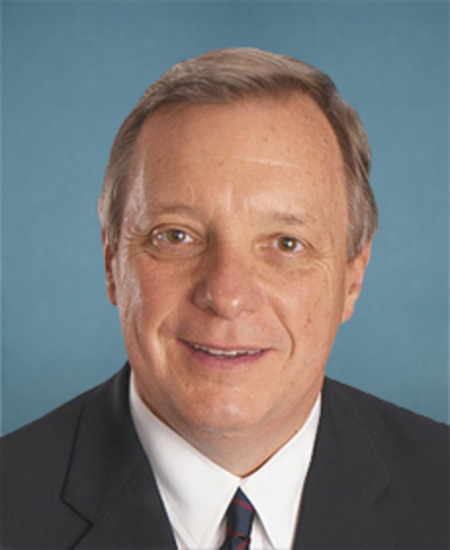
Sen. Richard J. Durbin
Sponsored bills
Freedom to Vote Act This bill addresses voter registration and voting access, election integrity and security, redistricting, and campaign finance. Specifically, the bill expands voter registration (e.g., automatic and same-day registration) and voting access (e.g., vote-by-mail and early voting). It also limits removing voters from voter rolls. Next, the bill establishes Election Day as a federal holiday. The bill declares that the right of a U.S. citizen to vote in any election for federal office shall not be denied or abridged because that individual has been convicted of a criminal offense unless, at the time of the election, such individual is serving a felony sentence. The bill establishes certain federal criminal offenses related to voting. In particular, the bill establishes a new criminal offense for conduct (or attempted conduct) to corruptly hinder, interfere with, or prevent another person from registering to vote or helping someone register to vote. Additionally, the bill sets forth provisions related to election security, including by requiring states to conduct post-election audits for federal elections. The bill outlines criteria for congressional redistricting and generally prohibits mid-decade redistricting. The bill addresses campaign finance, including by expanding the prohibition on campaign spending by foreign nationals, requiring additional disclosure of campaign-related fundraising and spending, requiring additional disclaimers regarding certain political advertising, and establishing an alternative campaign funding system for certain federal offices.

Veterans Preventive Health Coverage Fairness Act This bill eliminates veterans' copayments for medication, hospital care, and medical services related to preventive health services provided by the Department of Veterans Affairs. The bill expands the definition of preventive health services to include (1) evidence-based items or services that have an A or B rating in the recommendations of the United States Preventive Services Task Force; (2) immunizations that have a recommendation from the Advisory Committee on Immunization Practices of the Centers for Disease Control and Prevention with respect to the individual involved; and (3) with respect to women, the preventive care and screenings provided for in the Health Resources and Services Administration Preventive Services Guidelines in effect as of the date of enactment of this bill.
This resolution supports the designation of October 3-October 9, 2021, as National 4-H Week. It also (1) recognizes the important role of 4-H in youth development and education, and (2) encourages all citizens to recognize 4-H for the significant impact the organization and members have made and continue to make by empowering young people with the skills needed to lead for a lifetime.
Improving Care for Veterans Act This bill requires state homes that receive funding from the Department of Veterans Affairs (VA) to have a governing body that is legally responsible for establishing and implementing policies regarding the management and operation of the home. A state home is a home established by a state for veterans who are disabled by age, disease, or otherwise and are incapable of earning a living because of such disability. The term also includes a home that furnishes nursing home care for veterans. Additionally, the bill requires the VA to provide payments for states to assist state homes in the hiring and retention of infection preventionists.
Maddy summarySRES 420 is a Senate resolution honoring the late Adlai Ewing Stevenson III, a former U.S. Senator from Illinois who served from 1970 to 1981. The resolution expresses the Senate's condolences to his family, recognizes his decades of public service - including roles as an Illinois state legislator, treasurer, and Senator - and highlights his work on issues like energy policy and ethics reform. It directs the Senate to extend heartfelt condolences to his spouse and children, communicate the resolution to the House of Representatives, and adjourn in his memory. As a memorial resolution, it has no policy impact and solely serves to formally commemorate his life and career.
Maddy summarySRES 421 is a symbolic Senate resolution supporting National Domestic Violence Awareness Month. It formally recognizes the goals of this observance, commends domestic violence victim advocates, service providers, crisis hotline staff, and first responders, and acknowledges survivors' strength. The resolution expresses the Senate's sense that Congress should continue raising awareness about domestic violence and supporting programs that assist survivors, hold perpetrators accountable, and prevent future violence. This resolution does not create new laws or allocate funding but serves as a statement of congressional support for existing efforts.
This resolution recognizes (1) the celebration of Hispanic Heritage Month from September 15 - October 15, 2021; and (2) the integral role of Latinos and their manifold heritage in the economy, culture, and identity of the United States.
Helping American Victims Afflicted by Neurological Attacks Act of 2021 or the HAVANA Act of 2021 This bill specifically authorizes the Central Intelligence Agency, the Department of State, and other agencies to provide payments to agency personnel who incur brain injuries from hostilities while on assignment. Specifically, the bill allows agency personnel and their families to receive payments for brain injuries that are incurred (1) during a period of assignment to a foreign or domestic duty station; (2) in connection with war, insurgency, hostile acts, terrorist activity, or other agency-designated incidents; and (3) not as the result of willful misconduct. The bill's authority applies to injuries incurred before, on, or after the date of the bill's enactment. Agencies must submit classified reports on the bill's implementation, including the number of payments made and the amount of each payment. Since 2016, some intelligence, diplomatic, and other governmental personnel have reported experiencing unusual cognitive and neurological impairments while on assignment (particularly abroad), the source of which is currently under investigation. Symptoms were first reported by personnel stationed in Cuba and have since been collectively referred to as Havana Syndrome .
This resolution honors and commends the women who served in the Navy Women Accepted for Voluntary Emergency Service (WAVES) during World War II. Additionally, the resolution recognizes that the WAVES opened opportunities for women and contributed vitally to the victory of the United States and Allies in World War II.