

Maddy summaryThis resolution supports designating April 11-17, 2026, as "Black Maternal Health Week." The designation aims to bring national attention to the maternal and reproductive health crisis in the United States, specifically emphasizing the importance of reducing maternal mortality and morbidity among Black women and birthing people.
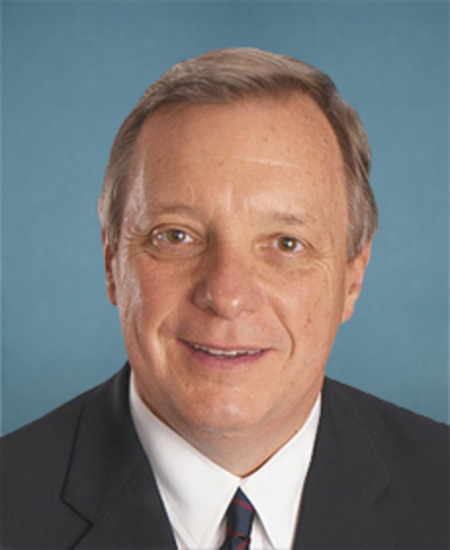
Sen. Richard J. Durbin
Sponsored bills
Maddy summaryThe Prison Libraries Act of 2026 directs the Attorney General to create a grant program for states and territories to improve library services for incarcerated individuals, aiming to support reintegration and reduce recidivism. To receive funding, applicants must submit a detailed plan that includes proof of an existing or planned physical library and data demonstrating a need for the services. The grants can be used for a wide range of activities such as hiring qualified librarians, providing digital and financial literacy training, offering art and cultural programs, and establishing partnerships with local public libraries. The legislation explicitly prohibits using the funds for general prison operations, staff salaries unrelated to libraries, or basic needs like food and healthcare. Additionally, the act authorizes $10 million annually from 2026 to 2031 and requires that no fees be charged to inmates for accessing books, computers, or educational materials.
Maddy summaryThis Senate resolution (SRES 670) expresses support for the goals of the 2026 Day of Silence, an event designed to highlight anti-LGBTQI+ bullying, harassment, and discrimination faced by individuals in K-12 schools. It focuses on improving the educational environment for all students, particularly LGBTQI+ young people, by drawing attention to issues like unequal educational opportunity and a lack of civil rights protections. The resolution encourages states, cities, and local school districts to adopt laws and policies that explicitly prohibit bullying and discrimination against students, teachers, and other school staff based on their sexual orientation, gender identity, or sex characteristics.
Maddy summaryThis bill expands the Federal Communications Commission's existing rules against robocalls to cover all phone numbers, not just residential lines, and allows individuals to sue for violations regardless of how many calls they receive. It also clarifies the legal definition of an automatic dialing system to include machines that use pre-set lists of numbers or dial without human intervention. By removing the "residential" restriction, the law aims to protect both home and business phone users from unwanted automated calls.
Maddy summaryThe Stop CHEATERS Act directs the Internal Revenue Service to increase its enforcement efforts against high-income individuals and large corporations while also expanding taxpayer support services. To achieve this, the bill appropriates billions of dollars over several years to fund IRS investigations, hire additional staff, purchase vehicles, and modernize outdated technology systems. Additionally, the legislation requires the IRS Commissioner to submit regular reports to Congress detailing plans to shift auditing resources toward wealthy taxpayers and analyzing collection gaps across different income levels.
Maddy summaryThis bill, titled the "Keep Public Funds in Public Schools Act," repeals two sections of the Internal Revenue Code. It eliminates Section 25F, which provides a tax credit for contributions made to scholarship granting organizations. Additionally, the bill repeals Section 139K, which allows certain educational assistance to be excluded from an individual's gross income. These changes primarily affect taxpayers who currently claim these credits or exclusions, and organizations involved in scholarship grants or providing educational assistance. The amendments generally take effect for taxable years ending after December 31, 2026.
Maddy summaryThe REDUCE Act requires transmission organizations to allow aggregators - companies that combine electricity demand from multiple retail customers - to bid into power markets. This applies specifically to utilities distributing over 4 million megawatt-hours annually, overriding state laws that previously blocked such participation. The Federal Energy Regulatory Commission must issue implementing rules within one year of the law's passage. The bill directly affects large utilities and demand aggregation companies by enabling new market participation mechanisms.
Maddy summaryThe Combating Illicit Xylazine Act places xylazine - a veterinary sedative increasingly found in illicit drug mixtures - into Schedule III of the Controlled Substances Act, subjecting it to federal regulation as a controlled substance. It specifically allows veterinary use without requiring registration of the ultimate user (e.g., pet owners or veterinarians) if xylazine is dispensed by a registered veterinarian or pharmacy with a vet prescription and used for animals owned by the user, under their care, or in authorized animal programs. The bill provides a one-year delay for labeling and packaging requirements and a 60-day delay for registration and recordkeeping for veterinary use to ease implementation. Additionally, it adds xylazine to the Arcos tracking system for controlled substances and mandates two congressional reports on illicit use prevalence within 18 months and 4 years of enactment.
Great Lakes Restoration Initiative Act of 2025 or the GLRI Act of 2025 This bill reauthorizes through FY2031 the Great Lakes Restoration Initiative, which carries out programs and projects to protect and restore the Great Lakes.
Maddy summaryThe Security And Freedom Enhancement Act of 2026, known as the SAFE Act, introduces new rules for how U.S. intelligence agencies collect and use information about Americans and people in the United States. The bill requires the FBI to conduct regular audits of its data queries, obtain additional approvals before searching for information about elected officials and judges, and create detailed records of all searches. It also limits when government agencies can access Americans' communications without a warrant and restricts intelligence agencies from purchasing personal data from private companies about people in the United States. The law increases transparency by requiring more detailed reports to Congress and the public about surveillance activities, and it expands the role of independent reviewers in court proceedings related to intelligence gathering.