

In committee Nov 21, 2024
1 co-sponsor
Total votes
1,044
all sessions
Attendance
100%
3 missed
Higher than 92% of chamber peers
With party
93%
of cast votes
Higher than 93% of chamber peers
Bipartisan score
4%
crosses aisle rarely
Lower than 95% of chamber peers
Sponsored
1,083
bills & resolutions
Near the chamber average
Committees
13
assignments
1,083 bills and resolutions
Sponsored bills
Total
1,083
Primary
70
Co-sponsor
1,013
This page
1,083
matching current filters
Defining Male and Female Act of 2024
Maddy summaryThis bill codifies biological definitions of sex in federal law, defining "male" and "female" based on reproductive anatomy (sperm-producing vs. egg-producing systems) as determined at birth. It requires federal agencies and laws to interpret terms like "sex," "male," and "female" according to these biological definitions, explicitly stating that gender identity does not equate to sex. The bill directly affects how federal agencies and programs interpret these terms in existing laws, regulations, and policies, including those related to facilities, sports, and equal treatment. It does not create new programs but mandates that federal interpretations align with these biological definitions, excluding gender identity from the definition of sex or gender.
In committee Nov 20, 2024
1 co-sponsor
A resolution recognizing National Native American Heritage Month and celebrating the heritages and cultures of Native Americans and the contributions of Native Americans to the United States.
Maddy summarySRES 897 is a Senate resolution designating November 2024 as National Native American Heritage Month and recognizing the Friday after Thanksgiving as Native American Heritage Day, as established by the 2009 Native American Heritage Day Act. It formally acknowledges the contributions of Native Americans to U.S. history, culture, and society, including their roles in agriculture, environmental stewardship, military service, and the influence of Indigenous governance concepts on the U.S. Constitution. The resolution encourages the public to observe these designations through educational programs and activities. As a ceremonial resolution, it does not create new laws or directly affect any individuals or communities.
Passed Nov 19, 2024
1 co-sponsor
Secure Rural Schools Reauthorization Act of 2023
Maddy summaryThis bill extends the Secure Rural Schools program, which provides payments to counties and states with federal land, through 2026. It also adjusts related deadlines for special projects on federal land and county fund expenditures, pushing them to 2028 and 2029 respectively. Additionally, the bill adds a pilot program allowing regional foresters to appoint resource advisory committee members, set to end on October 1, 2028. These changes maintain funding stability and administrative flexibility for rural communities dependent on federal land management.
Passed Nov 14, 2024
0 co-sponsors
Stand with Israel Act
Maddy summaryS 5303, the Stand with Israel Act, prohibits U.S. federal funds from being used to support the United Nations or its entities if those entities restrict Israel's full participation as a member state. Specifically, it blocks funding for UN contributions when the UN expels, downgrades, or suspends Israel's membership or limits its ability to engage equally with other member states. This bill directly affects how U.S. taxpayer money is allocated to the UN, requiring the Department of State and other agencies to withhold funds under these circumstances. The law amends the United Nations Participation Act of 1945 to enforce this restriction.
In committee Nov 13, 2024
1 co-sponsor
Alzheimer’s Accountability and Investment Act
Maddy summaryThis bill requires the National Institutes of Health (NIH) Director to submit an annual budget estimate for Alzheimer's research initiatives to the President for transmission to Congress, starting in fiscal year 2024. It specifically mandates including estimates of personnel needs alongside funding projections, based on recommendations from the National Alzheimer's Project Act. The law directly affects NIH operations by establishing a formal, recurring reporting requirement for Alzheimer's-related funding. This is not a new funding measure but a procedural change to improve transparency and accountability in budget planning for these initiatives. The bill amends Section 2 of the National Alzheimer's Project Act to add this annual reporting obligation.
Signed into law Oct 1, 2024
1 co-sponsor
NAPA Reauthorization Act
Maddy summaryThe NAPA Reauthorization Act (S 133) extends the National Alzheimer’s Project through 2035, replacing previous 2025 deadlines. It requires annual progress evaluations on research, risk reduction, and health equity, with new provisions to promote healthy aging, address Alzheimer’s risk factors, and expand focus to underserved groups - including people with Down syndrome and historically high-risk populations. The bill mandates updated advisory committee membership, including individuals with Alzheimer’s diagnoses and representatives from underserved communities. These changes directly affect federal health agencies, researchers, and healthcare planning efforts focused on Alzheimer’s prevention and care.
Signed into law Oct 1, 2024
1 co-sponsor
A resolution honoring the life of James Ralph Sasser, former Senator for the State of Tennessee.
Maddy summarySRES 888 is a ceremonial Senate resolution honoring the late James Ralph Sasser, a former U.S. Senator from Tennessee (served 1976-1993). It formally expresses the Senate’s "profound sorrow" over his death and requests the Secretary of the Senate transmit the resolution to his family. The resolution has no policy impact or direct effect on any individuals or entities - it is solely a commemorative gesture. As a procedural resolution, it does not create new laws or alter existing policies.
Passed Sep 26, 2024
1 co-sponsor
A resolution designating the week of October 6, 2024, through October 12, 2024, as "Religious Education Week" to celebrate religious education in the United States.
Maddy summarySRES 860 designates the week of October 6-12, 2024, as "Religious Education Week" to recognize the role of religious education in the United States. The resolution calls on all 50 states, territories, and the District of Columbia to accommodate students who wish to attend religious classes during school hours through released time programs. It highlights religious education's contribution to moral, civic, and personal development, citing historical and legal references like the Pierce v. Society of Sisters and Zorach v. Clauson Supreme Court cases. The resolution is non-binding and symbolic, focusing on awareness rather than new policy requirements.
In committee Sep 25, 2024
1 co-sponsor
A resolution expressing support for the designation of October 7 through October 12, 2024, as "National 4-H Week".
Maddy summaryThis resolution (SRES 887) is a symbolic Senate expression of support for designating October 7-12, 2024, as "National 4-H Week." It does not create new laws or funding but formally recognizes the 4-H youth development program, which serves nearly 6 million young people nationwide through community-based projects in health, science, and leadership. The resolution highlights 4-H’s role in fostering youth leadership and its partnership with land-grant universities and the USDA. It directly affects the 4-H organization, its 500,000 volunteers, and the youth members participating in the program.
Passed Sep 25, 2024
1 co-sponsor
Ask Maddy
·
AI policy assistant
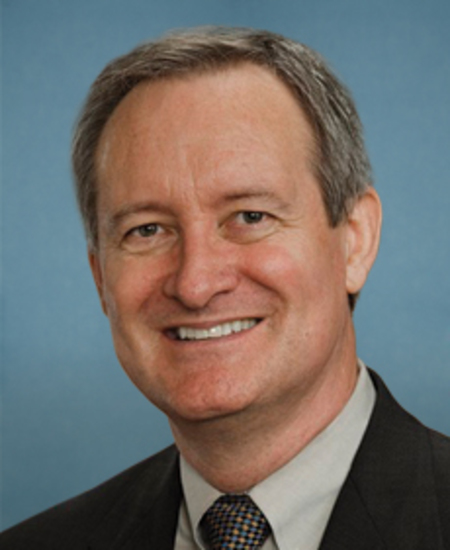
Ask Maddy about Mike Crapo
Scope: indiana
Hi! I can help you understand Mike Crapo's legislative record. What would you like to know?
Try one of these
i
Maddy answers using official bill text and legislative records. Always verify before sharing.
Sources cited inline