

Russian Federation Suspension Act of 2022 This bill requires U.S. representatives to various international organizations to advocate and vote for certain positions relating to Russia, such as (1) calling for the U.N. Human Rights Council to convene a special session on Russia's human rights violations committed during its invasion of Ukraine, (2) opposing Russia's access to International Criminal Police Organization (INTERPOL) systems, and (3) opposing financial assistance to Russia other than assistance that would support a core U.S. interest. The bill also prohibits U.S. law enforcement and executive agencies from recognizing INTERPOL Red Notices issued by Russia. (INTERPOL is an international police organization that facilitates cooperation in law enforcement matters. A Red Notice is a request from an INTERPOL member state seeking the location and arrest of wanted persons for extradition or a similar action.)
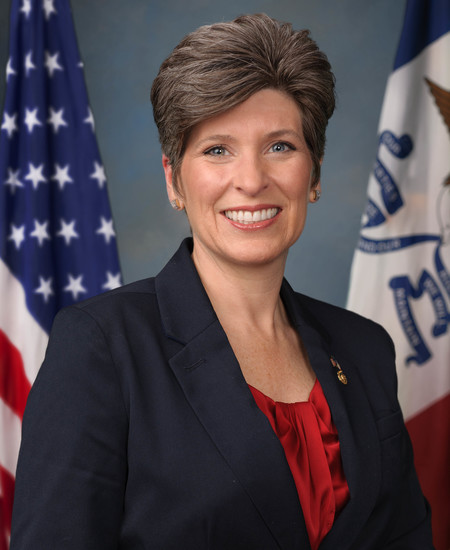
Sponsored bills
Small Lenders Exempt from New Data and Excessive Reporting Act or the Small LENDER Act This bill exempts certain financial institutions and transactions from the Consumer Financial Protection Bureau (CFPB) reporting requirements with respect to data about small business credit applications. Under the bill, the requirements apply only to financial institutions that originate at least 500 credit transactions to small businesses in each of the preceding two years. The bill further defines small businesses as those with annual revenue of $1 million or less. Currently, the CFPB has proposed a rule that the requirements apply only to financial institutions that originate at least 25 annual credit transactions to small businesses in each of the preceding two years. The rule further defines small businesses as those with annual revenue of $5 million or less.
Hearing Small Businesses Act of 20 22 This bill requires the U.S. Fish and Wildlife Service and the Internal Revenue Service to seek and consider the advice of small entities about a proposed or interim final rule before publishing the rule if the rule will have a significant economic impact on a substantial number of small entities.
Maddy summarySRES 565 is a ceremonial Senate resolution honoring the late Representative Don Young (R-AK), who served 49 years in the U.S. House of Representatives - the longest tenure of any Alaska representative and the 45th Dean of the House. The resolution commemorates his life, service, and legacy, including his work on landmark legislation like the Trans-Alaska Pipeline authorization and the Alaska Native Claims Settlement Act. It contains no policy changes or new laws; instead, it directs the Senate to mourn his passing, honor his bipartisan service, and transmit a copy to his family. This is a purely symbolic resolution with no direct impact on constituents or legislation.
Protecting Survivors from Traumatic Brain Injury Act of 2022 This bill requires the Department of Health and Human Services to collect and analyze data about brain injuries resulting from domestic and sexual violence and publish its findings.
Continuing Emergency Support for Restaurants Act This bill provides an additional $48 billion in FY2021 for the Restaurant Revitalization Fund and designates specified amounts for fund administrative expenses and audits of grants made from the fund. The fund was established in response to COVID-19 to make grants to eligible food and beverage purveyors for covering specified costs such as payroll, operational expenses, and paid sick leave. The bill designates the funding as emergency spending, which is exempt from discretionary spending limits.
This resolution designates March 24, 2022, as National Women in Agriculture Day. It also recognizes the important role of women in agriculture as producers, educators, leaders, mentors, and more
Cannabidiol and Marihuana Research Expansion Act This bill establishes a new, separate registration process to facilitate research on marijuana. Specifically, the bill directs the Drug Enforcement Administration (DEA) to follow specified procedures to register (1) practitioners to conduct marijuana research, and (2) manufacturers to supply marijuana for the research. The bill allows certain registered entities (including institutions of higher education, practitioners, and manufacturers) to manufacture, distribute, dispense, or possess marijuana or cannabidiol (CBD) for the purposes of medical research. Additionally, the bill directs the DEA to register manufacturers and distributors of CBD or marijuana for the purpose of commercial production of an approved drug that contains marijuana or its derivative. Finally, the bill includes various other provisions, including provisions that require the DEA to assess whether there is an adequate and uninterrupted supply of marijuana for research purposes; prohibit the Department of Health and Human Services (HHS) from reinstating the interdisciplinary review process for marijuana research; allow physicians to discuss the potential harms and benefits of marijuana and its derivatives (including CBD) with patients; and require HHS, in coordination with the National Institutes of Health and relevant federal agencies, to report on the therapeutic potential of marijuana for various conditions such as epilepsy, as well as the impact on adolescent brains and on the ability to operate a motor vehicle.
This joint resolution nullifies the rule titled Patient Protection and Affordable Care Act; Updating Payment Parameters, Section 1332 Waiver Implementing Regulations, and Improving Health Insurance Markets for 2022 and Beyond , which was issued by the Centers for Medicare & Medicaid Services and the Department of the Treasury on September 27, 2021. The rule expands the open enrollment period for individual health coverage and rescinds the previous interpretation of certain requirements relating to Section 1332 waivers (also known as State Innovation Waivers or State Relief and Empowerment Waivers).
This concurrent resolution expresses the sense of Congress that (1) it opposes the establishment of a new Palestinian consulate in Jerusalem, (2) any establishment of a new consulate or diplomatic mission in Jerusalem should not move forward without congressional approval through the passage of new legislation, and (3) the presence of a United States diplomatic mission devoted to a non-state actor in Israel's sovereign capital would be an affront to the territorial integrity of a long-standing U.S. partner and ally.