

Maddy summaryThe FASD Respect Act (S.1800) establishes a new federal program within the Health and Human Services (HHS) Department to address fetal alcohol spectrum disorders (FASD). It directly affects individuals with FASD, their families, and healthcare providers by requiring HHS to fund research, improve diagnostic standards, and build state and tribal capacity for prevention and support services. Key provisions include creating FASD Centers for Excellence to develop culturally appropriate screening tools, train medical and social service professionals, and maintain national resource directories for FASD care. The bill mandates HHS to report on progress within four years and authorizes $5 million annually for fiscal years 2024-2028 to support these efforts.
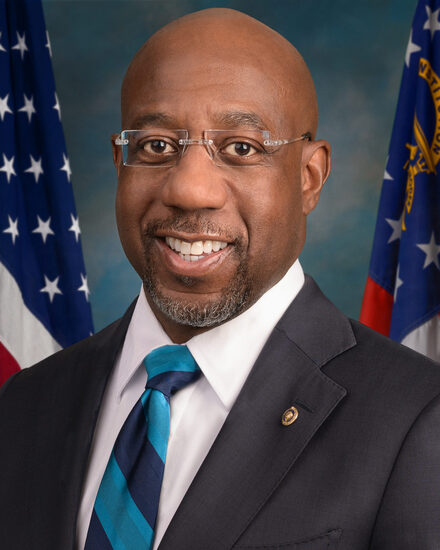
Sen. Raphael G. Warnock
Sponsored bills
Maddy summaryThis bill requires banks with over $10 billion in assets to claw back certain executive compensation if the bank fails. It directly affects executives, directors, and controlling shareholders at large banks that cause significant financial harm or fail. The key provision mandates recovery of salary, bonuses, equity awards, and other covered compensation paid within the prior three years when a bank becomes insolvent or is resolved. Any recovered funds must be deposited into the Deposit Insurance Fund. This amends existing banking law to strengthen accountability for executive pay during bank failures.
Maddy summaryS.Res. 229 designates May 2023 as "National Brain Tumor Awareness Month" in the U.S. Senate. The resolution encourages public awareness of brain tumors, supports research for better treatments, and honors individuals affected by the disease, including those living with or battling brain tumors. It does not create new laws or allocate funding but serves as a symbolic recognition of the health impact of brain tumors.
Maddy summaryThis resolution (SRES 230) symbolically recognizes the 102nd anniversary of the 1921 Tulsa Race Massacre, a violent attack by a White mob that killed an estimated 300 Black residents and destroyed the Greenwood District in Tulsa, Oklahoma - a thriving Black business community known as "Black Wall Street." It honors the victims and survivors, condemns the historical and ongoing legacy of racial violence, and encourages U.S. schools and universities to include education about the massacre in curricula. As a non-binding resolution, it does not enact new laws or policies but serves as a formal acknowledgment by the Senate of this pivotal event in American history.
Maddy summaryThis bill (S 1774, the ASSIST Act) increases federal funding for mental health and substance use disorder services provided in schools and school-based health centers. It raises the federal medical assistance percentage (FMAP) to 90% for eligible state expenditures on these services starting 12 months after enactment, directly benefiting public schools, school-based health centers, and students needing these services. The bill also creates a new grant program through the HHS Secretary to fund eligible entities (like school districts, universities, or tribal schools) to hire more licensed mental health providers, with requirements for cultural competence, reporting on provider numbers and retention, and a ban on using funds for threat assessment teams. These provisions aim to expand access to school-based mental health care without reducing funding for other Medicaid services.
Maddy summaryThis resolution (SRES 209) is a symbolic Senate measure recognizing May as Asian American, Native Hawaiian, and Pacific Islander Heritage Month. It formally celebrates the historical contributions of these communities to the United States, highlighting their diverse cultural impact and achievements. The resolution does not create new laws or policies - it simply encourages the Senate to observe the month with recognition of these communities' roles in U.S. history. It follows longstanding tradition, as May was chosen to honor key milestones including the arrival of Japanese immigrants and Chinese laborers on the transcontinental railroad.
Maddy summaryS 1688, the "Yes In My Backyard Act," requires local governments receiving Community Development Block Grant (CDBG) funds to report on plans to adopt specific housing-friendly land use policies. It directly affects cities and counties that administer CDBG programs by mandating annual submissions describing their progress on 22 policy examples, such as allowing duplexes in single-family zones, reducing parking requirements, or streamlining permitting. The bill does not require adoption of these policies but tracks jurisdictions' efforts to remove barriers to affordable housing. This reporting mechanism aims to address discriminatory zoning while keeping existing CDBG funding rules intact.
Maddy summaryThis bill would create a federal paid family and medical leave insurance program, providing wage replacement benefits for workers who need time off for family or medical reasons. Eligible workers would receive up to $4,000 per month (with a minimum of $580), calculated as 85% of the first $1,257 in monthly earnings, 69% of the next $2,243, and 50% of any amount above that. The program would be funded through 0.2% payroll taxes on both employees and employers, administered by the Social Security Administration. It would directly affect workers who meet income requirements, with benefits available for up to 60 caregiving days per benefit period.
Maddy summaryThis bill removes barriers for people with drug-related convictions seeking government assistance. It amends welfare law (PRWORA) to allow states to provide Temporary Assistance for Needy Families (TANF) benefits to individuals with such convictions through state programs. It also invalidates state rules that deny Supplemental Nutrition Assistance Program (SNAP) food aid based on drug convictions and adds incarcerated individuals scheduled for release within 30 days to SNAP eligibility. The law directly affects formerly incarcerated people seeking welfare or food assistance in states that previously restricted these benefits due to past drug offenses.
Maddy summaryThe Forest Data Modernization Act of 2023 requires the USDA Forest Service to update how it collects and reports forest data, particularly focusing on forest carbon and land use. It mandates new data collection methods like timber product studies and nationwide woodland owner surveys, and adds specific requirements for tracking forest carbon (including soil carbon) and improving data consistency across reports. The bill also requires the Secretary to submit updated strategic plans every 5 years, detailing plans to integrate remote sensing technology, expand data collection for carbon stocks at multiple levels, and improve transparency. All collected data must remain publicly accessible while protecting confidential information about plot locations and individual woodland owners.