

Maddy summaryThe Outdoors for All Act establishes a federal grant program to fund outdoor recreation projects in underserved communities. It provides funding for eligible entities (like cities, counties, tribes, or nonprofits) to acquire land for parks or develop outdoor facilities in qualifying areas - urban regions with 25,000+ people, adjacent clusters, or tribal lands. Grants prioritize projects that improve park access in low-income neighborhoods, engage youth, create jobs, and support cultural gathering spaces, while requiring a 100% cash or in-kind match (with possible waivers). Funds cannot cover maintenance, indoor facilities, or restricted-access land, and recipients must submit annual progress reports to the Interior Secretary.
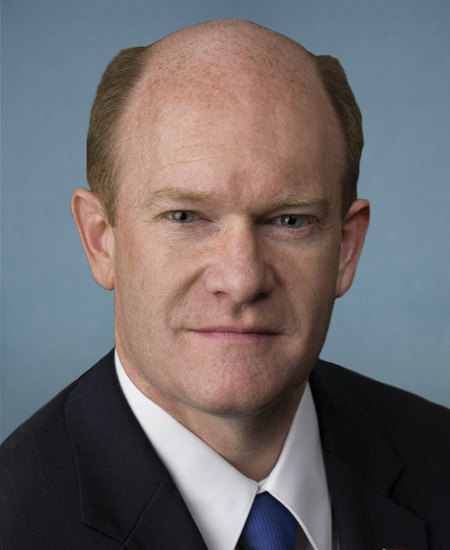
Sen. Christopher A. Coons
Sponsored bills
Maddy summaryThis resolution (SRES 63) is a symbolic Senate measure formally celebrating Black History Month. It acknowledges the contributions of African Americans to U.S. history and society, recognizes the origins of Black History Month (beginning as Negro History Week in 1926), and encourages nationwide reflection on this history. The resolution does not create new laws or policies but serves as a formal Senate acknowledgment of the significance of Black History Month in February. It aims to honor the legacy of African American pioneers and promote learning about their impact on the nation.
Maddy summaryThis symbolic Senate resolution designates March 3, 2023, as "National Speech and Debate Education Day" to honor the value of speech and debate programs in schools. It does not create new laws or affect specific groups, but encourages educational institutions, businesses, and communities to recognize these programs. The resolution highlights how speech and debate education develops communication, critical thinking, and civic skills in students. It formally affirms the importance of these programs without imposing any requirements or funding changes.
Maddy summaryThis bill requires U.S. Customs and Border Protection to ensure certain immigrants a meaningful opportunity to consult with legal counsel during immigration inspections at ports of entry or during deferred inspections. It directly affects individuals like lawful permanent residents returning from travel, refugees, asylees, and others with valid visas or parole documents. Key provisions mandate that CBP provide this consultation within one hour of starting secondary inspection, allow counsel to present evidence, and accommodate in-person meetings when possible. A special rule prevents lawful permanent residents from abandoning their status without first receiving legal advice, unless they provide a written waiver.
Maddy summaryThis bill allows veterans with combat-related disabilities and less than 20 years of service to receive both military retired pay and VA disability compensation simultaneously. Previously, such veterans had their retired pay reduced to avoid "concurrent receipt" of both benefits. The bill removes the 20-year service requirement for this group, applying specifically to those retired under Chapter 61 of Title 10 with a combat-related disability as defined in existing law. It does not change eligibility for veterans with non-combat disabilities or those with 20+ years of service.
Maddy summaryThe Keep Americans Safe Act bans the import, sale, manufacture, transfer, or possession of large capacity ammunition magazines (defined as holding more than 10 rounds) for most civilians, while exempting law enforcement officers, retired officers, and certain security personnel. It requires new magazines to have serial numbers and manufacturing dates, and allows federal funding for buy-back programs to remove these magazines from circulation. The law grandfathered existing magazines owned before enactment and excludes specific uses like campus law enforcement or nuclear facility security. This directly affects civilians owning high-capacity magazines but not police, military, or authorized security personnel.
Maddy summaryThe Countering Economic Coercion Act of 2023 establishes a framework for the U.S. to respond when foreign adversaries use economic coercion against U.S. trading partners. It authorizes the President to provide economic support to affected trading partners, such as reducing import duties or expediting export licenses, while also enabling measures against the foreign adversary like increasing duties on their goods. The bill requires the President to consult with Congress before implementing any support measures and to publish details of the economic coercion in the Federal Register. It emphasizes coordination with allies to address economic coercion as a shared challenge to the international trade system, with specific limitations on tariff changes to prevent indirect benefits to the foreign adversary.
Maddy summaryThis Senate resolution (SRES 25) recognizes January 2023 as "National Mentoring Month" to highlight the importance of mentoring relationships for young people. It acknowledges that one in three U.S. youth lacks a mentor outside their home and emphasizes mentoring's role in improving academic success, mental health, career development, and reducing delinquency. The resolution promotes expanding quality mentoring programs nationwide but does not create new laws or allocate funding. It serves as a symbolic gesture to encourage community, school, and workplace efforts supporting youth development through mentoring.
Maddy summaryThe Apprenticeship Hubs Across America Act of 2023 establishes a federal grant program to fund workforce intermediaries - organizations that help employers create apprenticeship programs in high-growth industries like healthcare, technology, and advanced manufacturing. These grants, up to $6 million per intermediary, require 20% non-Federal matching funds and support activities such as employer outreach, curriculum development, and apprenticeship support services for underrepresented groups. The bill specifically targets expanding apprenticeships in sectors with high job demand but few existing programs, such as professional services and healthcare. It mandates tracking program outcomes, including apprentice completion rates and job placement, to evaluate effectiveness over time.
Maddy summaryThis bill amends the Family and Medical Leave Act to create a new eligibility standard for education support professionals (ESP) in public schools, such as paraeducators, secretaries, custodians, and food service workers. It allows these employees to qualify for leave if they’ve worked at least 60% of their expected monthly hours from the previous school year, rather than requiring full-time hours. Employers must maintain records of each employee’s expected monthly hours for review by the Secretary. The change directly affects school support staff in public K-12 schools and institutions of higher education funded by state taxpayers.