

Maddy summaryThis bill would exclude certain union-provided payments to workers during strikes from taxable income. Specifically, it adds a new tax code section (139M) to exempt "qualified strike benefits" - payments from tax-exempt labor organizations (like unions) that replace lost wages during strikes, lockouts, or work stoppages arising from labor disputes - from gross income calculations. The change applies to compensation received after December 31, 2025, and also updates the Earned Income Tax Credit rules to include these excluded benefits. It directly affects union members who lose wages due to labor disputes and rely on union financial support during work stoppages.
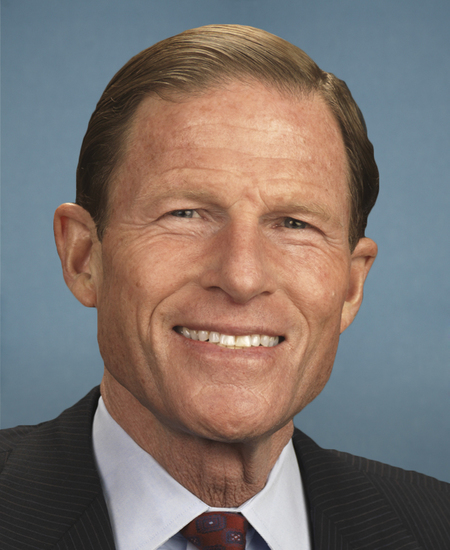
Sen. Richard Blumenthal
Sponsored bills
Maddy summaryThis bill establishes a federal 36% maximum interest rate for most consumer credit products, directly affecting borrowers using high-cost loans like payday, car title, and overdraft services. It closes loopholes by requiring all fees (including late fees, insurance, and ancillary charges) to be included in the rate calculation, replacing the current patchwork of state laws. The cap applies broadly, with limited exceptions for small application fees under specific conditions. This would prevent lenders from charging rates like 400% for payday loans or 17,000% for overdrafts, while requiring clear disclosure of the total fee-and-interest rate.
Maddy summaryThe FASTER Act repeals a requirement that aviation security fees be deposited into a general Treasury account subject to standard spending rules. Instead, it creates a dedicated account for these fees, allowing Transportation Security Administration (TSA) funds to be spent immediately - without waiting for annual appropriations or being blocked by anti-deficiency laws - to cover security screening costs. This directly affects TSA operations by streamlining funding for screeners and security equipment. The bill makes no new policy changes but removes bureaucratic delays in using aviation security fees as intended.
Maddy summaryS 2777, the Small Business RELIEF Act, exempts small businesses from import duties imposed under Executive Order 14257 (related to national emergencies) for goods they import. It requires the President to refund all duties paid under that order within 90 days of the bill's enactment. The bill directly affects small business concerns as defined by the Small Business Act (15 U.S.C. 632), which typically covers businesses with fewer than 500 employees. This policy change removes a financial burden on qualifying small importers and provides retroactive refunds for past payments.
Maddy summaryThis Senate resolution (SRES 383) commemorates the 80th anniversary of World War II's conclusion on September 2, 1945, with Japan's surrender, honoring veterans from both the Pacific and European theaters. It specifically mourns the casualties of the Battle of Okinawa (April-June 1945), reaffirms the Treaty of San Francisco (1951), and recognizes U.S. alliances in the Indo-Pacific region formed after the war. The resolution is purely ceremonial, expressing Senate gratitude and calling for public commemoration - no new policies or direct impacts on citizens are created.
Maddy summaryThis bill would make several administrative changes to the Social Security Administration, including exempting it from the jurisdiction of the Department of Government Efficiency (DOGE) and certain executive orders, restricting political appointees from accessing beneficiary data systems, and preventing closure of field offices while requiring maintenance of staff levels. It also creates new offices within the SSA for civil rights, transformation, and analytics, and provides additional funding for administrative costs and customer experience improvements. These provisions would directly affect how the SSA manages its operations, protects beneficiary data, and delivers services to beneficiaries. The bill's title is misleading as it does not address billionaires or their relationship with Social Security.
Maddy summaryThis bill expands eligibility for family and medical leave under the FMLA for paraprofessionals and education support staff (ESP) in schools. It lowers the required work hours for eligibility from 1,250 hours per year to 60% of the expected monthly hours for their specific role (based on the previous school year’s schedule). Employers must document each employee’s expected monthly hours in a file for the Secretary’s review. The law specifically covers school staff providing services like clerical work, food services, custodial duties, or student health support, aligning with existing definitions from education law.
Maddy summaryThis bill adds striking workers to the eligibility pool for unemployment insurance. It amends federal tax law (Internal Revenue Code §3304(a)) to allow workers unable to work due to labor disputes - like strikes or lockouts - to receive benefits starting 14 days after the dispute begins, or at specific triggers such as when an employer hires permanent replacements. It also removes work availability requirements for these workers under the Social Security Act. The policy directly affects workers participating in labor disputes who lose income due to strikes or lockouts.
Maddy summarySRES 374 is a non-binding Senate resolution expressing that Secretary of Health and Human Services Robert F. Kennedy Jr. lacks the confidence of the Senate and American people to serve in his role. The resolution cites specific actions including the termination of $11 billion in public health funding, mass firings of scientists (notably eliminating 8 Offices of Minority Health), replacing all 17 members of the vaccine advisory committee (ACIP) with critics of vaccines, and dismantling programs supporting maternal health, disability services, and chronic disease research. It alleges these actions violated federal law, undermined scientific integrity, and endangered public health during a measles outbreak. The resolution calls for the Secretary’s removal but has no legal effect, as it is a symbolic statement of disapproval.
Maddy summaryThe Nationwide Right To Unionize Act (S 2729) would repeal a federal law provision allowing states to enact "right-to-work" laws, which typically prevent unions from requiring workers to pay dues as a condition of employment. By removing this state-level exception, the bill would make it illegal for any state to have right-to-work laws, meaning workers in unionized workplaces across all 50 states could be required to pay union dues if their union and employer agree. This directly affects workers, unions, and employers in every state, particularly in the 27 states currently with right-to-work laws. The bill does not change existing union security agreements but eliminates state-level alternatives that restrict union dues collection.