

Maddy summaryS 2994, the Voter Purge Protection Act, prevents states from removing voters from registration lists based on non-voting or failure to respond to mail. It requires states to use verified evidence - like death records or permanent out-of-state moves - for removals, not just non-voting history. Voters removed must receive 48-hour notice with reinstatement options, and states must publicly announce list maintenance efforts. The bill also allows voters to update their address through election day at polling locations or central sites, ensuring continued eligibility after moving within the same state. This directly protects voters who might otherwise be incorrectly purged due to administrative errors or lack of contact.
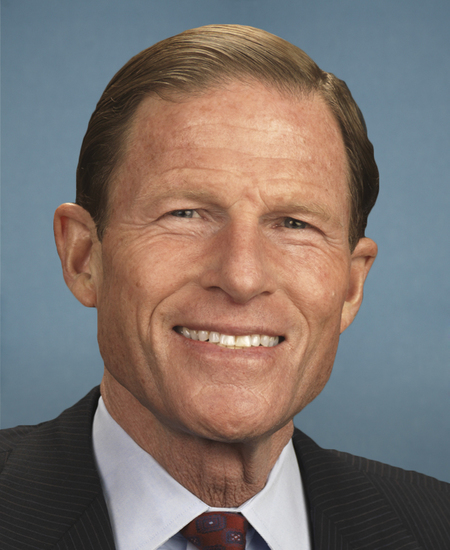
Sen. Richard Blumenthal
Sponsored bills
Maddy summaryThis Senate resolution (SRES 442) formally condemns recent Russian military incursions into NATO member countries' airspace, citing specific incidents in Poland, Romania, and Estonia during September 2025. It also condemns Russia's ongoing invasion of Ukraine and its refusal to negotiate an end to the war. The resolution reaffirms NATO's Article 5 commitment to collective defense, emphasizing that attacks on any member are considered attacks on all. As a symbolic resolution, it does not create new laws or policies but expresses the Senate's support for NATO allies facing these threats.
Maddy summaryThis non-binding Senate resolution expresses concern about rising book bans in schools and libraries, citing data showing over 6,800 individual book removals since July 2024 across 23 states. It highlights how bans disproportionately target books about race, LGBTQ+ experiences, and marginalized histories - such as *The Handmaid’s Tale* and *Maus* - and urges schools to follow established guidelines for handling book challenges. The resolution calls for returning books removed from military schools under recent executive orders and opposes content-based censorship in public education.
Veterans' Infrastructure and Transformation Act of 2025 or the VITAL Act of 2025 This bill addresses various policies and procedures related to Department of Veterans Affairs (VA) infrastructure and facilities, including those related to construction projects. The bill modifies the VA’s authority to share health care resources, including by providing for a simplified agreement process to share physical space (e.g., a building or parking facility) or common services (e.g., electricity). The bill also modifies the VA’s authority to lease its real property (enhanced-use leases). Specifically, the bill allows for the exchange of real property that is assessed to be of similar value and removes the cap on the length of an enhanced-use lease. The bill requires the VA to implement a seven-year pilot program to assess the feasibility and advisability of entering into enhanced-use leases for noncash consideration. Among other elements, the bill also authorizes the VA to use commercial codes and standards instead of or in addition to federal codes and standards in constructing or altering VA facilities, authorizes the VA to contract with private entities for comprehensive construction project management services, expands and extends the pilot program under which the VA may accept donations of real property and facilities, modifies the authority and responsibilities of the VA’s Director of Construction and Facilities Management, and requires the VA to consolidate certain employees and functions relating to facilities and infrastructure as well as acquisition and procurement.
Maddy summaryThis bill prohibits health care entities (like hospitals, clinics, and nursing facilities) and their for-profit owners from selling or leasing property to real estate investment trusts (REITs) if the deal risks weakening the entity's finances or public health. It requires the Health and Human Services (HHS) Secretary to review all such proposed transactions before they proceed. Violations can result in civil penalties up to $10,000 per incident, with states also having enforcement authority. The law directly affects health care providers participating in Medicare and their corporate owners, focusing on preventing financial instability through REIT arrangements.
Maddy summaryThis bill provides temporary relief to federal workers during government shutdowns by pausing specific civil obligations. It directly affects federal employees (including contractor employees) who are furloughed or working without pay, suspending actions like evictions, mortgage foreclosures, student loan collections, tax payments, and insurance lapses during the shutdown and for 30 days afterward. Key mechanisms include court-ordered stays for rent, mortgages, and loans; automatic student loan deferment; tax payment deferrals; and protection against insurance policy termination due to unpaid premiums. The relief applies only to civil matters (not criminal cases or child support) and requires court involvement for certain actions.
Maddy summaryS 2977, the FAST Justice Act, creates a 120-day timeline for the Merit Systems Protection Board (MSPB) to act on federal employee appeals. If the MSPB fails to take action within 120 days (excluding certain cases), affected federal employees or job applicants can file a civil lawsuit in federal court. The bill specifies where these lawsuits may be filed - based on where the personnel action occurred, where the employee would have worked, or the agency's main office - and ensures courts use the standard review applicable to MSPB decisions. This procedural change directly affects federal workers whose appeals are stalled at the MSPB, aiming to expedite resolution of personnel disputes.
Maddy summarySRES 422 is a non-binding Senate resolution recognizing polycystic ovary syndrome (PCOS) as a serious health condition affecting many women and girls. It formally supports designating September 2025 as "PCOS Awareness Month" to raise public and medical awareness about PCOS and its related health risks, including infertility, diabetes, heart disease, and mental health challenges. The resolution urges improved diagnosis, treatment, and research but does not create new laws or allocate funding. Introduced by Senators Warren, Fischer, Blumenthal, and others, it serves solely as an awareness tool without legal force.
Maddy summarySenate Resolution SRES 406 designates September 30, 2025, as "Impact Aid Recognition Day" to celebrate the 75th anniversary of the Impact Aid program. The program reimburses school districts near federal properties (such as military bases, Indian lands, and federal facilities) for lost tax revenue, ensuring they can provide quality education. This resolution formally recognizes the program’s role in supporting over 1,100 school districts serving more than 8 million students across 4.7 million acres of federally owned land. It is a ceremonial resolution with no new policy changes or funding.
Maddy summaryThis bill allows federal contractors, their employees, and certain federal grant recipients or District of Columbia government workers affected by government shutdowns to withdraw up to $30,000 (adjusted for inflation) from retirement plans without the usual 10% early withdrawal penalty. Withdrawals must be repaid within three years to avoid tax consequences, and the withdrawn amount is spread over three years for tax purposes. It specifically applies during periods of federal appropriations lapses (at least two weeks) when workers face unpaid leave or reduced pay. The bill modifies tax rules to treat these distributions as eligible for penalty-free access under defined circumstances.