

Maddy summaryS 3267, the ASAP Act, would require Medicare to cover early detection screening tests for Alzheimer's disease and related dementias starting January 1, 2028. The bill defines these tests as FDA-cleared or approved blood, genomic, or imaging-based screenings for pre-symptomatic or early-stage detection. It directly affects Medicare beneficiaries aged 65+ who may be at risk for Alzheimer's, ensuring coverage for these specific tests once approved. The key provision adds these screenings to Medicare's payment system under Section 1833(h)(1)(A) of the Social Security Act.
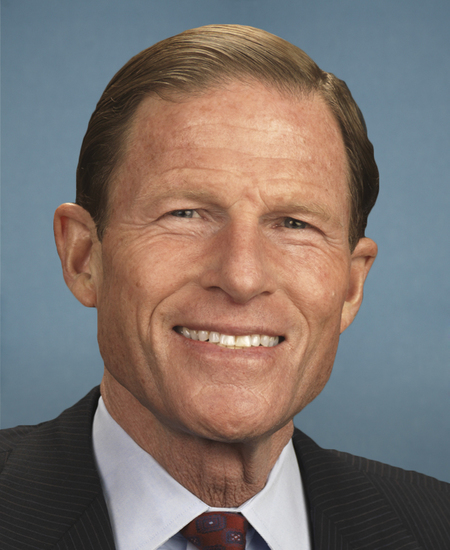
Sen. Richard Blumenthal
Sponsored bills
Maddy summaryThe SWIFT Act amends Social Security benefits to better support widows, widowers, and surviving divorced spouses with disabilities. It removes the previous age restriction requiring beneficiaries to be between 50 and 60 years old to receive full benefits, eliminates reductions for those claiming benefits before retirement age, and increases the age limit for dependent children from 16 to 18 (or 19 for full-time students). The bill creates new mechanisms to increase benefits for those who delay claiming, ensures current beneficiaries won't face reduced benefits due to these changes, and requires the Social Security Administration to provide clear information about survivors' benefits. These changes apply to benefits payable on or after January 1, 2027.
Maddy summaryThis bill amends fee structures under the Food Safety Modernization Act (FSMA) for food facilities and importers. It establishes a $15,000 base fee for 2026 and subsequent years (adjusted annually), provides a 1/3 fee reduction for qualifying small businesses (defined as facilities with <500 employees or importers meeting specific sales thresholds), and clarifies that fees fund facility oversight and the Voluntary Qualified Importer Program. The bill also increases funding caps for oversight activities and updates definitions to reduce ambiguity. It directly affects domestic/foreign food facilities, human/animal food importers, and small businesses meeting the defined criteria.
Maddy summaryThis bill prohibits child welfare agencies receiving federal funding from discriminating against children, youth, or prospective foster and adoptive parents based on religion, sex (including sexual orientation and gender identity), or marital status. It requires agencies to collect data on sexual orientation and gender identity of children in foster care and their prospective parents, and establishes a National Resource Center to improve services for LGBTQ youth. The bill also provides a private right to sue for individuals who experience discrimination and mandates cultural competency training for agency staff. It affects all state child welfare systems receiving federal funds, requiring compliance within one year of enactment. The legislation specifically aims to address the overrepresentation of LGBTQ youth in foster care and improve outcomes for this population.
Maddy summaryThis bill repeals sections 10101 through 10108 of the 2025 Farm Bill (Public Law 119-21) and restores the previous law that existed before those sections were enacted. It directly affects food security programs for American families and farmers by reverting to the prior provisions of the Farm Bill. The key mechanism is a simple repeal and restoration of pre-existing law, without creating new programs or altering current funding structures.
Maddy summaryThis bill prohibits employers from requiring employees to use forced arbitration for race discrimination claims. It directly affects workers who face discrimination based on race, color, or national origin in employment, making pre-dispute arbitration agreements unenforceable for such cases. The key mechanism requires courts - not arbitrators - to decide if an arbitration clause applies, ensuring employees can choose to pursue claims in court under federal, tribal, state, or local law. The law applies to all new or ongoing claims arising after its enactment.
Maddy summaryThis bill expands public service loan forgiveness for borrowers with federal student loans made after its enactment. It provides incremental forgiveness: 15% after 24 payments (2 years), an additional 15% after 48 payments (4 years), another 15% after 72 payments (6 years), and a final 15% after 96 payments (8 years), totaling 60% forgiven by year 8. After 120 payments (10 years) while working in public service, the entire remaining loan balance is canceled, with automatic deferment during processing. Borrowers must maintain public service employment and provide simplified employment certification via an automated system or basic form. It directly affects public service workers (e.g., teachers, firefighters, government employees) with qualifying federal student loans.
Maddy summaryThis bill (S 3222) requires electric and natural gas utilities to halt disconnections for non-payment during any government shutdown that causes a lapse in funding for the Department of Health and Human Services (HHS). It mandates that utilities must not disconnect service due to inability to pay, waive late fees and reconnection charges, and make reasonable efforts to restore service to disconnected households. The law applies to all consumers served by utilities operating under state regulatory authority during the period when HHS appropriations lapse. State regulators would oversee implementation but cannot require consumers to pay for costs incurred by utilities due to this moratorium, unless specific conditions are met.
Maddy summaryS 3206, the Transgender Health Care Access Act, authorizes $10 million annually for medical education grants to improve training on gender-affirming care in health professions schools and residency programs. It allocates $15 million yearly to expand transgender care capacity at community health centers and $5 million to support rural providers through collaborative training networks. The bill directly affects transgender patients by increasing access to specialized care and healthcare providers through new training requirements. It focuses on funding education and infrastructure improvements, with specific provisions for curricula development, provider training, and community health center capacity building.
Maddy summaryThe EXPERTS Act of 2025 increases transparency in federal rulemaking by requiring agencies to disclose conflicts of interest in studies submitted by interested parties, including funding sources and potential biases. It establishes an Office of the Public Advocate to help individuals participate in rulemaking, conduct social equity assessments, and ensure rules consider disproportionate impacts on protected classes. The bill also streamlines regulatory review processes, mandates justification for withdrawn rules, and penalizes entities that submit false information to agencies. These provisions apply to all federal agencies conducting rulemaking under the Administrative Procedure Act. The law aims to make regulatory processes more transparent, inclusive, and accountable to the public.