

Maddy summaryThis bill (S 3222) requires electric and natural gas utilities to halt disconnections for non-payment during any government shutdown that causes a lapse in funding for the Department of Health and Human Services (HHS). It mandates that utilities must not disconnect service due to inability to pay, waive late fees and reconnection charges, and make reasonable efforts to restore service to disconnected households. The law applies to all consumers served by utilities operating under state regulatory authority during the period when HHS appropriations lapse. State regulators would oversee implementation but cannot require consumers to pay for costs incurred by utilities due to this moratorium, unless specific conditions are met.
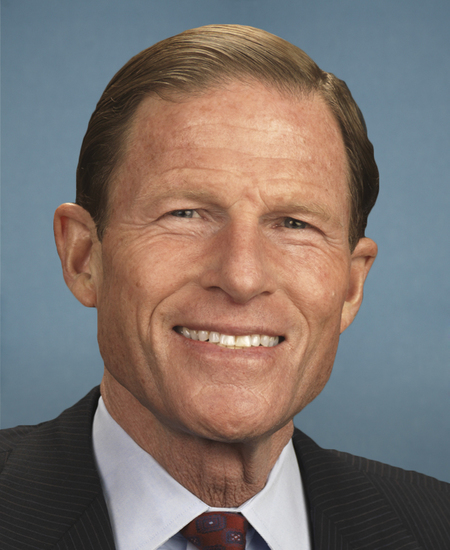
Sen. Richard Blumenthal
Sponsored bills
Maddy summaryS 3206, the Transgender Health Care Access Act, authorizes $10 million annually for medical education grants to improve training on gender-affirming care in health professions schools and residency programs. It allocates $15 million yearly to expand transgender care capacity at community health centers and $5 million to support rural providers through collaborative training networks. The bill directly affects transgender patients by increasing access to specialized care and healthcare providers through new training requirements. It focuses on funding education and infrastructure improvements, with specific provisions for curricula development, provider training, and community health center capacity building.
Maddy summaryThe EXPERTS Act of 2025 increases transparency in federal rulemaking by requiring agencies to disclose conflicts of interest in studies submitted by interested parties, including funding sources and potential biases. It establishes an Office of the Public Advocate to help individuals participate in rulemaking, conduct social equity assessments, and ensure rules consider disproportionate impacts on protected classes. The bill also streamlines regulatory review processes, mandates justification for withdrawn rules, and penalizes entities that submit false information to agencies. These provisions apply to all federal agencies conducting rulemaking under the Administrative Procedure Act. The law aims to make regulatory processes more transparent, inclusive, and accountable to the public.
Maddy summaryThis bill prohibits rental property owners and their agents from paying for or engaging in "coordinating functions" that involve collecting and analyzing rental price data across multiple properties to set rents or lease terms. It directly affects landlords, property management companies, and third-party coordinators who share pricing information or use algorithms to standardize rental rates. The key mechanism makes it unlawful to perform or pay for such coordination, treating it as a per se violation of antitrust laws under the Sherman Act and FTC Act. Enforcement is handled by the FTC, the Attorney General, and state attorneys general, with penalties including triple damages for affected tenants.
Maddy summaryThe Background Check Expansion Act requires most private firearm transfers between unlicensed individuals to go through a licensed dealer, who must conduct a background check as if the dealer were selling the firearm. Exceptions include transfers between close family members (like parents and children), law enforcement, temporary safety-related transfers (e.g., preventing domestic violence), and transfers for hunting or target shooting with specific safeguards. Licensed dealers must provide a notice about the background check requirement and have the buyer sign a certification form. The bill does not create a national gun registry and preserves states' authority to enact stricter firearm laws. It takes effect 180 days after enactment.
Maddy summarySRES 501 is a ceremonial Senate resolution recognizing November 2025 as National Native American Heritage Month. It encourages the American public to observe the month through programs and activities that celebrate Native American cultural contributions, heritage, and history. The resolution does not create new legal obligations or funding, serving solely as a symbolic acknowledgment of Native American communities' enduring impact on U.S. society.
Maddy summaryThis bill amends the Federal Tort Claims Act to create an exception preventing lawsuits against the President (or someone who becomes President while a case is pending) for any tort claim, regardless of when the incident occurred. It directly affects the President and future presidential candidates who might face civil lawsuits during their presidency. The key provision adds a new exception to federal law, blocking all such claims from proceeding in court. This is a procedural change to existing tort law, not a new policy affecting the general public. The bill would apply to any pending or future lawsuits against the President.
Maddy summaryThis bill amends 42 U.S.C. § 1983 (the main federal civil rights statute) by adding "of the United States" before "of any State" in its text. It would directly affect individuals seeking to sue federal officials for constitutional violations committed while acting under federal authority. The key mechanism is a narrow textual change to clarify that lawsuits can be brought against federal actors under this statute, similar to existing provisions for state officials. This is a procedural adjustment to existing law, not a new policy. (Note: This bill does not create new rights but modifies how an existing legal remedy applies.)
Maddy summaryThis bill (S 3196) gives most Department of Veterans Affairs (VA) employees the right to have a representative (like a union member or chosen person) present during any VA examination that might lead to disciplinary action, if the employee requests it. It directly affects VA workers in covered positions, excluding senior executives, certain appointed staff, and political appointees. The key provision requires the VA Secretary to provide this representation opportunity during such examinations, using the employee’s work time if needed. The bill aims to ensure VA employees have support during potentially disciplinary proceedings.
Maddy summaryThe Stop Ballroom Bribery Act restricts donations for specific properties tied to the President or Vice President, including White House grounds, Number One Observatory Circle, and monuments honoring them. It prohibits donations from individuals or entities involved in government litigation, seeking contracts/grants, lobbying the executive branch, or pursuing pardons or appointments. The bill requires prior approval from the National Park Service and Office of Government Ethics, mandates disclosure of meetings with officials, and bans donor recognition or anonymous contributions. It also imposes a two-year lobbying cooling-off period for donors and sets civil/criminal penalties for violations, including fines and disgorgement of benefits.