

This joint resolution directs the President to remove U.S. Armed Forces from hostilities within or against Iran unless a declaration of war or authorization to use military force for such purpose has been enacted. The resolution specifies that it shall not be construed to prevent the United States from defending against an attack on the United States or its personnel or facilities in other nations.
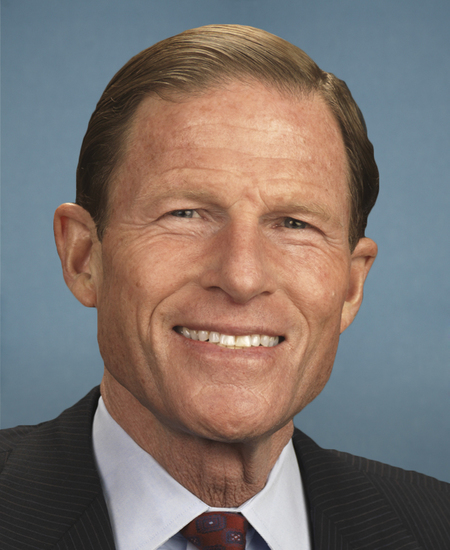
Sen. Richard Blumenthal
Sponsored bills
Maddy summaryThis bill, the PrEP Access and Coverage Act of 2026, requires most health insurance plans to cover HIV prevention medication without charging patients any cost-sharing fees. It directly affects people enrolled in private insurance, Medicare, Medicaid, and other government health programs by mandating that these plans cover the medication, related lab tests, and follow-up care without requiring prior approval. The law also prohibits insurance companies from denying life, disability, or long-term care insurance to individuals taking HIV prevention medication and requires a public education campaign to increase awareness about the medication.
Maddy summaryThis bill, known as the DISCLOSE Act of 2026, strengthens campaign finance transparency by requiring corporations, labor organizations, Super PACs, and other entities to disclose more information about their spending and funding sources. It closes loopholes that allow foreign nationals to contribute to U.S. elections by expanding disclosure requirements and prohibiting foreign money in ballot initiatives and referenda. The legislation also mandates that certain advertisements include lists of top funders and requires reporting of spending related to federal judicial nominations. Additionally, it streamlines administrative processes for challenging campaign finance laws and ensures coordination between the Federal Election Commission and financial authorities to enforce these rules.
Maddy summarySRES 624 is a symbolic Senate resolution designating the week of March 2-6, 2026, as "National Social and Emotional Learning Week." It recognizes the role of social and emotional learning (SEL) in supporting students' academic success, well-being, and long-term outcomes, citing research on SEL's benefits. The resolution does not create new laws or funding but encourages federal agencies to advance SEL initiatives. It directly affects no specific group, as it is a non-binding expression of support. The resolution was introduced by Senators Durbin, Kaine, Van Hollen, and others.
Maddy summaryThe Smarter Sentencing Act of 2026 reduces mandatory minimum prison sentences for certain federal drug offenses involving couriers who only transport or store drugs or money. Under the bill, couriers face reduced minimum sentences of 5 years instead of 10 years for major drug offenses, and 2 years instead of 5 years for lesser offenses, while maintaining longer sentences for repeat offenders or those with serious prior convictions. The law applies to cases sentenced after enactment and allows courts to reduce sentences for past cases upon motion. The bill also directs the Sentencing Commission to update sentencing guidelines within 120 days and requires the Attorney General to report on how cost savings from reduced sentences will be used to address prison overcrowding and improve law enforcement spending.
Maddy summaryThis bill would transition Puerto Rico from its current nutrition assistance block grant system to the federal Supplemental Nutrition Assistance Program (SNAP), aligning it with how other U.S. states receive food aid. The legislation requires Puerto Rico to submit an operational plan within 180 days, with the Department of Agriculture providing technical assistance and approval or feedback on the plan. During a five-year transition period, Puerto Rico would continue receiving consolidated block grant funds while gradually shifting to SNAP, with annual reports tracking funding adjustments needed for the change. Once the transition is complete, Puerto Rico would be formally recognized as a state for SNAP purposes and would receive funding based on the same cost-of-living adjustments applied to other states.
Maddy summaryThis resolution designates February 21-28, 2026, as "National FFA Week" to honor the National FFA Organization’s work in agricultural education. It recognizes FFA’s role in developing leadership and career skills for students (with over 1 million members nationally) and celebrates the 50th anniversary of Alaska’s State FFA Association, which has 19 chapters and 493 members. As a symbolic resolution, it has no legal effect but formally expresses Senate support for FFA’s mission.
Maddy summaryThis resolution (SRES 617) designates February 2026 as "Career and Technical Education (CTE) Month" to symbolically recognize CTE programs nationwide. It supports CTE's role in preparing students for high-demand careers by promoting workforce readiness through academic and technical skills training. The resolution encourages educators, counselors, parents, and school administrators to advocate for CTE as a valid educational pathway. As a non-binding Senate resolution, it does not create new laws or allocate funds but affirms bipartisan support for CTE's importance in workforce development.
Maddy summarySRES 620 designates February 28, 2026, as "Rare Disease Day" to promote awareness, encourage early diagnosis, and support research for rare diseases. The resolution recognizes the impact of rare conditions on over 30 million Americans living with more than 10,000 known rare diseases, acknowledging challenges like limited treatment options and diagnostic difficulties. As a symbolic gesture, it does not create new laws or policies but highlights ongoing efforts to address rare disease needs.
Maddy summaryThis bill, known as the Direct File Act of 2026, would establish a government-run online platform for taxpayers to prepare and file their individual income tax returns for free. It requires the Treasury Department to create a user-friendly system that uses IRS data to simplify the process, offers customer support, and is available in multiple languages and on mobile devices. The legislation also prohibits the Treasury from entering into agreements that would limit its ability to provide these tax preparation and filing services. Additionally, the bill allows eligible states to integrate their state tax filing with the federal system and provides funding to states that meet certain standards for doing so.