

Patsy T. Mink and Louise M. Slaughter Gender Equity in Education Act of 2021 This bill requires the Department of Education (ED) to establish an Office for Gender Equity to support state and local educational agencies, institutions of higher education, and elementary and secondary schools in fully implementing title IX of the Education Amendments of 1972, which prohibits discrimination on the basis of sex in federally funded education programs or activities. The office may provide grants and perform activities to reduce or prevent sex discrimination in all areas of education. The office must provide technical assistance and annual training to title IX coordinators and develop a handbook for conducting self-evaluations of title IX compliance. The training must address discrimination based on multiple characteristics, including race, ethnicity, national origin, disability status, religion, age, or actual or perceived sex. The office may award grants to eligible entities and partnerships that apply to carry out programs and activities designed to implement title IX and prevent and reduce sex discrimination, including programs that increase access to resources. ED must coordinate with the Institute of Education Sciences and other federal entities to investigate, identify, and disseminate best practices to (1) reduce and prevent sex stereotyping, bias, and discrimination in educational materials; (2) address sex-based harassment and violence on campuses; (3) develop counseling and career guidance training; (4) mitigate implicit bias in teaching and discipline; and (5) address the needs of students who face discrimination based on multiple characteristics.
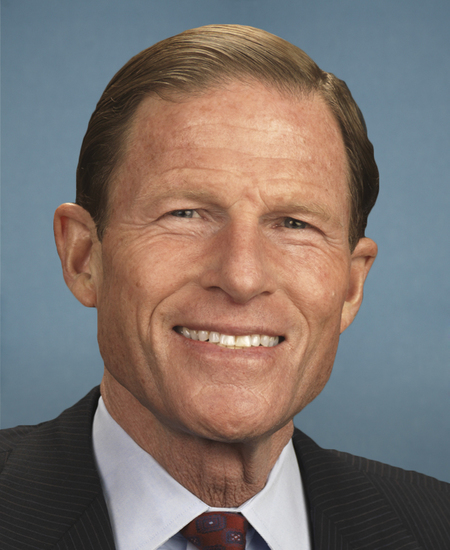
Sen. Richard Blumenthal
Sponsored bills
Commission to Study the Stigmatization, Criminalization, and Ongoing Exclusion and Inequity for LGBTQ Servicemembers and Veterans Act This bill establishes the Commission to Study the Stigmatization, Criminalization, and Ongoing Exclusion and Inequity for LGBTQ Servicemembers and Veterans. The Commission must identify and compile information about the history of military policy regarding homosexuality from 1778 onward, including regarding lesbian, gay, bisexual, transgender, and queer (LGBTQ) sexual orientation and gender identity. The Commission must hold public hearings, gather public testimony, examine lasting and disparate impacts of the discriminatory policies on the physical and mental well-being of members of the Armed Forces, and make recommendations on appropriate remedies.
Veteran Families Health Services Act of 2021 This bill addresses fertility treatments, counseling, and other health-related programs for veterans and members of the Armed Forces. Specifically, the bill requires the Department of Defense (DOD) and the Department of Veterans Affairs (VA) to provide fertility treatments and counseling to covered veterans and active duty service members or a spouse, partner, or gestational surrogate of such veteran or service member. A covered veteran or service member is a former or current member of the Armed Forces who has an infertility condition, unless it is demonstrable that the individual was completely infertile prior to serving in the Armed Forces. In the case of in vitro fertilization treatment, DOD and the VA may not furnish more than three completed cycles or six attempted cycles, whichever occurs first. DOD must establish procedures related to gamete retrieval and storage. Additionally, DOD must provide service members with the opportunity to cryopreserve and store their gametes prior to deployment to a combat zone or a hazardous duty assignment. DOD and the VA must share best practices and facilitate referrals for the furnishing of fertility treatment and counseling to eligible individuals. Fertility counseling and treatment are included within authorized VA medical services. The VA may pay the adoption expenses (for up to three adoptions) for a covered member who is enrolled in the VA health care system. The VA must facilitate specified reproduction and infertility research conducted collaboratively by DOD and the Department of Health and Human Services.
Puppies Assisting Wounded Servicemembers Act of 2021 or the PAWS Act of 2021 This bill requires the Department of Veterans Affairs (VA) to implement a grant program for the purpose of pairing service dogs with eligible veterans. Organizations that receive grants shall provide veterinary health insurance coverage, hardware, and travel expenses for each service dog and veteran participating in the program. Eligible veterans are those who (1) are enrolled in the VA health care system, (2) have been evaluated and treated for post-traumatic stress disorder (PTSD) but remain diagnosed with PTSD, (3) may benefit from a service dog, and (4) agree to successfully complete training provided by an eligible organization. Veterans are required to see a VA health care provider at least once every 180 days to determine whether the veteran continues to benefit from a service dog. Eligible organizations are nonprofit organizations that are accredited by a widely recognized accreditation organization, meet publicly available standards set forth by the Association of Service Dog Providers for Military Veterans, have expertise in the needs of veterans with PTSD, agree to cover all costs in excess of the grant amount to guarantee the benefits of the program, agree to reaccept or replace a service dog provided to a veteran, and submit an application to the VA. Any improvement in PTSD symptoms as a result of the provision of a service dog shall not affect the veteran's eligibility for any other VA benefits. The Government Accountability Office must report on the grant program.
CHAMPVA Children's Care Protection Act of 2021 This bill provides that a child shall be eligible for medical care under the Civilian Health and Medical Program of the Department of Veterans Affairs (CHAMPVA) until the child's 26th birthday, regardless of the child's marital status.
Puppies Assisting Wounded Servicemembers for Veterans Therapy Act or the PAWS for Veterans Therapy Act This bill implements a program and a policy related to service dog therapy for veterans. Specifically, the bill requires the Department of Veterans Affairs (VA) to implement a five-year pilot program to assess the effectiveness of addressing post-deployment mental health and post-traumatic stress disorder through a method where veterans train service dogs for veterans with disabilities. The bill also authorizes the VA to provide service dogs to veterans with mental illnesses, regardless of whether they have a mobility impairment.
Elder Abuse Protection Act of 2021 This bill provides statutory authority for the Elder Justice Initiative, which coordinates activities of the Department of Justice (DOJ) to combat elder abuse, neglect, and financial fraud. The bill requires DOJ's Elder Justice Coordinator to serve as the head of the initiative. The bill also requires the initiative to establish a national elder fraud telephone hotline, promote civil legal aid to victims of elder fraud and elder abuse, and make resources available online in English and Spanish.
Lori Jackson-Nicolette Elias Domestic Violence Survivor Protection Act This bill makes changes to the federal statutory framework that prohibits the shipment, transport, receipt, or possession of firearms or ammunition by an individual who is subject to a qualifying domestic violence court order. Under current law, a qualifying domestic violence court order must meet certain requirements, including to (1) be issued after a hearing of which the individual had notice and an opportunity to participate; and (2) restrain the individual from harassing, stalking, or threatening an intimate partner (i.e., a current or former spouse, a co-parent of a child, or a current or former cohabitant) or the child of an intimate partner. This bill expands the scope of qualifying domestic violence court orders to include an order that is issued after an ex parte hearing (i.e., a hearing with only one party present); restrains the individual from harassing, stalking, or threatening a dating partner or former dating partner; or restrains the individual from intimidating a witness. Current law also prohibits an individual who is convicted of a misdemeanor crime of domestic violence from shipping, transporting, receiving, or possessing firearms or ammunition. These restrictions generally only apply to spouses, co-parents, and cohabitants, and to offenses that involve physical force or deadly weapons. This bill expands the scope of these restrictions to include dating partners and offenses that involve stalking. Finally, the bill authorizes grants for state, local, and tribal governments to remove firearms and take other steps after a domestic violence court order is issued.
Fire Fighters and EMS Employer-Employee Cooperation Act This bill requires the Federal Labor Relations Authority to determine whether a state substantially provides fire and emergency medical services (EMS) personnel the right to form and join a labor organization; recognition by fire and EMS employers of the employees' labor organization, agreement to bargain with the organization, and reduction of any agreements to writing in a contract or memorandum of understanding; the right to bargain over hours, wages, and terms and conditions of employment; and arbitration or other mechanisms to resolve an impasse in collective bargaining negotiations. The bill makes the authority responsible for (1) determining the appropriateness of units for labor representation; (2) supervising elections; (3) conducting hearings and resolving complaints of unfair labor practices; and (4) protecting the right of employees to form, join, or assist any labor organization, or to refrain from doing so. An employer, fire and EMS personnel, or labor organization may not engage in a lockout, sickout, work slowdown, strike, or any other organized job action that will measurably disrupt the delivery of emergency services and is designed to compel an employer, fire and EMS personnel, or labor organization to agree to the terms of a proposed contract.
Washington, D.C. Admission Act This bill provides for admission into the United States of the state of Washington, Douglass Commonwealth, composed of most of the territory of the District of Columbia. The commonwealth shall be admitted to the Union on an equal footing with the other states. The Mayor of the District of Columbia shall issue a proclamation for the first elections to Congress of two Senators and one Representative of the commonwealth. The bill applies current District laws to the commonwealth and continues pending judicial proceedings. The commonwealth (1) shall consist of all District territory, with specified exclusions for federal buildings and monuments, including the principal federal monuments, the White House, the Capitol Building, the U.S. Supreme Court Building, and the federal executive, legislative, and judicial office buildings located adjacent to the Mall and the Capitol Building; and (2) may not impose taxes on federal property except as Congress permits. District territory excluded from the commonwealth shall be known as the Capital and shall be the seat of the federal government. The bill maintains the federal government's authority over military lands and specified other property. The bill provides for expedited consideration of a joint resolution repealing the Twenty-third Amendment to the Constitution, which provides for the appointment of electors of the President and Vice President. The bill continues certain federal authorities and responsibilities, including regarding employee benefits, agencies, courts, and college tuition assistance, until the commonwealth certifies that it is prepared to take over the authorities and responsibilities. The bill establishes the Statehood Transition Commission to advise the President, Congress, and District and commonwealth leaders on the transition.