

Maddy summaryThis bill amends U.S. immigration law to make certain DUI convictions grounds for inadmissibility and deportability. It adds new provisions stating that any non-citizen (alien) convicted of driving while intoxicated or impaired (as defined by state law, including DUI/DWI) is automatically inadmissible upon entry and deportable if already in the U.S. The law applies regardless of whether the offense is classified as a misdemeanor or felony under state or federal law. It directly affects non-citizens with such convictions, potentially preventing entry or leading to removal from the United States.
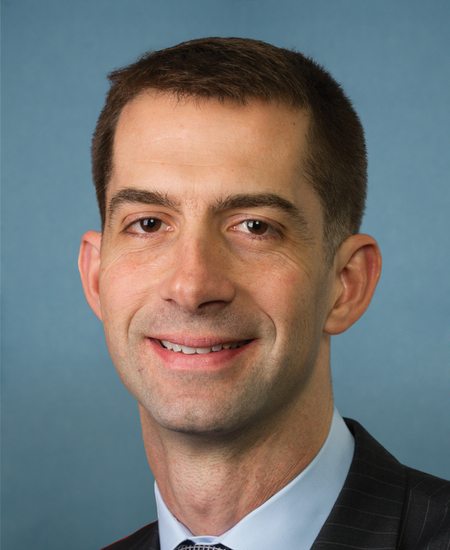
Sen. Tom Cotton
Sponsored bills
Maddy summaryS 3840 (Protect America’s Lands Act) prohibits national securities exchanges from processing transactions in securities issued by "natural asset companies." These are companies that manage land for conservation, restoration, or sustainable use of natural assets (like forests or wetlands) and ecosystem services (such as clean water or carbon absorption), without harming natural resources. The bill directly affects these conservation-focused companies and securities exchanges, banning exchanges from facilitating trades in their stocks or bonds. It creates a specific regulatory barrier for this emerging investment sector without altering broader securities rules. The law focuses on restricting how these natural asset investments can be traded, not on the conservation activities themselves.
Maddy summaryThis bill (S 3812, the FIREARM Act) changes firearm licensing enforcement by requiring the Attorney General to give licensees (like dealers) 30 business days to correct self-reported violations before taking action to revoke or deny license renewals. It adds a new 10-day judicial review option: licensees can bypass a hearing and request a federal court review of a revocation notice, with the revocation stayed during the court process. The bill also clarifies that minor or clerical errors are not considered "willful" violations and defines "self-reported violation" as one a licensee discloses before the Attorney General discovers it. These changes directly affect firearm license holders and the enforcement process under federal law.
Maddy summaryS 3814, the TUNNELS Act of 2024, prohibits the U.S. President from authorizing any U.S. government business (by employees, contractors, or grantees) in the Gaza Strip or West Bank if it would bypass existing terrorism sanctions. It specifically blocks actions that would terminate, waive, license, or remove sanctions under the Global Terrorism Sanctions Regulations or Foreign Terrorist Organizations Sanctions Regulations. The bill retroactively rescinds any prior actions taken before its enactment that allowed such sanction-avoiding activities. This directly affects U.S. government operations and funding in those regions by ensuring compliance with current terrorism-related sanctions.
Maddy summarySCONRES 28 is a non-binding concurrent resolution expressing Congress's opinion, not a law. It states that Hamas's hostage-taking of U.S. citizens on October 7, 2023, constitutes an attack on the U.S., affirms the President's constitutional authority (under Article II) to use military force to liberate hostages, and urges the President to exercise that authority. The resolution does not create new policy or change existing law, but formally declares congressional support for potential military action to free the six U.S. citizens still held by Hamas in Gaza.
Maddy summarySRES 553 is a ceremonial Senate resolution honoring Jean A. Carnahan, who served as Missouri’s first female U.S. Senator from 2001 to 2002 after her husband’s passing. The resolution expresses the Senate’s sorrow over her death, recognizes her service as First Lady of Missouri and U.S. Senator, and her advocacy for families and veterans. It directs the Senate Secretary to share the resolution with the House and Carnahan’s family, with no substantive policy changes or affected parties. This is a standard commemorative measure with no legislative impact.
This resolution supports the designation of February 17-February 24, 2024, as National FFA Week. It also (1) recognizes the important role of the National FFA Organization (Future Farmers of America) in developing the next generation of globally conscious leaders who will change the world; and (2) celebrates the 10th anniversary of the Give the Gift of Blue program, which has donated more than 17,000 FFA blue jackets to FFA members in need.
Maddy summaryS 3782, the Jalisco Cartel Neutralization Act, requires the Secretary of Defense to provide regular briefings to specific congressional committees about progress in targeting the leadership of the Jalisco New Generation Cartel (CJNG). The bill mandates these briefings - initially within 90 days of enactment and then every 90 days thereafter - to 10 designated Senate and House committees focused on national security, intelligence, and foreign policy. It does not create new funding or operational changes but establishes a procedural requirement for Congress to receive updates on U.S. efforts against the CJNG leadership. This bill directly affects the executive branch (via the Secretary of Defense) and the specified congressional committees.
Maddy summaryThis bill prohibits U.S. funding for the United Nations Relief and Works Agency for Palestine Refugees in the Near East (UNRWA) starting from its enactment date, ending all U.S. financial support for the agency in fiscal year 2024 and prior years. It also bans entry to the United States for individuals affiliated with UNRWA (except U.S. citizens, lawful permanent residents, or those covered by a specific UN headquarters agreement) and revokes tax-exempt status for UNRWA USA under U.S. tax law. These provisions directly affect UNRWA's operations, its staff and partners, and individuals linked to the agency seeking U.S. entry or tax benefits.
Maddy summaryThis bill (S 3708) redirects existing U.S. federal funds that were previously allocated for the United Nations Relief and Works Agency for Palestine Refugees in the Near East (UNRWA) to construct a physical barrier along the U.S. southwest border. It also prohibits all future U.S. funding for UNRWA beginning upon the bill's enactment. The key provisions are the immediate reprogramming of unspent UNRWA funds for border wall construction and a permanent ban on new UNRWA funding. This directly affects UNRWA's funding stream and the federal budget allocation for border security infrastructure.