

Maddy summaryThis bill establishes the William S. Knudsen Commission for American Defense-Industrial Mobilization to assess the U.S. defense industrial base and recommend improvements. The 12-member commission, appointed by congressional leaders and defense committee chairs, will review current production capacity, identify regulatory barriers (from agencies like EPA and DOE), and evaluate supply chain vulnerabilities. It must submit a report within one year, including strategies to boost domestic defense production capacity and reforms to federal policies affecting manufacturing. The commission will hold public hearings, consult industry experts, and provide interim briefings to Congress on its findings.
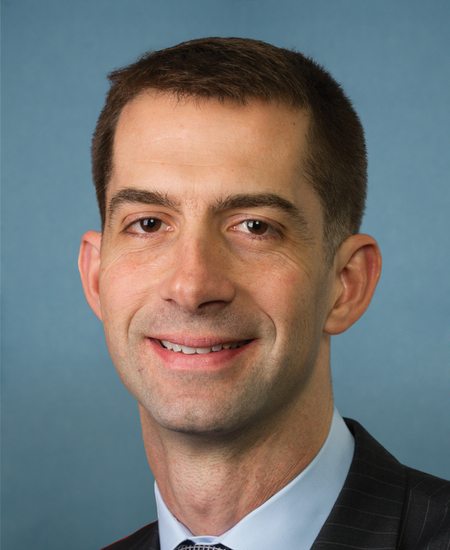
Sen. Tom Cotton
Sponsored bills
Maddy summaryThis bill reimposes tariffs on steel imports from Mexico at levels in effect before May 2019, requiring the Secretary of Commerce to maintain these duties for at least one year. It targets Mexican steel exporters directly, aiming to address alleged breaches of a 2019 trade agreement that the bill claims caused harm to the U.S. steel industry. The law also allows the President to set import limits (quotas) to reduce Mexican steel shipments back to pre-2019 trade volumes. Duties can only be lowered if U.S. officials certify Mexico has adopted compliant policies and will maintain them. The measure focuses on reversing increased steel imports from Mexico under the framework of the 2019 Joint Statement.
Maddy summaryS 3923 requires state and local law enforcement to hold criminal aliens for up to 48 hours to transfer to U.S. Immigration and Customs Enforcement (ICE), if ICE issues a detainer. It mandates that states cannot restrict sharing immigration status information with ICE and prohibits local agencies from blocking detainer compliance. The bill also creates a federal compensation program, funding states $750 million in 2025 (rising to $950 million annually through 2031) for detaining eligible criminal aliens - defined as those convicted of felonies or multiple misdemeanors who entered without inspection or violated visa status. States must comply with detainer requests to receive funding, with non-compliant jurisdictions losing eligibility.
Maddy summaryThis bill creates a private right for victims (or their families) of serious crimes committed by aliens to sue states or local governments that failed to comply with federal immigration detainer requests. It allows lawsuits for compensatory damages if a state/local entity did not follow DHS requests regarding an alien convicted of murder, rape, or a felony (1+ year sentence), and the victim would not have been harmed had the alien been detained. States accepting certain federal grants (like community development funds) must waive sovereign immunity to be sued under this law, with a 10-year statute of limitations from the crime or victim's death. The bill directly affects states or localities with "sanctuary policies" that restrict sharing immigration status or complying with detainers.
Maddy summaryS 3933, the Laken Riley Act, amends immigration law to require mandatory detention for non-citizens charged with certain crimes like theft or burglary, rather than allowing release. It directly affects individuals facing these charges and gives state attorneys general the legal standing to sue federal agencies (like DHS or the State Department) if they claim immigration policies caused the state or residents financial harm exceeding $100. Key provisions include requiring Homeland Security to take custody of such individuals and establishing new court procedures for states to seek injunctions against federal immigration enforcement actions. The bill does not change border policies but focuses on detention requirements and state legal challenges to federal immigration enforcement.
Maddy summaryThis bill prohibits federal agencies from granting or renewing security clearances to individuals who have publicly expressed support for designated foreign terrorist organizations (including Hamas and Hezbollah), the Islamic Revolutionary Guard Corps (IRGC), or their affiliates. It amends existing law to add these new disqualifying criteria to the security clearance process. The bill also requires the Intelligence Community Inspector General to conduct biennial audits verifying that agencies have effective measures to screen applicants for such affiliations. This directly affects federal employees and contractors requiring security clearances who have publicly supported these designated groups.
Maddy summaryThis bill prohibits active-duty U.S. military members from participating in off-base demonstrations under specific circumstances, directly affecting service members. It bans demonstrations while on-duty, in foreign countries, when illegal or likely violent, while in uniform violating DoD rules, or when opposing U.S. military actions, support for U.S. allies at war, or held outside U.S. or allied embassies. Violations would be punishable under the Uniform Code of Military Justice as dereliction of duty. The law aims to clarify conduct standards for service members during demonstrations outside military posts.
Maddy summaryThis joint resolution (SJRES 63) seeks to block a specific rule issued by the Department of Labor (DOL) concerning worker classification under the Fair Labor Standards Act (FLSA). The DOL rule (published January 10, 2024) aimed to clarify how businesses must classify workers as employees or independent contractors for purposes of minimum wage and overtime pay. If passed, this resolution would formally disapprove the rule under a statutory process (Chapter 8 of Title 5, U.S. Code), preventing it from taking effect. The rule directly affects employers across industries who use independent contractors and their workers, as it would change how worker status is determined under federal labor law.
Maddy summaryThis bill amends Section 2101 of Title 18, U.S. Code, which addresses riot offenses. It increases the maximum penalty for certain riot-related violence from five to ten years in prison and clarifies that individuals who commit acts of violence or aid others in doing so during such activities face the higher sentence. The changes specifically adjust sentencing language in subsections (a) and (b) of the existing law, focusing on cases involving violence during riots. The bill directly affects individuals convicted under these riot statutes who engaged in violent conduct. It does not create new offenses but modifies penalties for existing violations involving violence.
Maddy summaryThe RENT Act of 2024 requires large rental car companies (operating in multiple states, near airports, with 1,000+ vehicles) to get explicit customer consent before providing electric vehicles (EVs). It mandates companies to notify customers 12 hours before pickup if only EVs are available and allows customers to cancel without fees if they didn’t opt for an EV. The law treats violations as deceptive practices under FTC rules, enabling the FTC to enforce it and allowing affected customers to sue for damages or attorney fees. This directly affects major rental companies and their customers at airports or locations meeting the bill’s size criteria.