

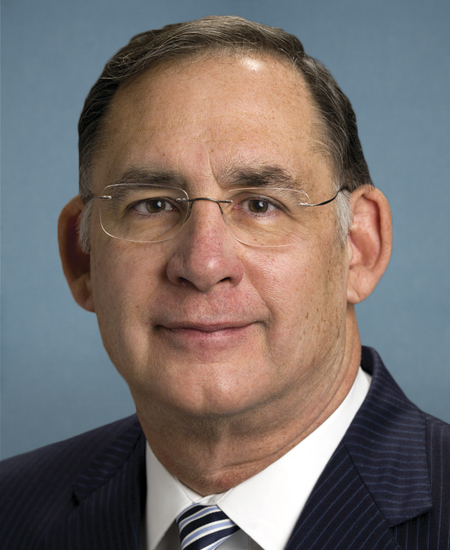
Photo of John Boozman
R United States Senate · Arkansas

Sen. John Boozman

Compare
Total votes
1,044
all sessions
Attendance
100%
3 missed
Higher than 82% of chamber peers
With party
96%
of cast votes
Near the chamber average
Bipartisan score
3%
crosses aisle rarely
Near the chamber average
Sponsored
1,075
bills & resolutions
Lower than 80% of chamber peers
Committees
20
assignments
1,075 bills and resolutions

Sponsored bills

Total
1,075
Primary
66
Co-sponsor
1,009
This page
1,075
matching current filters
Co-sponsor S 469
In committee · Indiana Senate · Co-sponsor
Family Farm and Small Business Exemption Act

Maddy summaryThis bill amends the Higher Education Act of 1965 to exempt certain family-owned assets from financial need calculations for college students. Specifically, it removes the net value of a family farm (where the family resides) or a small business (with 100 or fewer full-time equivalent employees) owned and controlled by the family from being counted as assets when determining federal financial aid eligibility. The change applies to need analysis for award years starting after the bill's enactment date. This policy directly affects students from qualifying family farms or small businesses when applying for federal student aid under Title IV programs.

In committee Feb 6, 2025 1 co-sponsor
Co-sponsor S 470
In committee · Indiana Senate · Co-sponsor
Respect State Housing Laws Act

Maddy summaryThis bill amends the CARES Act by removing subsection (c) of Section 4024. It does not create new policies or directly affect any specific group; it only modifies an existing provision in federal law. The change is purely procedural, eliminating a specific subsection without altering the law's overall structure or requirements. No new rules or impacts on housing are introduced. (1 sentence, as it is a procedural amendment).

In committee Feb 6, 2025 1 co-sponsor
Co-sponsor S 479
In committee · Indiana Senate · Co-sponsor
New Markets Tax Credit Extension Act of 2025

Maddy summaryThis bill permanently extends the New Markets Tax Credit (NMTC) program, which incentivizes private investment in low-income communities. It modifies the tax code to keep the credit available beyond 2025 (replacing "2020 through 2025" with "2020 and each calendar year thereafter") and adds automatic annual inflation adjustments to the credit amount starting in 2026. The bill also provides tax relief by allowing NMTC credits to offset the alternative minimum tax, specifically for investments made after December 2024. This directly affects community development financial institutions (CDFIs) and investors who fund projects in designated low-income areas.

In committee Feb 6, 2025 1 co-sponsor
Co-sponsor S 475
In committee · Indiana Senate · Co-sponsor
Alternatives to PAIN Act

Maddy summaryS 475, the Alternatives to PAIN Act, changes Medicare Part D coverage to make non-opioid pain management drugs more accessible and affordable for beneficiaries. It requires Medicare plans to cover qualifying non-opioid pain drugs without deductibles and place them on the lowest cost-sharing tier (meaning patients pay the least out-of-pocket) starting in 2026. The bill also prohibits plans from requiring step therapy (forcing patients to try opioids first) or prior authorization for these specific drugs. Qualifying drugs must treat acute pain (like post-surgery), not work on opioid receptors, have no equivalent alternatives, and meet cost thresholds. This directly affects Medicare Part D beneficiaries needing pain management and the plans that cover them.

In committee Feb 6, 2025 1 co-sponsor
Co-sponsor S 482
In committee · Indiana Senate · Co-sponsor
A bill to include Czechia in the list of foreign states whose nationals are eligible for admission into the United States as E-1 nonimmigrants if United States nationals are treated similarly by the Government of Czechia.

Maddy summaryThis bill (S 482) adds Czechia to the list of countries whose business traders can enter the U.S. as E-1 nonimmigrants, provided Czechia offers similar status to U.S. nationals. It directly affects Czech businesspeople seeking to operate trade in the U.S. and U.S. citizens needing reciprocal treatment in Czechia. The key provision modifies the Immigration and Nationality Act to include Czechia as a qualifying country if the Czech government grants comparable business visitor status to U.S. citizens. This change would allow Czech nationals to access E-1 visa benefits for conducting trade, contingent on Czechia’s reciprocal policy. The bill focuses solely on updating eligibility criteria without altering broader immigration rules.

In committee Feb 6, 2025 1 co-sponsor
Primary SRES 57
In committee · Indiana Senate · Lead sponsor
An original resolution authorizing expenditures by the Committee on Agriculture, Nutrition, and Forestry.

Maddy summarySRES 57 authorizes the Senate Committee on Agriculture, Nutrition, and Forestry to spend up to $15.3 million from the Senate's contingent fund between March 2025 and February 2027 for its operations. The resolution sets specific spending limits for three periods, including $200,000 for consultant services and $40,000 for staff training in each period, while outlining payment procedures for committee expenses. This procedural resolution directly affects the committee's ability to carry out its duties - such as holding hearings and investigations - without changing substantive policy.

In committee Feb 5, 2025 0 co-sponsors
Co-sponsor SRES 55
Passed · Indiana Senate · Co-sponsor
A resolution recognizing January 2025 as "National Mentoring Month".

Maddy summarySRES 55 is a Senate resolution designating January 2025 as "National Mentoring Month." It formally recognizes the value of mentoring relationships in supporting youth development, highlighting benefits like improved academic outcomes, mental health, career exploration, and reduced juvenile delinquency. The resolution encourages expanding mentoring programs in communities, schools, and workplaces to address the "mentoring gap" where one-third of U.S. youth lack consistent mentorship. As a symbolic measure, it aims to raise public awareness and promote cross-sector collaboration without creating new laws or funding.

Passed Feb 4, 2025 1 co-sponsor
Co-sponsor S 383
In committee · Indiana Senate · Co-sponsor
JOBS Act of 2025

Maddy summaryS 383 (the JOBS Act of 2025) expands Federal Pell Grant eligibility to students enrolled in certain short-term job training programs at eligible institutions of higher education. The bill creates a "job training Federal Pell Grant" for programs meeting specific criteria: 150-600 clock hours over 8-15 weeks, aligned with high-demand industry sectors, and leading to recognized postsecondary credentials that meet employer hiring requirements or licensure prerequisites. It also lowers the minimum Pell Grant award from 10% to 5% of the full annual amount. This directly affects students seeking career-focused training and institutions offering qualifying programs that validate industry partnerships.

In committee Feb 4, 2025 1 co-sponsor
Co-sponsor S 401
In committee · Indiana Senate · Co-sponsor
Fair Access to Banking Act

Maddy summaryThe Fair Access to Banking Act (S 401) prohibits large financial institutions ($10 billion+ in assets) and payment networks from denying services to lawful businesses based on political or reputational factors, such as the type of legal business they operate. It requires banks to justify denials using objective, risk-based standards instead of category-based decisions, and mandates written explanations for denials. The law enables lawsuits against violators with treble damages and civil penalties up to 10% of service value (capped at $10,000 per violation). It directly affects major banks, payment processors, and credit unions that serve large-scale customers, ensuring fair access for businesses operating within federal law.

In committee Feb 4, 2025 1 co-sponsor
Co-sponsor S 364
In committee · Indiana Senate · Co-sponsor
Hearing Protection Act

Maddy summaryS 364, titled the "Hearing Protection Act" (though it regulates firearm silencers, not hearing protection), changes federal law to treat firearm silencers like firearms for tax and regulatory purposes. It imposes a 10% federal tax on silencers (similar to firearms), preempts state laws that tax or regulate silencers beyond federal rules, and requires the destruction of existing silencer registration records within one year. The bill clarifies definitions of "firearm silencer" in federal law and modifies licensing requirements for these devices. This directly affects silencer owners, manufacturers, and state governments that previously imposed additional restrictions or taxes.

In committee Feb 3, 2025 1 co-sponsor
Showing 251 to 260 of 1,075 bills
Previous 1 … 25 26 27 … 108 Next