

Maddy summaryThe INSULIN Act of 2023 sets cost-sharing limits for insulin products under most health insurance plans. Starting in 2024, health plans must cover selected insulin products with no deductible and cost-sharing capped at $35 per 30-day supply before 2025, and at the lesser of $35 or 25% of the negotiated price after 2025. The bill defines "selected insulin products" to include at least one of each dosage form (vial, pen, inhaler) and type (rapid-acting, short-acting, intermediate-acting, long-acting, pre-mixed) of insulin. It also requires pharmacy benefit managers to pass through 100% of insulin rebates to health plans and mandates a report on insulin market competition and barriers to biosimilar adoption. This legislation directly affects millions of people with diabetes who rely on insulin and their health insurance plans.
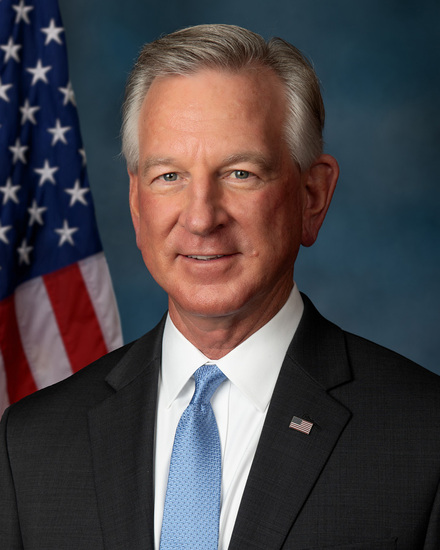
Sponsored bills
Maddy summaryThis bill (SJRES 10) seeks to block a specific rule issued by the Department of Veterans Affairs (VA) regarding reproductive health services for veterans. It requests Congress disapprove the rule (published September 2022) under a process in federal law that allows Congress to halt agency regulations. If approved, the VA rule would be nullified and could not take effect, meaning the VA could not enforce its provisions on reproductive health services for veterans. The bill directly affects the implementation of this VA policy for veterans receiving care at VA facilities.
Maddy summaryThis bill establishes a new framework for "industry-recognized apprenticeship programs" under federal law. It creates a process for the Secretary of Labor to recognize private or public entities (standards recognition entities) that can approve apprenticeship programs meeting specific standards. Programs must include paid work, on-the-job learning, mentorship, classroom instruction, written training plans, safety components, and provide industry-recognized credentials. The bill directly affects employers, training providers, and apprentices by setting minimum quality standards for these programs and streamlining recognition. Existing registered apprenticeship programs remain unaffected by this new framework.
Maddy summaryThis bill amends key labor laws to strengthen worker protections and clarify union election processes. It requires employers to provide voter lists for union elections with only one employee-chosen contact detail (like email or phone), mandates secret ballot elections for union representation, and restricts union dues from funding non-representational activities without written employee consent for at least 35 days. The bill also clarifies joint employment standards, making it harder for companies to avoid responsibility for workers' pay and conditions, and adds tribal sovereignty protections to labor law definitions. These changes directly affect employers, unions, and employees in collective bargaining contexts.
Maddy summarySRES 163 is a symbolic Senate resolution supporting National Public Safety Telecommunicators Week. It honors public safety telecommunications professionals - such as 911 operators - who handle critical emergency calls, provide life-saving guidance during crises, and support investigations involving missing persons or crimes. The resolution encourages the public to recognize their vital role in emergency response and the emotional toll of their work. It does not create new laws or policies but formally acknowledges their contributions through Senate recognition.
Maddy summaryThis bill prohibits federal agencies from banning lead ammunition or tackle for hunting and fishing on federal lands and waters managed by the Interior Department or Agriculture Department. It directly affects hunters and anglers using these public areas by preventing federal restrictions on lead products, except in limited cases. The exception allows restrictions only on specific federal sites where state wildlife data shows lead use is harming wildlife, and only if approved by the state's fish and wildlife agency. The bill requires federal agencies to explain in public notices how any exception meets these state approval and wildlife harm criteria.
Maddy summarySRES 120 is a ceremonial Senate resolution designating March 23, 2023, as "National Women in Agriculture Day." It recognizes the significant contributions of women in U.S. agriculture, citing that they represent over one-third of agricultural producers and generated $148 billion in sales in 2017. The resolution encourages citizens to acknowledge women in the field and supports their roles as producers, educators, mentors, and leaders. As a symbolic gesture, it does not create new laws or funding but aims to highlight their impact on the agricultural workforce and food systems.
Maddy summaryThis bill restricts federal funding for state and local governments that qualify as "sanctuary jurisdictions" under its definition. A sanctuary jurisdiction is defined as any state or local area that prohibits sharing immigration status information or refusing to comply with federal immigration detainers (with an exception for crime victims/witnesses). The bill blocks funding for Economic Development Administration grants and Community Development Block Grants if projects are located in such jurisdictions or if recipients become sanctuary jurisdictions during the grant period. Recipients must return funds if they become sanctuary jurisdictions, and the U.S. government will reallocate those funds to non-sanctuary areas.
Maddy summaryThe Farmer-Informed WOTUS Act of 2023 establishes a 32-member advisory committee composed entirely of farmers and ranchers to study how federal Waters of the United States (WOTUS) regulations affect agricultural operations. The committee will examine specific issues like exemptions for farmland, common farming practices not covered by current rules, and regulatory inconsistencies, then submit recommendations to the Agriculture Secretary, Environmental Protection Agency, and congressional committees within one year. This bill directly involves U.S. farmers in reviewing WOTUS rules without altering existing regulations, aiming to incorporate on-the-ground farming perspectives into future policy discussions. The committee’s findings will inform potential adjustments to how WOTUS regulations impact agriculture, food supply chains, and rural infrastructure.
Maddy summaryThe Access to AEDs Act (S 1024) provides $25 million in federal funding over five years (2024-2028) to help public elementary and secondary schools improve access to automated external defibrillators (AEDs) and CPR training. It authorizes grants for schools to purchase AEDs, train students and staff, develop emergency response plans, and partner with health organizations - such as local hospitals or fire departments - to implement these programs. The bill also requires the creation of a national database to track school AED access and share best practices, aiming to support immediate response during cardiac emergencies. This directly affects schools, students, and school staff by enhancing preparedness for sudden cardiac arrest, which the bill cites as a leading cause of death among young athletes and children.