

Maddy summaryThe Telehealth Modernization Act makes permanent Medicare's temporary telehealth coverage rules that were set to expire in 2024, ensuring continued access for beneficiaries. It expands eligibility for healthcare providers who can offer telehealth services under Medicare, allowing the Secretary to add more professions (like nurse practitioners or therapists) after stakeholder consultation. The bill also changes payment rules for community health centers and rural clinics, treating telehealth services provided after 2025 as if delivered in person for billing purposes. Additionally, it permanently allows audio-only telehealth visits for Medicare coverage, removing previous restrictions.
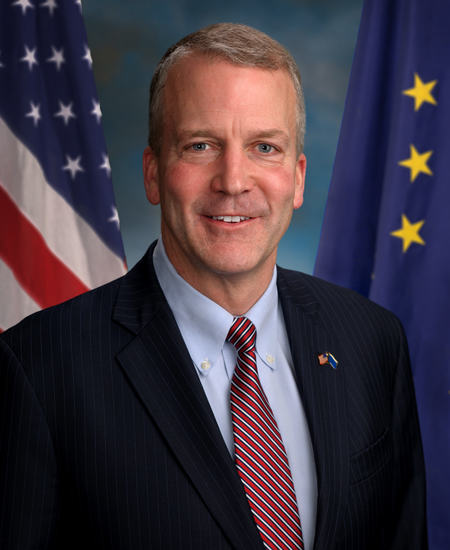
Sen. Dan Sullivan
Sponsored bills
Maddy summaryThe Recycling Infrastructure and Accessibility Act of 2024 establishes a federal pilot grant program to improve recycling access in underserved communities. It authorizes $30 million annually (2023-2027) to fund competitive grants for eligible entities - including states, local governments, tribes, and public-private partnerships - to build transfer stations, expand curbside recycling, and create hub-and-spoke infrastructure networks. Grants range from $500,000 to $15 million per project, with 70% of funds reserved for single or multiple underserved communities lacking nearby recycling facilities. The program prohibits grant use for education and requires the EPA to report on outcomes, including recycling rate improvements, within two years of first grants.
Maddy summaryThis bill (SJRES 64) seeks to block a Federal Communications Commission (FCC) rule published in the Federal Register (89 Fed. Reg. 4128, January 22, 2024) that implements provisions from the Infrastructure Investment and Jobs Act related to preventing digital discrimination. It requests Congress disapprove the rule under Chapter 8 of Title 5, U.S. Code, which would prevent the rule from taking effect. The resolution directly affects the FCC's ability to enforce digital discrimination prevention measures under the Infrastructure Investment and Jobs Act. If passed, the rule would have no legal force or effect, halting the FCC's regulatory action on this specific issue.
Maddy summaryThis joint resolution (SJRES 65) seeks to disapprove an Environmental Protection Agency (EPA) rule that would have revised national air quality standards for tiny air particles (particulate matter), which are pollutants linked to health issues like asthma and heart disease. The EPA rule, published on March 6, 2024, proposed updating these standards to tighten pollution limits. By invoking the Congressional Review Act, the resolution would block the rule from taking effect, maintaining the current standards without changes. This directly affects the EPA’s ability to implement the proposed revisions to air quality regulations, impacting public health protections and industry compliance requirements.
Maddy summaryS 3963, the Native Species Protection Act, defines "intrastate species" as plants or wildlife entirely within one state's borders and not part of a national commodity market. It removes federal regulatory authority for these species under the Endangered Species Act and other federal laws based on interstate commerce powers. This directly affects state governments and landowners within states containing such species, shifting management responsibility to state authorities. The bill changes federal policy by explicitly exempting these locally confined species from federal environmental regulations.
Maddy summaryS 3929 prohibits the Secretary of Agriculture from implementing a specific Forest Service notice (88 Fed. Reg. 88042, December 20, 2023) that proposed land management actions for old-growth forest conditions across National Forest System lands. The bill directly affects the Department of Agriculture's management authority over federal forest lands by blocking the adoption of this particular plan direction. It does not create new policy but prevents the executive branch from moving forward with the proposed actions outlined in that specific notice. The bill's effect is limited to halting this one administrative step related to old-growth forest management.
Maddy summaryS 3933, the Laken Riley Act, amends immigration law to require mandatory detention for non-citizens charged with certain crimes like theft or burglary, rather than allowing release. It directly affects individuals facing these charges and gives state attorneys general the legal standing to sue federal agencies (like DHS or the State Department) if they claim immigration policies caused the state or residents financial harm exceeding $100. Key provisions include requiring Homeland Security to take custody of such individuals and establishing new court procedures for states to seek injunctions against federal immigration enforcement actions. The bill does not change border policies but focuses on detention requirements and state legal challenges to federal immigration enforcement.
Maddy summaryThe HELPER Act of 2023 creates a new FHA mortgage insurance program allowing eligible first responders and K-12 teachers to secure home loans with **no down payment**. It directly affects full-time law enforcement officers, firefighters, paramedics, EMTs, and public/private K-12 teachers who have worked in their roles for at least 4 of the past 5 years. Key provisions include requiring housing counseling, verifying employment status, and prohibiting monthly mortgage insurance premiums (replacing standard FHA requirements). The bill authorizes $660,000 for 2024 and $160,000 annually from 2025-2030 to fund this program, which expires after 5 years.
Maddy summaryS 3840 (Protect America’s Lands Act) prohibits national securities exchanges from processing transactions in securities issued by "natural asset companies." These are companies that manage land for conservation, restoration, or sustainable use of natural assets (like forests or wetlands) and ecosystem services (such as clean water or carbon absorption), without harming natural resources. The bill directly affects these conservation-focused companies and securities exchanges, banning exchanges from facilitating trades in their stocks or bonds. It creates a specific regulatory barrier for this emerging investment sector without altering broader securities rules. The law focuses on restricting how these natural asset investments can be traded, not on the conservation activities themselves.
Maddy summaryThis bill (S 3812, the FIREARM Act) changes firearm licensing enforcement by requiring the Attorney General to give licensees (like dealers) 30 business days to correct self-reported violations before taking action to revoke or deny license renewals. It adds a new 10-day judicial review option: licensees can bypass a hearing and request a federal court review of a revocation notice, with the revocation stayed during the court process. The bill also clarifies that minor or clerical errors are not considered "willful" violations and defines "self-reported violation" as one a licensee discloses before the Attorney General discovers it. These changes directly affect firearm license holders and the enforcement process under federal law.