

Maddy summaryThis resolution designates May 5, 2024, as the "National Day of Awareness for Missing and Murdered Native Women and Girls" to honor victims and raise public attention. It calls on the American public and organizations to commemorate affected women (both documented and undocumented cases) and show solidarity with families. The resolution is symbolic - requiring no new funding, laws, or government action - solely aiming to increase awareness of this crisis. It directly affects Native American, Alaska Native, and Native Hawaiian communities by acknowledging their disproportionate vulnerability to violence. The resolution references specific statistics on violent crime rates against Native women and the case of Hanna Harris, a Northern Cheyenne woman whose murder highlighted this issue.
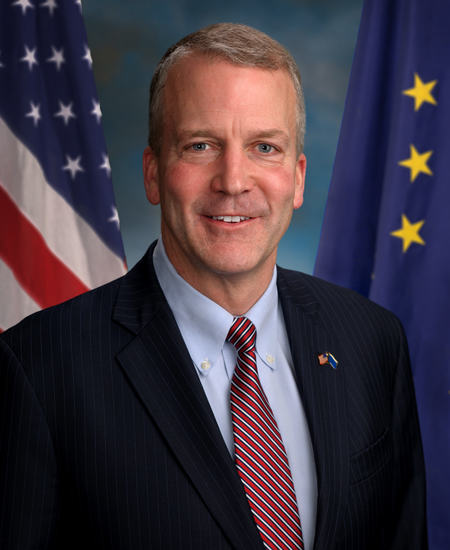
Sen. Dan Sullivan
Sponsored bills
Maddy summaryThis bill requires the U.S. Secretary of Defense to consider Taiwan for enhanced defense industrial cooperation, including potential funding for joint research and formal agreements to boost Taiwan's defense industry and supply chain resilience. It mandates a feasibility study evaluating strategic benefits like supply chain security, mutual defense goods sharing, and interoperability, while accounting for legal and economic factors. The study must identify specific defense capabilities developed or produced in Taiwan that need expedited U.S. component licenses, or U.S. capabilities Taiwan cannot obtain timely from U.S. industry. The Secretary must submit a report to Congress within 180 days of the bill's enactment detailing the study's findings. The bill operates within the framework of the Taiwan Relations Act and does not authorize direct military aid or security guarantees.
Maddy summaryS 4262, the FISHES Act, streamlines the approval process for fishery disaster funding requests. It requires the Office of Management and Budget Director to approve or deny spend plans within 30 days of receipt, and if denied, must specify needed changes within 15 days. Requesters (like coastal communities or fishing businesses) with a confirmed fishery disaster must then resubmit corrected plans within 15 days, with the Director making a final decision within another 15 days. The bill also shortens the review timeline for fishery disaster determinations under the Magnuson-Stevens Act from 90 to 30 days. These changes aim to reduce delays in accessing emergency funding for affected fisheries.
Maddy summaryThis joint resolution seeks congressional disapproval of a specific Environmental Protection Agency (EPA) rule setting greenhouse gas emissions standards for heavy-duty vehicles (Phase 3). If passed, it would nullify the EPA rule (published April 22, 2024) under the Congressional Review Act, preventing it from taking effect. The rule directly affects manufacturers of trucks and buses by establishing new requirements for reducing emissions. The resolution does not create new standards but aims to block the existing EPA rule through a formal disapproval process.
Maddy summaryThis joint resolution seeks to block an Environmental Protection Agency (EPA) rule that would set new emissions standards for light- and medium-duty vehicles sold in model years 2027 and later. It directly affects automakers, as the rule would require them to meet stricter pollution limits for these vehicles. The resolution uses a congressional disapproval process under federal law to prevent the EPA rule from taking effect. If passed, the rule would be invalidated, meaning automakers would not need to comply with the 2027+ emissions standards outlined in the EPA's April 2024 proposal.
Maddy summarySRES 655 is a Senate resolution passed on April 18, 2024, to honor the late Joseph I. Lieberman, a former U.S. Senator from Connecticut (1988-2013), following his death. The resolution recognizes his career, including his role in creating the Department of Homeland Security, establishing the 9/11 Commission, and advocating for civil rights and environmental protections. It directs the Senate to adjourn in his memory and transmit a copy to his family, expressing the Senate's sorrow and respect. This procedural resolution does not create new laws or affect policy, as it solely commemorates his legacy.
Maddy summaryS 4198, the Veterans Cemetery Access Act, requires the Department of Veterans Affairs to provide families of veterans buried in national cemeteries with direct same-day access to the cemetery without traveling through Department of Defense-controlled areas. It also directs the VA to prioritize federal grants for states that lack veterans' cemeteries when awarding funding under existing law. The bill directly affects veterans' families seeking timely cemetery access and states without dedicated veterans' burial sites. These changes aim to streamline family access to burial sites and support new cemetery development in underserved states.
Maddy summaryThe Contaminated Lands Reclamation Act of 2024 creates a $35 million annual grant program (2025-2030) to help Alaska Native Corporations and Indian Tribes remediate contamination on lands conveyed to them under the Alaska Native Claims Settlement Act (ANCSA). The bill explicitly allows funding for lands contaminated after conveyance if the Federal Government didn't cause the contamination, and expands eligibility for existing Brownfields funding programs to include ANCSA land. It also establishes a pilot program enabling Indian Tribes to directly manage eligible projects like water infrastructure. The legislation requires the Secretary of the Interior to develop a cleanup plan within 180 days and submit annual reports to Congress on progress.
Maddy summaryThe Regional Leadership in Wildland Fire Research Act of 2024 establishes seven regional wildland fire research centers at eligible institutions across seven U.S. regions (Alaska, California, Northern Rockies, Pacific Northwest, Pacific Islands, Southeast, and Southwest). Each center will develop predictive models for wildfire behavior, safety technologies, and career pathways while coordinating with federal agencies, tribal organizations, and state governments. The bill authorizes $300 million over five years ($60 million to $64 million annually) for these centers, plus $1 million annually for a National Center Coordination Board to oversee research efforts. The centers must make all research and data openly available to support wildfire management agencies and communities affected by wildfires. This legislation directly affects research institutions, federal wildfire management agencies, tribal organizations, and communities facing wildfire risks.
Maddy summaryThis bill prohibits federal funding for implementing, administering, or enforcing specific Environmental Protection Agency (EPA) vehicle emissions rules. It directly affects the EPA's ability to enforce the proposed and final "Multi-Pollutant Emissions Standards for Model Years 2027 and Later Light-Duty and Medium-Duty Vehicles" rules. The key mechanism blocks all fiscal year 2024 funds from being used for these particular rules or any substantially similar future rules. The bill does not alter the rules themselves but prevents their enforcement through funding restrictions.