

Maddy summaryHRES 1076 is a House resolution recognizing the 10th anniversary of the first U.S. liquefied natural gas (LNG) export shipment from the lower 48 states, which occurred on February 24, 2016. The resolution celebrates this milestone as a historic achievement in American energy production, highlighting its role in supporting over 273,000 annual jobs and $400 billion in economic growth over the past decade. It honors the workers and communities involved and acknowledges LNG exports' contribution to U.S. economic growth, energy security, and global partnerships. The resolution has no binding effect or policy changes - it solely expresses recognition of a past event.
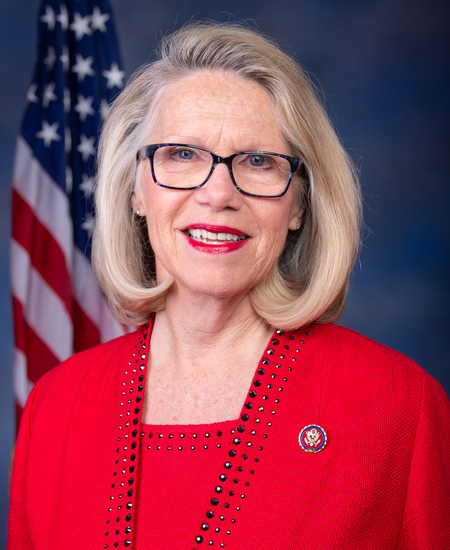
Rep. Carol D. Miller
Sponsored bills
Law-Enforcement Innovate to De-Escalate Act This bill removes less-than-lethal projectile devices (e.g., certain TASERs) from regulation under the Gun Control Act. The term less-than-lethal projectile device means a device that (1) is not designed or intended to expel (and may not be readily converted to discharge) commonly used ammunition or projectiles exceeding a velocity of 500 feet per second; (2) is designed and intended to be used in a manner not likely to cause death or serious bodily injury; and (3) does not accept (and cannot be readily modified to accept) an ammunition feeding device. The bill also requires the Bureau of Alcohol, Tobacco, Firearms and Explosives to determine whether a device satisfies the definition of a less-than-lethal projectile device within 90 days of a request.
Maddy summaryThis bill directs U.S. agencies to support Iranian people's access to uncensored information and hold Iranian officials accountable for human rights abuses. It requires the State Department and FCC to report on technologies (like satellite networks and mesh systems) that could bypass internet restrictions in Iran, and authorizes $2 million annually to develop such tools. The bill also establishes a new "Iran Kleptocracy Initiative" at FinCEN to track corruption, freeze assets of Iranian regime officials and state-owned businesses, and coordinate with international partners. These measures apply to U.S. policy toward Iran but do not alter Iran's domestic laws; they focus on U.S. sanctions, technology development, and anti-corruption efforts targeting the Iranian regime.
Maddy summaryThe Pay Less at the Pump Act of 2026 ends a fee on certain chemicals that funded the Superfund program for hazardous waste cleanup after December 31, 2025. Starting January 1, 2026, companies subject to this fee will no longer be required to pay it. The bill also changes repayment rules for Superfund advances, requiring quarterly payments from unobligated funds until advances are fully repaid. This directly affects businesses that paid the Superfund fee, which applied to manufacturers and handlers of specific chemicals.
Maddy summaryThis bill establishes the United States-Israel Defense Technology Cooperation Initiative to accelerate joint development and integration of defense technologies between the two countries. It directs the U.S. Secretary of Defense, with Israel’s agreement, to identify Israeli-origin technologies for rapid adoption into U.S. military systems, focusing on areas like counter-drone systems, missile defense (including "Golden Dome for America"), AI, cyber defense, and directed energy. The initiative requires annual congressional reporting on progress, partnerships with industry, and technology transitions, while authorizing $150 million annually for fiscal years 2027-2029. It aims to strengthen bilateral defense innovation and streamline the use of Israeli technologies within U.S. military programs.
Maddy summaryThis bill modifies tax credit rules to help businesses recover after disasters. It allows businesses operating in designated disaster areas to treat certain unused tax credits (carryforwards) as transferrable credits against current tax liability, rather than letting them expire. Specifically, it applies to taxpayers making eligible expenditures for business operations in areas with a major disaster declaration after December 31, 2023, or a state-declared disaster meeting specific criteria. The change affects businesses in affected zones by providing immediate tax relief for qualifying expenses incurred within two years of the disaster declaration. It does not involve energy policy or new funding, but adjusts existing tax credit rules for disaster recovery.
Maddy summaryHR 7391, the Community Health Center Drug Pricing Protection Act, requires that Federally Qualified Health Centers (FQHCs) pay the discounted 340B ceiling price for covered drugs **at the time of purchase**, not later through rebates or adjustments. This directly affects FQHCs, which rely on 340B discounts to provide affordable care to low-income patients. The bill amends the Public Health Service Act to prohibit manufacturers from entering agreements where FQHCs initially pay more than the ceiling price, with later reimbursement. It takes effect immediately upon enactment for all new drug purchases and applies to existing agreements starting then.
Maddy summaryHR 7409, the Defend Rural Health Act of 2026, prevents rural hospitals from being reclassified as urban Medicare facilities after October 1, 2029, unless they met specific criteria before October 1, 2026. The bill amends Medicare rules to block hospitals from retaining rural status beyond 2029, even if they applied for reclassification earlier. It also prohibits the Medicare Geographic Classification Review Board from approving new reclassification requests for hospitals already treated as rural under current rules for fiscal years starting after October 1, 2026. This directly affects rural hospitals that rely on higher Medicare payments tied to their geographic classification. The law aims to maintain stable funding for rural hospitals by restricting future reclassifications.
Maddy summaryThis bill amends the Lacey Act to create a registration system for facilities holding certain "prohibited wildlife species" (like big cats), directly affecting zoos and animal facilities that exhibit or possess these species. Facilities must register each animal with the U.S. Fish and Wildlife Service and then stop breeding, selling, or allowing public contact with these species. The bill explicitly excludes snow leopards and clouded leopards (and their hybrids) from the "prohibited" category. It also allows compliant facilities to export/import prohibited species to foreign facilities operating legally in their home countries.
Maddy summaryThis bill prevents state or local governments from banning or restricting energy connections (like installation, modification, or access) based on the type or source of energy, such as electricity, natural gas, or renewable fuels. It directly affects consumers choosing energy providers and energy companies seeking to offer services. The key provision prohibits local laws, regulations, or policies that limit energy services sold in interstate commerce, covering all energy types listed in the bill’s definitions. It does not create new programs but limits regulatory authority at the state or local level. The law aims to ensure open access to diverse energy sources without source-based restrictions.