

Maddy summaryHR 4237, the Ensuring Sound Guidance Act, requires investment advisors and retirement plan fiduciaries to prioritize financial factors (like investment returns and costs) when making decisions for clients or plan participants. It mandates that non-financial factors (such as environmental or social goals) can only be considered if the client provides written consent, and advisors must then disclose the expected and actual financial impact over a three-year period. The bill amends the Investment Advisers Act and ERISA to enforce this standard, with changes taking effect 12 months after enactment. Additional provisions direct studies on state pension plans, climate disclosures in municipal bonds, and rules preventing payments to officials for government business.
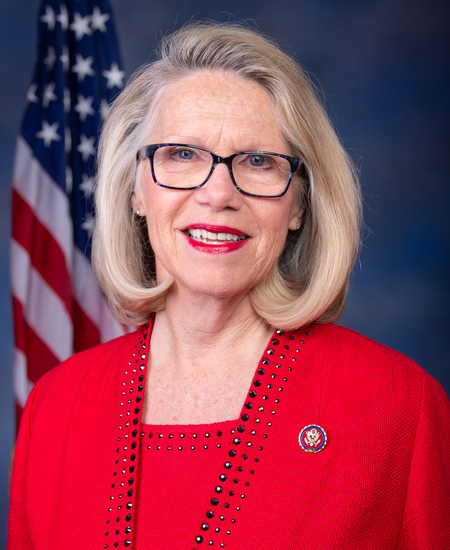
Rep. Carol D. Miller
Sponsored bills
Maddy summaryHR 277 would require Congress to approve major federal regulations before they take effect. Major rules are defined as those with significant economic impact ($100 million+ annually), major cost increases for consumers or industries, or significant adverse effects on competition, employment, or innovation. Agencies must submit detailed information about these rules to Congress, including cost-benefit analyses, before they can take effect. Congress would have 70 session days to approve the rule with a joint resolution; if they don't act within that timeframe, the rule would not take effect. This would increase congressional oversight of federal regulations and require more detailed information about proposed rules before they become law.
Maddy summaryHR 4212, the Middle Class Mortgage Insurance Premium Act of 2023, increases the income limit for deducting mortgage insurance premiums on federal income taxes. It raises the cap from $100,000 (or $50,000 for married filing separately) to $200,000 (or $100,000 for married filing separately), making this deduction permanent. This change directly benefits middle-income homeowners who itemize deductions and pay mortgage insurance premiums, allowing them to deduct more of these costs. The bill applies to taxable years beginning after December 31, 2023.
Maddy summaryThis bill bans displaying any flag other than the U.S. flag on the exterior or in hallways of public buildings, including government offices, military installations, and embassies. Exceptions allow specific flags like POW/MIA memorials, visiting diplomats' national flags, a member of Congress's home state flag, military unit flags, tribal flags, or local jurisdiction flags. It directly affects how public buildings display flags, requiring exclusive use of the U.S. flag in designated areas. The bill applies to all public buildings under federal definition, with limited exceptions for historical, diplomatic, or local displays.
Maddy summaryHJRES 69 is a resolution seeking to disapprove an Environmental Protection Agency (EPA) rule published on June 5, 2023, which established a "Federal Good Neighbor Plan" for the 2015 ozone air quality standards. The rule aimed to address ozone pollution crossing state lines, particularly affecting southeastern states and industries subject to the 2015 ozone standards. This resolution would block the rule from taking effect by invoking the Congressional Review Act, preventing it from being enforced. If enacted, it would directly stop the EPA from implementing this specific plan, impacting states and businesses that would have had to comply with the rule.
Maddy summaryHRES 498 is a non-binding resolution recognizing June 28, 2023, as the 125th anniversary of the American Association of Colleges of Osteopathic Medicine (AACOM). It commends AACOM for its role in supporting 40 osteopathic medical colleges across 35 states, which educate over 35,000 future physicians and emphasize improving healthcare access in rural and underserved communities. The resolution highlights AACOM’s work in advancing osteopathic medical education and its focus on training physicians who prioritize preventive care and community health. As a commemorative resolution, it does not create new laws or policies but formally acknowledges AACOM’s contributions to U.S. healthcare.
Maddy summaryThis bill requires all U.S. flags displayed on federal property or purchased by federal agencies to be 100% made in the United States, meaning all materials and manufacturing must occur domestically. It directly affects federal agencies (including military departments, legislative/judicial branches, and U.S.-owned corporations) and their procurement of flags for display on government property. Key provisions include a 90-day implementation for new flag purchases and a 2-year phase-in for display requirements, with a separate mandate for the FTC to study and report on country-of-origin labeling enforcement for flags within one year. The bill does not apply to private entities or flags displayed off federal property.
Maddy summaryHR 4038, the POPP Act, blocks the Environmental Protection Agency (EPA) from finalizing, implementing, or enforcing a specific proposed rule about greenhouse gas emissions from power plants. This rule, published in May 2023, aimed to set new standards for emissions from fossil fuel-fired power plants and replace an earlier rule. The bill prohibits the EPA from moving forward with this rule or any substantially similar rule, directly affecting the EPA's regulatory authority and power plant operators who would have been subject to the proposed standards. The bill bases this prohibition on arguments that the proposed rule violates the Clean Air Act by not demonstrating that required emission reduction technologies are commercially viable and cost-effective.
Maddy summaryHR 1640, the Save Our Gas Stoves Act, prevents the Department of Energy from implementing energy efficiency standards for gas stoves that would make them unavailable in the U.S. market. It amends federal law to require that any new standard for gas stoves must not result in the unavailability of gas stove types, directly affecting gas stove manufacturers and consumers who rely on these appliances. The bill specifically blocks the implementation of the 2023 proposed rule (Energy Conservation Program: Energy Conservation Standards for Consumer Conventional Cooking Products) and any similar rule. This is a policy change focused on maintaining the availability of gas stoves by altering the criteria for energy standard approval.
Maddy summaryThe Telehealth Expansion Act of 2023 modifies the Internal Revenue Code to require health insurance plans to cover telehealth services without applying deductibles. It directly affects high deductible health plans (HDHPs) and their enrollees, ensuring telehealth visits aren’t counted toward annual deductibles. The key provision creates a "safe harbor" (Section 223(c)(2)(E)) so plans won’t lose HDHP status for excluding telehealth deductibles. This change applies immediately upon enactment and affects all plans offering telehealth services. It does not create new funding or services but adjusts tax code requirements for existing coverage.