

Maddy summaryHR 563 requires the Bureau of Alcohol, Tobacco, Firearms and Explosives (ATF) to destroy all firearm transaction records from discontinued businesses within 90 days of the law's enactment. It also amends a federal law to prevent future registration of such transactions by removing language that required these records to be delivered to the Attorney General. The bill mandates that the ATF submit a report to Congress detailing how many records were destroyed. This legislation directly affects ATF record-keeping procedures, not individual gun owners or firearm ownership rights.
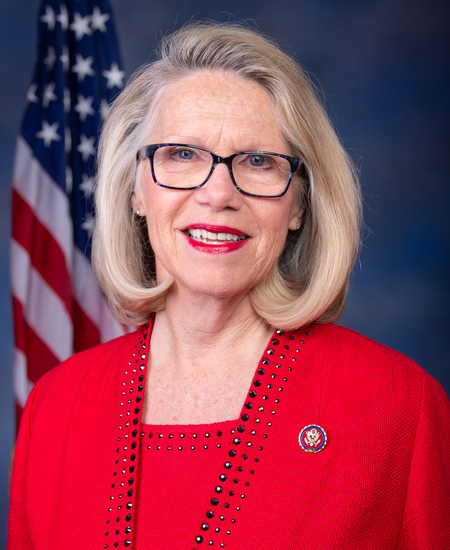
Rep. Carol D. Miller
Sponsored bills
Maddy summaryThis bill makes permanent the increased standard deduction amounts for individual income tax filers. It raises the single filer standard deduction from $4,400 to $18,000 and the married filing jointly amount from $3,000 to $12,000 under the Internal Revenue Code. The bill also requires annual inflation adjustments to these amounts, using a specific formula based on the cost-of-living adjustment. These changes directly affect millions of American households that use the standard deduction instead of itemizing deductions on their federal tax returns.
Chiropractic Medicare Coverage Modernization Act of 2025 This bill expands Medicare coverage of chiropractic services to include all services provided by chiropractors, rather than only subluxation corrections through manual manipulation of the spine.
This bill increases the annual limit on the tax credit for qualified railroad track maintenance expenses (also referred to as the short line railroad tax credit) and expands eligibility for claiming the credit. Under current law, the tax credit is limited each tax year to $3,500 multiplied by the sum of the number of miles of railroad track owned or leased by the taxpayer (miles owned or leased) and the number of railroad track miles assigned to the taxpayer by a Class II or III railroad (miles assigned). This bill increases the annual limit to $6,100 multiplied by the sum of miles owned or leased and miles assigned. The $6,100 amount used in the calculation of the tax credit limit is adjusted for inflation for tax years beginning after 2025. The bill also expands eligibility for the tax credit to include gross expenses for maintaining railroad tracks owned or leased as of January 1, 2024. Under current law, the tax credit is limited to gross expenses for maintaining railroad tracks owned or leased as of January 1, 2015.
Maddy summaryThis bill creates special tax rules for certain Taiwanese residents with income from U.S. sources, primarily addressing double taxation concerns. It reduces withholding tax rates on interest, dividends, and royalties from 30% to 10% (or 15% for certain dividends) for qualified Taiwanese residents, and eliminates tax on certain wages paid to Taiwanese workers in the U.S. It also sets a $30,000 annual limit on tax-free income from entertainment or athletic activities. To qualify, individuals must meet specific residency and ownership criteria, and the bill requires reciprocal tax benefits from Taiwan before taking effect. This legislation is designed to facilitate economic activity between the U.S. and Taiwan without requiring a formal tax treaty.
Maddy summaryThe FAIR PREP Act of 2025 prohibits the IRS from preparing individual tax returns or refund claims, except for the existing IRS Free File Program and certain qualified return preparation services. It clarifies that the IRS may still provide fillable tax forms with automated calculations and correct mathematical or clerical errors without violating the prohibition. The bill also bans the IRS from developing or operating new electronic tax preparation services after enactment without explicit new congressional authorization. This directly affects how the IRS delivers tax filing assistance, preserving current free options while restricting new government-run tools.
Maddy summaryHR 28, the *Protection of Women and Girls in Sports Act of 2025*, amends Title IX to prohibit federally funded schools from allowing male-identified individuals (based on biological sex at birth) to compete on women’s or girls’ sports teams. It explicitly states that such participation would violate federal civil rights law, with exceptions only for training/practice that doesn’t displace female athletes from roster spots, competitions, scholarships, or other benefits. The bill mandates a Comptroller General study to define "other benefits" lost by girls when males compete in single-sex sports, including impacts on psychological well-being, scholarship access, and safe participation environments. This bill directly affects all athletic programs receiving federal funding, requiring compliance with its biological-sex-based eligibility rules.
Maddy summaryHR 332, the Travel Trailer and Camper Tax Parity Act, would amend the tax code to allow business owners to claim a tax deduction for financing travel trailers and campers used for recreation. Specifically, it adds these vehicles to the definition of "floor plan financing" by clarifying that trailers/campers designed for temporary living (recreational, camping, or seasonal use) qualify, if towed or attached to a motor vehicle. This change directly affects small businesses and owners who finance such vehicles for commercial use, aligning their tax treatment with other similar vehicles. The provision would take effect for tax years beginning after December 31, 2024.
Maddy summaryHR 354, the Small Business Growth Act, increases tax deduction limits for small businesses purchasing equipment. It raises the annual deduction cap from $1 million to $2 million and the phaseout threshold from $2.5 million to $3.5 million under Section 179 of the tax code. These changes directly affect small businesses that buy qualifying depreciable assets like machinery or vehicles, allowing them to deduct more of the cost upfront. The provisions apply to property placed in service after December 31, 2025, with inflation adjustments updated to reference 2025 and 2026.
Maddy summaryThe Supporting America's Children and Families Act reauthorizes federal child welfare programs through 2029, with new provisions to improve services for children in foster care and families. It directly affects states, tribes, child welfare agencies, foster youth, and families through requirements to address poverty-related neglect, expand family preservation services, strengthen kinship care support, and improve court technology for remote hearings. Key mechanisms include new funding for regional partnerships addressing parental substance use, streamlined administrative processes, and demonstration projects for maintaining relationships between incarcerated parents and their children in foster care. The bill also strengthens tribal child support enforcement and improves implementation of the Indian Child Welfare Act, aiming to reduce bureaucracy while improving outcomes for children and families.