

Maddy summaryThe CONSTRUCTS Act of 2025 creates a federal grant program to fund training programs at community colleges and career schools focused on residential construction careers. It targets rural areas and underserved populations - including veterans, low-income individuals, and groups with historically low representation in construction - to develop skills in trades like carpentry, plumbing, electrical work, and HVAC. Grants, totaling $20 million annually from 2026-2030, require flexible scheduling, partnerships with construction employers, and plans to increase affordable housing supply through workforce development. The bill directly affects community colleges in rural or underserved regions and their students seeking residential construction careers.
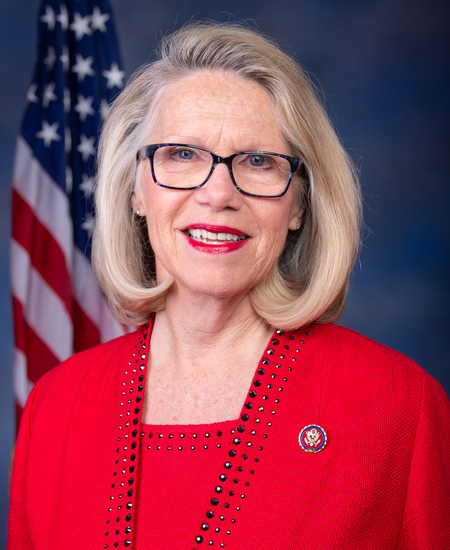
Rep. Carol D. Miller
Sponsored bills
Maddy summaryThis bill modifies tax credits for carbon capture under the Internal Revenue Code. It expands qualifying uses for carbon capture credits to include using carbon as a "tertiary injectant" in oil/gas recovery projects (with storage) and other specified methods, while increasing the credit rate from $17 to $36 per ton for eligible projects starting in 2025. The changes directly affect companies capturing carbon dioxide for storage or industrial use, making these projects more financially viable. The updated credit rates apply to taxable years beginning after December 31, 2024, with future rates adjusted for inflation.
Fair Access to Banking Act This bill places restrictions on certain banks, credit unions, and payment card networks if they refuse to do business with a person who complies with the law. Restrictions include prohibiting the use of electronic funds transfer systems and lending programs, termination of an institution's depository insurance, and specified civil penalties. Banks and other specified financial institutions are allowed to deny financial services to a person only if the denial is justified by a documented failure of that person to meet quantitative, impartial, risk-based standards established in advance by the institution. This justification may not be based upon reputational risks to the institution. The bill establishes the right for a person to bring a civil action for a violation of this bill.
Maddy summaryHR 1024, the US-Kazakhstan Trade Modernization Act, terminates the application of Title IV of the Trade Act of 1974 to Kazakhstan. This means the U.S. will no longer apply special trade restrictions tied to Kazakhstan's emigration policies, as Kazakhstan has been found compliant since 1997. The bill allows the President to determine that Title IV no longer applies and extend normal trade relations (NTR) treatment to Kazakhstan's products. As a result, Kazakhstan's exports to the U.S. will be subject to standard U.S. trade rules rather than the specific Title IV provisions.
Maddy summaryHR 953 establishes a new Indo-Pacific Trade Strategy Commission to develop a comprehensive US trade strategy for the region. The bill directs the US International Trade Commission to study how existing agreements like RCEP and CPTPP affect US exports, supply chains, and competitiveness, and requires the Commission to submit recommendations within 18 months. The Commission, composed of 12 non-congressional experts, will focus on countering China's trade influence, promoting US economic leadership, and addressing supply chain vulnerabilities. This legislation directly affects US businesses, workers, and government policymakers by shaping future trade policy in a region critical to global economic growth.
Medicare Patient Access and Practice Stabilization Act of 2025 This bill increases certain payment adjustments under the Medicare physician fee schedule for services furnished between April 1, 2025, and January 1, 2026.
Maddy summaryHR 858, the REVIVE VI Act, exempts certain income earned by Virgin Islands businesses from global tax rules that typically apply to foreign-owned companies. Specifically, it creates a new category of "qualified Virgin Islands services income" for Virgin Islands corporations performing services within the territory, excluding this income from the global intangible low-taxed income (GILTI) tax calculation. This directly benefits Virgin Islands-based service providers and their "specified United States shareholders" (including individuals, trusts, estates, or closely held C corporations that owned the business before 2023). The change reduces tax liability for qualifying businesses operating in the U.S. Virgin Islands, aiming to boost local economic activity.
Maddy summaryHCONRES 4 is a symbolic resolution expressing Congress's support for tax-exempt fraternal benefit societies (like mutual aid organizations). It recognizes these groups, which have over 7 million members nationwide, as historically and currently providing critical community benefits - including life/health insurance, charitable work, and volunteer services - valued at over $3.8 billion annually. The resolution affirms that their tax-exempt status under Section 501(c)(8) of the Internal Revenue Code remains beneficial and should continue to be promoted. This is a non-binding expression of congressional sentiment, not a policy change.
Sustainable Cardiopulmonary Rehabilitation Services in the Home Act This bill permanently allows services relating to cardiac rehabilitation programs, intensive cardiac rehabilitation programs, and pulmonary rehabilitation programs to be furnished via telehealth at a beneficiary's home under Medicare.
Maddy summaryHR 801, the Charitable Act, creates a new tax deduction for individuals who do not itemize deductions on their federal tax returns. It allows these taxpayers to deduct up to one-third of their standard deduction amount for charitable contributions in 2026 and 2027. The bill directly affects non-itemizing individual taxpayers by providing a limited, direct deduction for charitable giving without requiring them to itemize. The deduction is capped at 1/3 of the standard deduction amount for those tax years, effective for returns filed in 2027 and 2028.