

Dentist and Optometric Care Access Act of 2025 or the DOC Access Act of 20 25 This bill prohibits private health insurance plans from setting rates for items and services, except for dental cleanings, provided by a doctor of optometry, of dental surgery, or of dental medicine (or an employer of such a doctor) for which the plan does not pay a substantial amount. Additionally, an agreement between a plan and such a doctor for limited scope dental or vision benefits may last longer than two years only with the prior acceptance of the doctor for each term extension. Plans also may not restrict such a doctor's choice of laboratories or suppliers. Such doctors may elect to waive the application of the payment amount and choice of laboratories provisions of this bill. The bill does not supersede state laws regarding health insurers and dental or vision benefit plans.
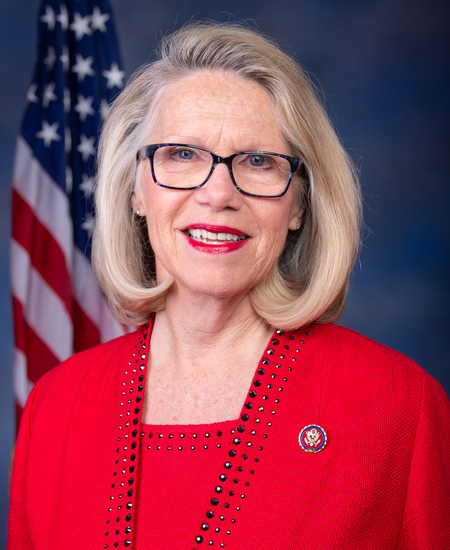
Rep. Carol D. Miller
Sponsored bills
Maddy summaryHR 1494, the Sporting Goods Excise Tax Modernization Act, requires online marketplaces (like Amazon or eBay) to collect the federal excise tax on sporting goods sold through their platforms, rather than leaving this responsibility to individual sellers. It specifically targets platforms that host third-party seller listings and facilitate transactions for goods imported from outside the U.S. The bill treats these marketplaces as the "importer" for tax purposes, making them liable for the tax on qualifying sporting goods sales. This change applies to sales after a 60-day grace period following the bill's enactment, with no impact on taxes already owed by other parties.
Maddy summaryHR 1502 authorizes the creation of a Congressional Gold Medal to honor the volunteers and communities (primarily from Nebraska, Colorado, and Kansas) who supported the North Platte Canteen during World War II. The bill directs the Treasury Secretary to design and strike the medal, which will be presented to the individuals who contributed to the canteen’s operations and then permanently displayed at the Lincoln County Historical Museum in North Platte, Nebraska. It also permits the sale of bronze duplicates to cover production costs, with proceeds going to the U.S. Mint. This is a commemorative measure recognizing historical service, not a policy change affecting current laws or programs.
Maddy summaryThis bill increases tax credits for rehabilitating historic buildings in rural areas. It creates a new "applicable rural project" category: affordable housing projects get a 40% credit on rehabilitation costs (up to $5 million total), while other rural projects get a 30% credit. The credit can now be transferred to other taxpayers, unlike previous rules. It specifically targets buildings in areas outside cities over 50,000 people or adjacent urban zones, and requires affordable housing projects to maintain housing affordability standards. The changes apply to property placed in service after December 31, 2025.
Maddy summaryHR 1492 amends the Social Security Act to extend the negotiation period for standard drug manufacturers under the federal drug pricing program. Specifically, it changes the timeframe from 7 years to 11 years for small-molecule drugs (like traditional pills) to negotiate prices with the government, aligning it with the existing 12-year period for complex biologic drugs (like insulin or monoclonal antibodies). This adjustment directly affects pharmaceutical companies that produce small-molecule drugs, giving them a longer window to negotiate pricing terms. The bill makes this change effective as if it had been part of the 2022 law that established the program.
Maddy summaryThis bill would require states to create a simplified process for out-of-state healthcare providers to join Medicaid and CHIP programs. Qualified providers (those already enrolled in Medicare or another state's program with low fraud risk) could enroll without excessive screening and would be approved for five years. It directly affects children under 21 enrolled in Medicaid or CHIP by expanding access to providers outside their state, particularly in underserved areas. The change applies to all states' Medicaid programs but takes effect three years after enactment.
Maddy summaryHR 1436, the ENABLE Act, makes permanent key tax provisions for ABLE accounts - tax-advantaged savings accounts for people with disabilities. It removes the 2026 expiration date for increased contribution limits to ABLE accounts and allows rollovers from 529 college savings plans into ABLE accounts without tax penalties. These changes directly affect individuals with disabilities who use ABLE accounts for qualified expenses like housing, education, and medical costs. The bill ensures these financial tools remain available long-term, streamlining access to savings without requiring new legislative action each year.
Maddy summaryThis bill requires the U.S. State and Defense Departments to produce a report within 180 days analyzing how expanding the Comprehensive Security Integration and Prosperity Agreement (CSIPA) would improve regional security cooperation. The report must cover CSIPA’s benefits for military readiness, economic ties, and technology collaboration, including responses to Houthi attacks and Iranian threats, plus identify barriers to broader membership. It also mandates a follow-up strategy and briefing to engage Middle Eastern nations in joining CSIPA. The bill affects U.S. foreign policy agencies but does not alter existing laws or funding.
This concurrent resolution declares that Congress should not impose any new performance fee, tax, royalty, or other charge relating to the public performance of sound recordings on a local radio station for broadcasting sound recordings over the air, or on any business for such public performance of sound recordings.
Maddy summaryHR 1303, the Protecting America’s Seniors’ Access to Care Act, would block the federal government from enforcing a 2024 rule requiring nursing homes to meet minimum staffing standards and mandating Medicaid programs to report payment transparency details. This bill directly affects long-term care facilities and Medicaid programs by preventing the implementation of these specific requirements. The legislation prohibits the Secretary of Health and Human Services from carrying out the rule published on May 10, 2024, which was designed to improve care quality and accountability in senior healthcare. It stops the rule from taking effect without creating new policies or regulations.