

Maddy summaryThis bill expands Medicare's definition of "rural emergency hospital" to allow certain closed rural hospitals to rejoin the program. Specifically, it creates a new eligibility category for facilities that were critical access hospitals or rural hospitals (under Section 1886(d)) in rural counties, ceased operations between January 2014 and December 2020, and submit an application to become rural emergency hospitals. The bill modifies Medicare payment rules to provide specific adjustments for these reactivated facilities, including distance requirements (e.g., hospitals within 35 miles of another hospital won't receive immediate payment increases). The changes take effect January 1, 2027, directly affecting rural hospitals that closed during the specified period and wish to rejoin Medicare.
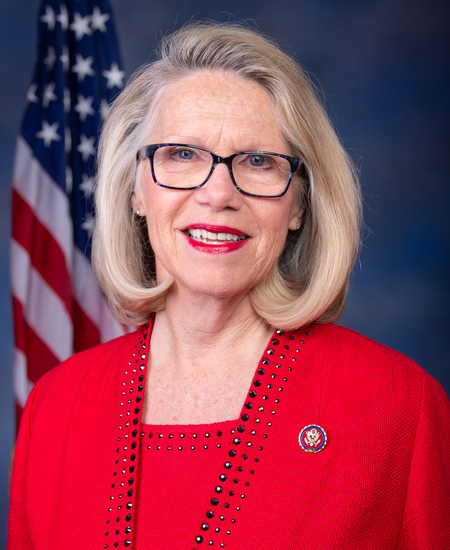
Rep. Carol D. Miller
Sponsored bills
Maddy summaryHR 1818, the Aviation Workforce Development Act, expands tax-advantaged 529 college savings plans to cover costs for aviation maintenance and commercial pilot training. It allows families to use 529 funds for tuition, fees, books, and equipment at qualifying schools - specifically aviation maintenance technician programs under FAA Part 147 rules or commercial pilot courses at FAA-certified flight schools (Part 61 or Part 141). The bill directly affects students pursuing these aviation careers by making their training more affordable through existing tax-advantaged savings accounts. The change applies to distributions made after the law's enactment date.
Maddy summaryThe American Innovation Act of 2025 modifies tax rules to support new businesses by changing how start-up and organizational costs can be deducted. It allows businesses to deduct up to $20,000 (adjusted for inflation) of initial costs in the first year, with remaining costs amortized over 15 years (180 months). The bill also preserves net operating losses and tax credits for new businesses after ownership changes, helping startups maintain tax benefits when sold or restructured. This primarily affects new businesses, startups, and small companies forming new ventures beginning after December 31, 2025.
Federal Firearms Licensee Protection Act of 2025 This bill modifies criminal penalties for an offense involving the theft of a firearm from a licensed importer, manufacturer, or dealer, or from their business premises. Specifically, the bill does the following: increases from 10 to 20 years the maximum prison term, and creates a 3- or 5-year mandatory minimum prison term for an offense that occurs during the commission of a burglary or robbery. An attempt to commit an offense is subject to the same penalties as a substantive offense.
Maddy summaryThe ARCH Act extends Medicare payment protections for rural hospitals through 2031, specifically prolonging the Medicare-Dependent Hospital (MDH) and Medicare Low-Volume Hospital (LVH) programs that prevent payment cuts for financially vulnerable facilities. It requires the GAO to report on rural hospital classifications - including critical access hospitals, rural emergency hospitals, and others - to analyze overlaps and recommend simplifications. The report must also assess how changing cost-reporting rules might improve financial stability for rural hospitals. This bill directly affects rural hospitals qualifying under MDH or LVH designations, ensuring continued Medicare funding until 2031.
Maddy summaryHR 1383 extends the Secure Rural Schools program, which provides payments to counties and states with federal land (like national forests) to support local schools and services. It reauthorizes these payments through fiscal year 2026, adding specific rules to ensure counties don’t receive duplicate payments for 2024 and 2025. The bill also extends related authorities for special projects on federal land and county fund expenditures through 2028-2029. This directly affects rural communities adjacent to federal lands that rely on these payments for education and infrastructure.
Rebuild America’s Health Care Schools Act of 2025 This bill allows hospitals to receive reimbursement under Medicare for certain costs associated with training nursing and allied health students in settings other than the hospital itself. Currently, hospitals may receive reimbursement under Medicare for the reasonable costs associated with training nursing and allied health students if certain conditions are met; the criteria vary depending on whether the students are enrolled in an educational program that is operated by the hospital or another entity. If the students are part of a program that is operated by another entity, the training must occur at the hospital itself or in areas immediately surrounding the hospital in order to qualify for reimbursement (among other requirements). The bill allows hospitals to receive reimbursement for these costs if the training is conducted at an entity that is related to the hospital (i.e., common ownership or control). The bill requires the Centers for Medicare & Medicaid Services (CMS) to update regulations to reflect these changes. Additionally, the CMS may not recoup or reduce payments to hospitals with respect to costs that are allowed under the bill and must refund any such recoupments or reductions that occurred during the six-year period prior to the bill's enactment.
Maddy summaryThis bill makes permanent a provision requiring health insurance plans to cover telehealth services without applying deductibles, which was previously temporary. It directly affects health insurance plans and their members who use telehealth services, ensuring no out-of-pocket cost for these visits under the plan. The key mechanism removes specific language in tax code provisions that limited this coverage to certain time periods, applying the rule permanently to all plan years starting in 2025. The bill does not create new telehealth services or infrastructure but changes how existing telehealth visits are covered by insurance.
Maddy summaryHR 1651 would nullify a specific Environmental Protection Agency (EPA) rule finalized on May 9, 2024. This rule established emissions standards for greenhouse gases from new, modified, and reconstructed fossil fuel power plants, set guidelines for existing plants, and repealed the previous "Affordable Clean Energy Rule." The bill would make this EPA rule unenforceable, directly affecting fossil fuel power plants by removing these federal emissions requirements. It does not create new regulations but cancels an existing EPA rule.
Maddy summaryThe Hospice Recertification Flexibility Act extends the ability for hospice providers to use telehealth for patient recertifications (verifying ongoing eligibility for hospice care) until December 31, 2027, instead of ending in March 2025. It specifies that telehealth recertifications will not apply in certain cases starting January 1, 2026, such as when patients are in areas with a hospice enrollment moratorium or when providers are under enhanced oversight. The bill also requires hospice claims for telehealth recertifications on or after January 1, 2026, to include a specific modifier or code indicating the telehealth encounter. This change directly affects hospice providers and their patients by modifying how remote eligibility checks are processed under Medicare.