

Maddy summaryHR 4417, the Mobile Cancer Screening Act, provides federal grants to fund new mobile cancer screening units targeting underserved communities. It directly affects nonprofit hospitals, community health centers, academic health centers, and health systems in rural areas or regions served by the Indian Health Service. The bill authorizes up to $2 million per grant to purchase vehicles, imaging technology, and digital tools for these units, requiring recipients to match federal funds at a 1:3 ratio. Grantees must provide follow-up care within 90 minutes for abnormal results and report de-identified patient data on screening rates and outcomes to Congress by 2031. The law allocates $15 million annually from 2027 through 2031 to expand access to early cancer screenings, particularly for lung and breast cancer.
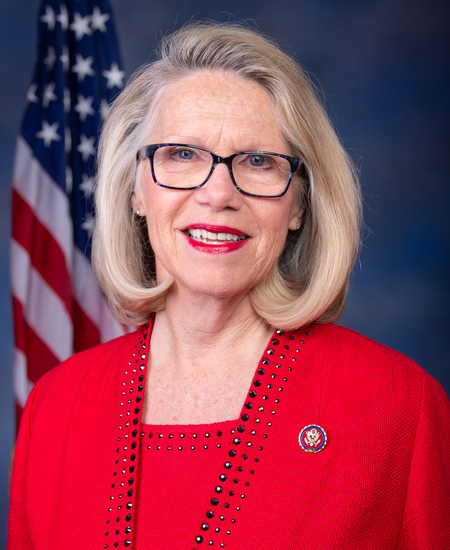
Rep. Carol D. Miller
Sponsored bills
Maddy summaryHR 4382 authorizes the U.S. Mint to produce commemorative coins for the 2028 Los Angeles Olympics/Paralympics and 2034 Salt Lake City Winter Olympics/Paralympics. It specifies gold, silver, and half-dollar coin designs with defined mintage limits (e.g., up to 100,000 $5 gold coins for each event), all bearing inscriptions like "2028" or "2034" and standard coin features. A surcharge ($5-$50 per coin) is added to sales, with all funds directed to the respective Olympic committees to support event hosting and legacy programs like youth sports. The bill ensures no net cost to the government by requiring surcharge revenues to cover all design, production, and marketing expenses before funds are disbursed.
Maddy summaryHRES 570 is a House resolution commending Petty Officer 3rd Class Scott Ruskan for rescuing 165 people during catastrophic July 2025 flooding in central Texas. The resolution honors Ruskan, a Coast Guard Aviation Survival Technician from Air Station Corpus Christi, for his role as the sole triage coordinator during the disaster. It recognizes his "exceptional courage" and "selflessness" in saving lives during the Guadalupe River flooding that caused extensive damage and loss of life. As a ceremonial resolution, it does not create new laws or policies but formally expresses the House's gratitude for Ruskan's service.
Maddy summaryHRES 571 is a symbolic resolution passed by the U.S. House of Representatives to commemorate the one-year anniversary of the July 13, 2024, attempted assassination of President Donald J. Trump in Butler, Pennsylvania. It condemns two assassination attempts against the President (in Butler and West Palm Beach), honors victims Corey D. Comperatore (who died shielding his family), David Dutch, and James Copenhaver (who were critically injured), and expresses gratitude to first responders. The resolution also condemns incitement of violence against political officials and calls for unity against political violence. As a non-binding resolution, it does not create new laws or policies but formally states the House’s position on these events.
Maddy summaryThis bill requires drug manufacturers to pay rebates to Medicare when their "selected drugs" (cancer and complex therapies subject to negotiated maximum fair prices) are used. Manufacturers must calculate rebates based on the difference between current Medicare payment rates (ASP+6) and new negotiated rates (MFP+6), covering the gap for beneficiaries. This lowers patient coinsurance from the current 20% of ASP+6 to 20% of MFP+6 for these specific drugs during the negotiated price period. The rebates are paid to the Medicare trust fund and apply to Medicare Part B beneficiaries using these drugs, directly affecting drug manufacturers and patients covered under Medicare Part B.
Maddy summaryThe CONNECT for Health Act of 2025 expands Medicare telehealth coverage by removing geographic restrictions that limited where patients could receive care, expanding the types of health care providers who can offer telehealth services, and eliminating the requirement for an in-person visit before receiving telemental health services. The bill includes specific provisions to support telehealth use for Native American health facilities, rural health clinics, and Federally Qualified Health Centers. It requires the Centers for Medicare & Medicaid Services to collect and publish data on telehealth usage and impacts, and to develop resources to improve accessibility for people with disabilities and limited English proficiency. Program integrity measures are added to monitor telehealth billing practices and prevent fraud while maintaining coverage for telehealth services during public health emergencies.
Maddy summaryThis bill makes technical corrections to the Camp Lejeune Justice Act of 2022 to streamline claims for individuals harmed by water contamination at Camp Lejeune. It clarifies the evidence required (30+ days at the base plus a link between contaminants and health harm), specifies that cases must be handled in North Carolina courts (with limited transfer options), and sets attorney fee caps (20% before suit, 25% after). These changes directly affect veterans and civilians who lived at Camp Lejeune and filed claims under the 2022 law. The bill does not create new eligibility but aims to improve the legal process for existing cases.
Maddy summaryThis bill changes how federal Bureau of Prisons employees in the "Rest of U.S." pay locality receive compensation. It directs that employees whose official worksite is in "Rest of U.S." be treated as working in the nearest other pay locality (within 200 miles) with the highest comparability payment, rather than the default "Rest of U.S." rate. This adjustment applies to all Bureau of Prisons employees, including prevailing rate staff, and takes effect 180 days after enactment. The change directly affects federal correctional officers and staff working in remote locations currently covered by the "Rest of U.S." pay rate.
Maddy summaryHR 3885, the Community TEAMS Act of 2025, creates a new grant program to expand medical student clinical training in rural and medically underserved communities. It provides funding for consortia of medical schools partnered with rural health clinics, community health centers, or facilities in underserved areas to support student rotations in outpatient settings. The grants, lasting 1-5 years, require applicants to detail project plans, sustainability, and how the program will improve community access to healthcare. This directly affects medical students, training facilities, and residents of high-need areas by aiming to build a sustainable physician workforce in those locations.
Maddy summaryHR 3843, the Baseload Reliability Protection Act, prohibits the retirement or fuel-source conversion of certain large, reliable power plants (over 25 megawatts, not relying on intermittent renewables like solar/wind without storage) in areas designated as high or elevated risk for electricity shortages. It directly affects power plant operators in these high-risk regions, requiring them to maintain existing facilities unless they qualify for an exemption. Exemptions can be granted if operators demonstrate financial hardship, safety risks, or prove they’ll replace the plant with a comparable reliable unit, with potential federal grants or loans from the Department of Energy to cover operational costs. The bill explicitly blocks consideration of greenhouse gas emissions in exemption decisions and mandates standardized risk assessment criteria for identifying high-risk areas.