

Maddy summaryThis bill defines "natural cheese" in federal law to clarify labeling standards for consumers. It specifies that natural cheese must be made primarily from coagulated milk proteins through traditional methods, while explicitly excluding processed cheeses like American cheese, cheese spreads, and pasteurized blends. The law requires products labeled as "natural cheese" to meet this definition, ensuring consistent labeling nationwide and preventing misleading claims. It directly affects cheese manufacturers, retailers, and consumers by standardizing what can be marketed as natural cheese. The bill aims to increase transparency without changing existing food safety regulations.
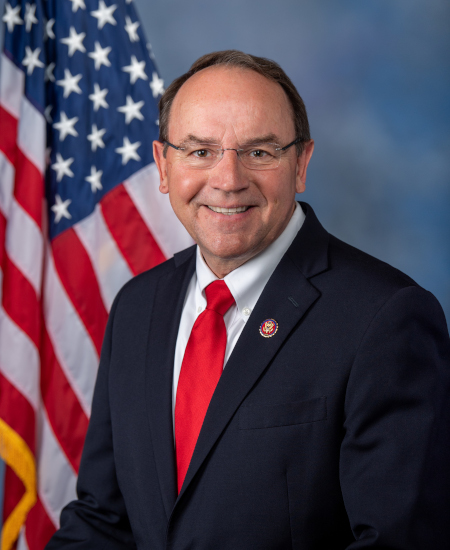
Rep. Thomas P. Tiffany
Sponsored bills
Maddy summaryThis bill amends the Food and Nutrition Act of 2008 to clarify that households must meet existing income and resource criteria to receive food assistance benefits. It directly affects households applying for or receiving SNAP (Supplemental Nutrition Assistance Program) benefits under the Food and Nutrition Act. The key provision explicitly states that eligibility requires compliance with current income and asset standards, reinforcing existing rules rather than creating new restrictions. The amendment takes effect one year after enactment, with existing benefit certifications unaffected if they began before that date.
This concurrent resolution declares that Congress should not impose any new performance fee, tax, royalty, or other charge relating to the public performance of sound recordings on a local radio station for broadcasting sound recordings over the air, or on any business for such public performance of sound recordings.
Maddy summaryHR 1303, the Protecting America’s Seniors’ Access to Care Act, would block the federal government from enforcing a 2024 rule requiring nursing homes to meet minimum staffing standards and mandating Medicaid programs to report payment transparency details. This bill directly affects long-term care facilities and Medicaid programs by preventing the implementation of these specific requirements. The legislation prohibits the Secretary of Health and Human Services from carrying out the rule published on May 10, 2024, which was designed to improve care quality and accountability in senior healthcare. It stops the rule from taking effect without creating new policies or regulations.
Maddy summaryHR 1301, the Death Tax Repeal Act, would eliminate the federal estate tax and generation-skipping transfer tax for estates of individuals dying on or after its enactment date. It directly affects individuals inheriting significant assets, as it removes taxes on estates exceeding $10 million (adjusted for inflation) and repeals taxes on large transfers between generations. The bill modifies the gift tax by establishing a $10 million lifetime exemption with annual inflation adjustments, replacing previous tax brackets. It applies to estates, gifts, and transfers occurring on or after the bill's effective date.
Maddy summaryHR 1309, the "Protect America’s Lands Act," prohibits national securities exchanges from processing transactions involving securities issued by "natural asset companies." These are defined as companies that hold rights to manage specific land areas for conservation, restoration, or sustainable use, with the primary purpose of maintaining or growing natural assets and ecosystem services. The bill directly affects financial markets by restricting how securities tied to environmental land management are traded, not landowners or conservation efforts. It amends the Securities Exchange Act of 1934 to create this new regulatory barrier for such financial instruments. The bill focuses on securities regulation, not direct land protection or policy changes for land use.
Maddy summaryThis bill removes the time limit for prosecuting federal homicide offenses, allowing cases to be filed regardless of how long it takes between the harmful act and the victim's death. It amends Title 18 to state that a prosecution may proceed without regard to the time elapsed between the act causing death and the death itself. This directly affects federal prosecutors and defendants in homicide cases where the victim dies after the initial injury or act. The change ensures cases involving delayed fatalities, such as those from severe assaults, can be prosecuted without being barred by time limits.
Maddy summaryHR 1232, the National Right-to-Work Act, would make union membership voluntary for workers in most private-sector jobs by removing legal requirements for employees to join a union or pay dues as a condition of employment. It directly affects workers in unionized workplaces covered by the National Labor Relations Act (including most private employers) and railroad workers covered by the Railway Labor Act. The key change eliminates provisions that allowed "union security agreements" (requiring dues or membership), meaning workers could no longer be forced to pay union fees to keep their jobs. This bill does not change other labor rights or create new programs - it only modifies existing laws to allow workers to opt out of union membership and financial obligations.
Security And Fairness Enhancement for America Act of 2025 or SAFE for America Act of 2025 This bill eliminates the diversity visa program. This program provides up to 55,000 visas annually to individuals from countries with low rates of immigration to the United States.
This bill repeals the Impoundment Control Act of 1974 (ICA). The ICA generally limits the authority of the President to impound (i.e., withhold from obligation or expenditure) funds that have been appropriated by Congress and establishes related procedures. It also establishes expedited legislative procedures that Congress may use to consider legislation to enact rescissions proposed by the President.