

Maddy summaryThis bill would create a new annual budget process requiring Congress to produce a single comprehensive budget act that includes all federal spending and revenue, rather than the current fragmented system where appropriations bills and direct spending/revenue policies are handled separately. It sets specific deadlines: Congress must adopt a budget resolution by April 15, committees must submit direct spending and revenue line items by May 15, and the House must report the full budget act by June 10. The bill repeals the current reconciliation process and requires committees to submit their spending and revenue proposals for inclusion in the annual budget. This reform aims to make Congress more involved in fiscal decision-making, improve program coordination, and better control deficits and debt. It would directly affect all congressional committees and the budget process for all federal spending and revenue.
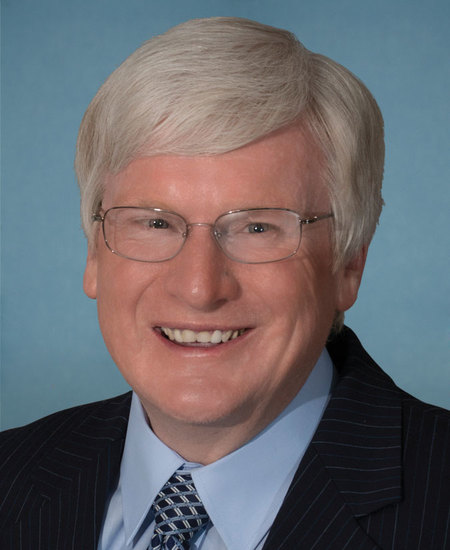
Rep. Glenn Grothman
Sponsored bills
Maddy summaryThis bill requires cabinet secretaries (like the Secretary of Defense or Health Secretary) to notify Congress in writing within 24 hours if they cannot perform their duties. It applies to all cabinet members whose appointments require Senate confirmation. If a secretary cannot notify due to a medical emergency or other urgent situation, their agency must submit the notice instead. The law aims to ensure Congress is promptly informed about temporary leadership gaps in major federal departments.
Maddy summaryHR 6744, the "No VA Resources for Illegal Aliens Act," prohibits the Department of Veterans Affairs (VA) from providing health care or processing health care claims for individuals unlawfully present in the United States who are not already eligible for VA health care under existing law. This bill directly affects undocumented immigrants who do not qualify for VA benefits through standard veteran eligibility criteria. The key provision explicitly bars VA resources from being used for any care or claims processing for such individuals. The bill does not alter VA eligibility rules for veterans but prevents the use of VA funds for non-eligible non-citizens unlawfully present in the U.S.
Maddy summaryThe Default Prevention Act (HR 187) requires the Treasury to pay interest and principal on U.S. debt held by the public and Social Security trust funds (including Old-Age and Survivors Insurance and Disability Insurance Trust Funds) if the national debt limit is reached. To do this, the Treasury would issue special obligations exempt from the debt ceiling, meaning they wouldn’t count toward the limit, and these funds couldn’t be used to pay Congress members’ salaries. The bill mandates weekly reports to the House Ways and Means and Senate Finance Committees detailing payments made and obligations issued. This mechanism aims to prevent a government default on critical debt obligations without altering the statutory debt limit.
Maddy summaryThis bill permanently cancels unused funds from the Department of Commerce's Nonrecurring Expenses Fund, which were set aside under the 2023 Fiscal Responsibility Act. It specifies that this cancellation won't count toward federal budget caps or allocation rules under existing budget laws. The bill directly affects how leftover government funds are handled within the Commerce Department's budget, eliminating a specific account for nonrecurring expenses.
Maddy summaryHR 1147, the Whole Milk for Healthy Kids Act of 2023, allows schools participating in the National School Lunch Program to offer whole milk as an option during lunch. It amends the school lunch law to explicitly permit schools to serve flavored and unflavored whole milk alongside reduced-fat, low-fat, and fat-free milk choices for students. The bill also requires the Secretary of Agriculture to adjust meal regulations to account for saturated fat from whole milk, ensuring it doesn't count against meal fat limits. This change directly affects participating schools and the students who receive school lunches, expanding their milk beverage options.
Maddy summaryHR 6734 prohibits the use of federal funds to finalize, implement, or enforce the Bureau of Alcohol, Tobacco, Firearms, and Explosives' (ATF) proposed rule (2022R-17) defining "engaged in the business as a dealer in firearms." This bill directly affects the ATF by blocking funding for this specific regulatory rule, which was proposed in August 2023. The legislation does not create new requirements but prevents federal resources from being used to advance this particular ATF regulation.
Maddy summaryHR 6728, the Save Women’s Sports Act of 2023, requires schools receiving federal funding to designate athletic teams as male, female, or coed based strictly on biological sex at birth. Female-designated teams must be composed exclusively of students biologically female at birth. Schools failing to comply risk losing all federal financial assistance. The bill directly affects public and private schools participating in federally funded sports programs.
Maddy summaryHJRES 88 is a resolution seeking to block a Department of Education rule that would have improved income-driven repayment options for federal student loan borrowers. The rule, published in the Federal Register on July 10, 2023, targeted the William D. Ford Direct Loan Program and the Federal Family Education Loan (FFEL) Program. This resolution uses the Congressional Review Act process to disapprove the rule, preventing it from taking effect and preserving the current repayment structure. If enacted, it would stop the proposed changes to repayment terms without altering existing loan policies.
Maddy summaryThe DETERRENT Act requires institutions of higher education to disclose foreign gifts and contracts meeting specific value thresholds ($50,000 or more) to the Department of Education, with special rules for contracts involving "foreign countries of concern" or "foreign entities of concern." It creates a public database of these disclosures, mandates faculty and staff to report foreign gifts related to research, and establishes a waiver process for institutions seeking to contract with prohibited foreign entities. Institutions that fail to comply face fines ranging from 1% to 100% of their federal funding, depending on the violation and whether it's a first or repeat offense. The bill applies primarily to institutions receiving significant federal funding, particularly those with substantial research programs. It aims to increase transparency around foreign influence in higher education while maintaining academic freedom.