

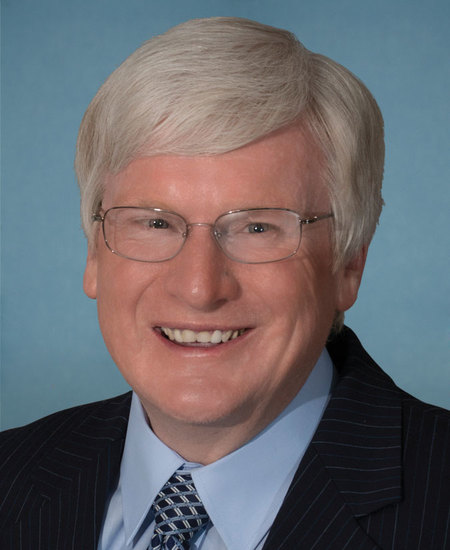
Photo of Glenn Grothman
R United States House · District 6 · Wisconsin On the 2026 ballot

Rep. Glenn Grothman

Compare
Total votes
2,837
all sessions
Attendance
99%
41 missed
Near the chamber average
With party
92%
of cast votes
Near the chamber average
Bipartisan score
4%
crosses aisle rarely
Near the chamber average
Sponsored
1,193
bills & resolutions
Near the chamber average
Committees
9
assignments
1,193 bills and resolutions

Sponsored bills

Total
1,193
Primary
104
Co-sponsor
1,089
This page
1,193
matching current filters
Primary HR 5712
Signed into law · Indiana House · Lead sponsor
To designate the facility of the United States Postal Service located at 220 Fremont Street in Kiel, Wisconsin, as the "Trooper Trevor J. Casper Post Office Building".

Maddy summaryThis bill renames a U.S. Postal Service facility at 220 Fremont Street in Kiel, Wisconsin, as the "Trooper Trevor J. Casper Post Office Building." It directly affects the postal service location and all federal documents referencing it. The bill’s key provision updates all official references (laws, maps, records) to use the new name. No policy changes or funding are involved - this is a purely ceremonial naming resolution.

Signed into law Nov 25, 2024 0 co-sponsors
Co-sponsor HR 807
Signed into law · Indiana House · Co-sponsor
Working Dog Commemorative Coin Act

Maddy summaryThe Working Dog Commemorative Coin Act (HR 807) directs the U.S. Treasury to mint three types of commemorative coins honoring working dogs' service: $5 gold coins, $1 silver coins, and half-dollar coins with specific weight and composition requirements. Each coin will carry a surcharge ($35 for $5 coins, $10 for $1 coins, $5 for half-dollars) that will be paid directly to America's VetDogs to support their programs providing service dogs for veterans, the disabled, and others. The coins will be issued in 2027 with designs reflecting working dogs' roles in military, detection, therapy, and assistance work. The legislation specifies that all surcharge revenue must fund America's VetDogs' operations without creating new government programs. This is a commemorative measure focused on honoring working dogs' contributions through coin sales, with all surcharge funds going to a specific nonprofit organization.

Signed into law Nov 25, 2024 1 co-sponsor
Co-sponsor HR 10195
In committee · Indiana House · Co-sponsor
No Discrimination in Housing Act

Maddy summaryThe No Discrimination in Housing Act would deny the federal low-income housing tax credit (LIHTC) to housing developers and entities that implement diversity, equity, and inclusion (DEI) initiatives. This credit, a key incentive for building affordable housing, would no longer be available to entities with DEI programs, including partnerships and S corporations. For business structures like partnerships, the denial applies to the entire entity - not just individual owners - meaning the credit is lost at the organizational level. The provision would take effect for tax years beginning after the bill is enacted.

In committee Nov 21, 2024 1 co-sponsor
Co-sponsor HR 10194
In committee · Indiana House · Co-sponsor
Flexibility in Housing Act of 2024

Maddy summaryThis bill blocks the Department of Housing and Urban Development (HUD) from implementing or enforcing the "Affirmatively Furthering Fair Housing" rule (2023) and prevents HUD from reissuing a similar rule without new congressional approval. It requires HUD to reinstate the "Preserving Community and Neighborhood Choice" rule (2020) as fully effective. The bill directly affects HUD's regulatory authority over housing programs but does not create new housing benefits or requirements for residents. It focuses solely on altering HUD's rulemaking process regarding fair housing enforcement.

In committee Nov 21, 2024 1 co-sponsor
Primary HR 10216
In committee · Indiana House · Lead sponsor
Ending Racism in Government Contracting Act

Maddy summaryThis bill would eliminate preferences for socially and economically disadvantaged businesses in government contracting by amending multiple federal laws, including the Small Business Act and the Minority Business Development Act. It removes references to "disadvantaged businesses" and repeals provisions requiring agencies to track or prioritize contracts for these businesses. The bill also adds new prohibitions against considering race or ethnicity in contract awards, stating agencies may not take race or ethnicity into account when granting contracts. It would require agencies to remove all references to racial or ethnic considerations from contracting rules within 180 days of enactment. These changes would fundamentally alter government contracting practices by removing specific preferences that have been part of contracting programs for decades.

In committee Nov 21, 2024 0 co-sponsors
Co-sponsor HR 8706
In committee · Indiana House · Co-sponsor
Dismantle DEI Act of 2024

Maddy summaryHR 8706, the "Dismantle DEI Act of 2024," would prohibit federal agencies from maintaining diversity, equity, and inclusion (DEI) offices, programs, or training by requiring the closure of existing DEI offices within 90 days and banning federal funding for DEI-related activities. The bill defines "prohibited diversity, equity, and inclusion practices" as those that discriminate based on race, color, ethnicity, religion, biological sex, or national origin, or require training that asserts a particular group is inherently superior or inferior. It would rescind several executive orders related to racial equity and gender inclusion, and prohibit the use of federal funds for DEI-related activities across all federal agencies, contractors, and grant recipients. The bill contains limited exceptions for Equal Employment Opportunity offices and disability rights enforcement offices as historically organized and operated.

In committee Nov 20, 2024 1 co-sponsor
Co-sponsor HR 3887
In committee · Indiana House · Co-sponsor
Children’s Hospital GME Support Reauthorization Act of 2023

Maddy summaryThis bill reauthorizes federal funding for graduate medical education (GME) programs at children's hospitals through fiscal year 2028. It prohibits payments to any children's hospital that provided gender-affirming care to minors during the previous fiscal year (with a special rule for 2024 payments covering July-September 2023). The bill defines "gender-affirming care" as specific medical treatments like surgeries or puberty-blocking medications for gender transition, but excludes care for certain medical conditions or gender dysphoria treatment not classified as such. This directly affects hospitals receiving GME funding that serve minors, potentially impacting their federal support if they provided the specified care. The policy change modifies existing funding rules without altering broader healthcare access for minors.

In committee Nov 20, 2024 1 co-sponsor
Primary HJRES 223
In committee · Indiana House · Lead sponsor
Providing for congressional disapproval under chapter 8 of title 5, United States Code, of the rule submitted by the Environmental Protection Agency relating to "Waste Emissions Charge for Petroleum and Natural Gas Systems: Procedures for Facilitating Compliance, Including Netting and Exemptions".

Maddy summaryThis resolution seeks congressional disapproval of an Environmental Protection Agency (EPA) rule that established procedures for petroleum and natural gas companies to comply with waste emissions charges, including netting and exemptions. If passed, it would prevent the EPA rule (published November 18, 2024) from taking effect, removing its requirements for affected companies. The bill directly impacts oil and gas operators subject to the EPA's emissions charge system by blocking a specific regulatory framework. It uses the statutory disapproval process under Title 5, U.S. Code, to halt the rule without creating new policy. The resolution does not alter emissions standards or create new obligations - it only stops the EPA rule from being enforced.

In committee Nov 19, 2024 0 co-sponsors
Co-sponsor HR 6951
In committee · Indiana House · Co-sponsor
College Cost Reduction Act

Maddy summary# Summary of Proposed Higher Education Act Amendments This document outlines significant proposed amendments to the Higher Education Act of 1965, primarily as part of the "College Cost Reduction Act." The key elements include: ## Accreditation Reform - Major overhaul of accreditation standards, requiring accrediting agencies to demonstrate independence from trade associations - New requirements for accrediting agencies to assess student achievement outcomes, including median value-added earnings relative to median total price charged - Introduction of an "Alternative Quality Assurance Experimental Site Initiative" to test non-accredited institutions - Protections for religious institutions, including a new process for appealing accreditation decisions related to religious mission - Removal of "litmus tests" that would require institutions to support specific political viewpoints ## Student Success Initiatives - Establishment of "Postsecondary Student Success Grants" to increase participation, retention, and completion rates for high-need students - Focus on evidence-based practices, with tiered requirements (tier 1, 2, and 3 reforms) - Mandatory inclusion of high-need student populations (low-income, first-generation, military-connected, etc.) - Requirements for institutions to report on completion rates, retention rates, and student demographics ## Regulatory Changes - Repeal of numerous existing regulations including: * Closed school discharges * Borrower defense to repayment * Pre-dispute arbitration * False certification requirements * Ability-to-benefit rules * Financial responsibility regulations - New restrictions on incentive compensation for recruiters - Changes to third-party servicer definitions and regulations ## Transfer and Credit Policies - New requirement that institutions cannot deny transfer credit based solely on the source of accreditation - Requirements for transparent transfer policies - Changes to reverse transfer policies ## Other Key Provisions - Modifications to the National Advisory Committee on Institutional Quality and Integrity (NACIQI) - New definitions for "total price" and "value-added earnings" - Changes to the process for institutions to change accrediting agencies - New requirements for institutions to report on student outcomes The overall focus of these proposed amendments is to reduce regulatory burden on institutions, promote transparency, improve student outcomes (particularly for high-need students), modernize accreditation processes, and protect religious institutions' rights in accreditation decisions.

In committee Nov 18, 2024 1 co-sponsor
Co-sponsor HR 9950
In committee · Indiana House · Co-sponsor
Miracle on Ice Congressional Gold Medal Act

Maddy summaryHR 9950, the "Miracle on Ice Congressional Gold Medal Act," authorizes three gold medals to be awarded to the members of the 1980 U.S. Olympic men's ice hockey team for their historic victory over the Soviet Union during the Winter Olympics. The medals, designed by the Treasury Secretary, will be presented by Congress to honor the team's achievement, which revitalized American morale during the Cold War. One medal will be displayed at the Lake Placid Olympic Center, one at the USA Hockey Hall of Fame in Eveleth, Minnesota, and one at the U.S. Olympic Museum in Colorado Springs. The bill also permits the sale of bronze duplicates to cover production costs. This is a ceremonial honor, not a policy change, directly recognizing the team members and their legacy.

In committee Oct 8, 2024 1 co-sponsor
Showing 381 to 390 of 1,193 bills
Previous 1 … 38 39 40 … 120 Next