

Maddy summaryHRES 166 is a non-binding House resolution expressing U.S. support for the Iranian people's desire for a democratic, secular, and nonnuclear republic. It condemns the Iranian regime's terrorism, regional proxy wars, internal suppression of ethnic and religious minorities, and human rights abuses - including executions and repression of women-led protests. The resolution calls for holding the regime accountable through sanctions, supports the Ten-Point Plan for Iran’s democratic transition, and urges protection for Iranian political refugees in Albania. It does not create new laws but affirms U.S. policy alignment with Iranian protesters' demands.
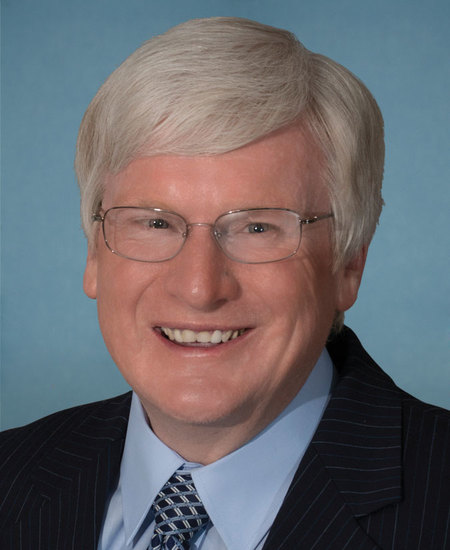
Rep. Glenn Grothman
Sponsored bills
Maddy summaryThis bill awards a Congressional Gold Medal to the 761st Tank Battalion (known as the "Black Panthers"), the first predominantly Black armored unit in World War II's European Theater. It recognizes their combat service from 1944-1946, including key roles in the Battle of the Bulge and breaking the Siegfried Line, despite facing racial prejudice during and after the war. The medal will be displayed at the National Museum of African American History and Culture, with bronze duplicates available for sale to cover costs. The bill commemorates the battalion's 130,000 enemy casualties inflicted, 50% casualty rate, and their 1978 Presidential Unit Citation. It does not create new laws or affect current policies.
Maddy summaryHR 1502 authorizes the creation of a Congressional Gold Medal to honor the volunteers and communities (primarily from Nebraska, Colorado, and Kansas) who supported the North Platte Canteen during World War II. The bill directs the Treasury Secretary to design and strike the medal, which will be presented to the individuals who contributed to the canteen’s operations and then permanently displayed at the Lincoln County Historical Museum in North Platte, Nebraska. It also permits the sale of bronze duplicates to cover production costs, with proceeds going to the U.S. Mint. This is a commemorative measure recognizing historical service, not a policy change affecting current laws or programs.
Maddy summaryThis bill prohibits U.S. government funds from being used to support organizations (both foreign and domestic) that provide, promote, or fund abortion services abroad, including referrals, counseling, or training related to abortions. It directly affects foreign NGOs, multilateral organizations, and domestic groups receiving U.S. aid if they perform or support such activities, even within programs funded by the U.S. government. The restriction includes all forms of financial support and co-location of abortion services with other funded programs, with exceptions only for abortions resulting from rape or incest, or when the mother's life is endangered. This policy change alters how U.S. foreign aid is allocated to ensure funds do not support abortion-related services.
Maddy summaryThe DEFUND Act of 2025 would terminate U.S. membership in the United Nations and all its affiliated bodies, including the World Health Organization, by repealing the legal foundations for U.S. participation. It requires the closure of the U.S. Mission to the UN, withdrawal from UN headquarters agreements, and the cessation of all U.S. financial contributions to the UN (except for termination costs). The bill also mandates that UN entities vacate U.S. government properties, revokes diplomatic immunity for UN officials in the U.S., and prohibits U.S. involvement in UN peacekeeping operations. Future U.S. re-entry into the UN would require Senate approval and a reservation allowing for immediate withdrawal.
Maddy summaryHR 1513, the "Unplug the Electric Vehicle Charging Stations Program Act," terminates two existing federal programs that funded electric vehicle (EV) charging infrastructure. The bill repeals the authorization for grants supporting EV charging stations and eliminates the National Electric Vehicle Infrastructure Formula Program, which distributed funds to states for building charging networks. It also rescinds unobligated funds previously allocated to these programs. This bill directly affects the Department of Transportation's ability to support EV charging infrastructure development through these specific funding mechanisms. The policy change removes federal financial support for expanding public EV charging networks under the Infrastructure Investment and Jobs Act.
Maddy summaryThe No IRIS Act of 2025 (HR 1415) prohibits the Environmental Protection Agency (EPA) from using scientific assessments generated by its Integrated Risk Information System (IRIS) program to develop environmental regulations, enforce laws, issue permits, or inform air toxics mapping tools. This bill directly restricts the EPA’s regulatory process by banning IRIS data from key decision-making steps in environmental rulemaking. The law requires the EPA to rely on alternative scientific data for these purposes, without altering the IRIS program itself. It does not change existing EPA authority but limits how specific assessments may be applied in regulatory actions.
Maddy summaryHR 1388 requires the Congressional Budget Office (CBO) and Office of Management and Budget (OMB) to use "fair-value" accounting for federal loan and loan guarantee programs, replacing traditional budget estimates with market-based cost calculations. This means the CBO must provide fair-value cost estimates for new or modified loan programs, and the OMB must annually report these estimates starting in 2026. The bill directs Congress to use these fair-value estimates when enforcing budget rules, ensuring budgetary decisions reflect the true economic cost of credit programs. It directly affects the CBO, OMB, and Congress in how they measure and manage federal credit program costs.
Maddy summaryThis bill defines "natural cheese" in federal law to clarify labeling standards for consumers. It specifies that natural cheese must be made primarily from coagulated milk proteins through traditional methods, while explicitly excluding processed cheeses like American cheese, cheese spreads, and pasteurized blends. The law requires products labeled as "natural cheese" to meet this definition, ensuring consistent labeling nationwide and preventing misleading claims. It directly affects cheese manufacturers, retailers, and consumers by standardizing what can be marketed as natural cheese. The bill aims to increase transparency without changing existing food safety regulations.
Maddy summaryHR 479, the Healthy SNAP Act of 2025, revises which foods are eligible for purchase using Supplemental Nutrition Assistance Program (SNAP) benefits. It prohibits SNAP benefits from being used for alcoholic beverages, tobacco, soft drinks, candy, ice cream, and prepared desserts like cakes or pies. The bill requires the Secretary of Agriculture to establish regulations within 180 days designating specific foods that contain nutrients lacking in U.S. diets, promote health based on nutrition science, and align with cultural eating patterns, while limiting fat, sugar, and salt. The Secretary must also review and update these designations at least every five years to reflect current science, and states may substitute culturally appropriate foods if nutritionally equivalent. This directly affects SNAP recipients and the program's food eligibility rules.