

Maddy summaryHR 672 directs the United States Postal Service to assign a single unique ZIP Code to 14 specific communities within 270 days of enactment. These communities include Eastvale (CA), Scotland (CT), Castle Pines and Silver Cliff (CO), Hollywood, Miami Lakes, and Ocoee (FL), Urbandale (IA), Franklin, Greenfield, Caledonia, Mount Pleasant, and Somers (WI), and Mills (WY). This change will update mail delivery systems and address identifiers for residents and businesses in these areas, streamlining postal operations.
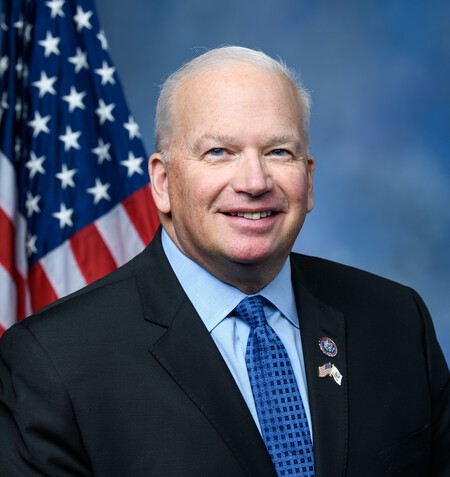
Rep. Scott Fitzgerald
Sponsored bills
Maddy summaryThis bill (HR 4564) amends federal law to expand who can administer epinephrine in schools during emergencies. It replaces "school personnel" with "trained personnel" and allows non-employee volunteers (like parents or community members) to be treated as trained if they meet requirements and their state attorney general certifies the program. The bill also updates terminology from "auto-injectable epinephrine" to "epinephrine delivery systems" to include all administration methods. It directly affects schools, non-employee staff/volunteers, and state health authorities responsible for certification. The changes aim to make emergency allergy response more flexible while maintaining state oversight.
Maddy summaryHR 1919, the "Anti-CBDC Surveillance State Act," prohibits the Federal Reserve from developing, testing, or issuing any central bank digital currency (CBDC) or similar digital assets. It specifically bans the Fed from offering direct financial products to individuals, maintaining individual accounts, or issuing CBDCs directly or indirectly through intermediaries like banks. The bill also blocks the Fed from using any digital asset for monetary policy and clarifies that physical currency's privacy protections remain intact. This policy directly affects the Federal Reserve System's ability to create or manage digital monetary tools.
Maddy summaryHR 4474, the Equal Shot Act of 2025, prohibits the Small Business Administration (SBA) from denying financial assistance - such as loans or guarantees - to firearm businesses solely because of their industry. It directly affects firearm manufacturers, distributors, trade associations, and affiliated entities like shooting ranges or training providers. The bill requires the SBA to treat these applicants equally under existing law, removing any policy that would block them based on their connection to firearms. This is a concrete policy change ensuring firearm-related businesses have the same access to SBA programs as other eligible applicants.
Maddy summaryHR 4382 authorizes the U.S. Mint to produce commemorative coins for the 2028 Los Angeles Olympics/Paralympics and 2034 Salt Lake City Winter Olympics/Paralympics. It specifies gold, silver, and half-dollar coin designs with defined mintage limits (e.g., up to 100,000 $5 gold coins for each event), all bearing inscriptions like "2028" or "2034" and standard coin features. A surcharge ($5-$50 per coin) is added to sales, with all funds directed to the respective Olympic committees to support event hosting and legacy programs like youth sports. The bill ensures no net cost to the government by requiring surcharge revenues to cover all design, production, and marketing expenses before funds are disbursed.
Maddy summaryThis bill prohibits U.S. courts from enforcing foreign court judgments against U.S. digital companies related to foreign digital market regulations. It directly affects U.S. companies providing "core platform services" (like major social media or search platforms) that face foreign rules requiring data sharing, interoperability, or restrictions on business practices. Key provisions block enforcement of such foreign regulations unless Congress specifically authorizes it, and grant the President authority to take actions protecting these companies if they face adverse foreign regulatory actions. The bill specifically targets regulations similar to the EU's Digital Markets Act, aiming to shield U.S. tech firms from foreign rules that could hinder their competitiveness.
Maddy summaryThis bill prohibits U.S. companies deemed "integral to national interests" (primarily those in extractive industries like mining/energy, manufacturing, or critical minerals with significant government contracts or revenue from raw materials) from complying with foreign sustainability regulations, including the EU’s Corporate Sustainability Due Diligence Directive. It bars such entities from undertaking required environmental or social impact assessments, reporting, or corrective actions under these foreign rules. Companies facing hardship may seek presidential exemptions within 30 days, considering impacts on U.S. jobs, supply chains, and economic security. The bill also prevents U.S. courts from recognizing foreign judgments against companies for non-compliance and allows legal action against entities taking adverse actions for refusing such foreign regulations.
Maddy summaryThis bill clarifies the Holocaust Expropriated Art Recovery Act of 2016 by preventing courts from dismissing claims based on time-related defenses (like laches or adverse possession) or other non-merits arguments (such as the act of state doctrine or forum non-conveniens). It specifically bars these defenses for claims seeking recovery of art looted by Nazis during World War II, ensuring cases are resolved on their merits. The bill applies to all pending cases and new claims filed after enactment, regardless of the victim's nationality. It strengthens the original law's purpose of enabling victims' heirs to pursue rightful recovery without procedural barriers.
Maddy summaryHR 4199, the Modernize the Au Pair Program Act of 2025, updates federal regulations for the au pair program to improve affordability and flexibility for host families. The bill requires the Department of State to propose new rules within 90 days, including a revised stipend formula reflecting room, board, and childcare costs without making the program prohibitively expensive. It also mandates greater program flexibility to accommodate military families, first responders, single parents, and shift workers with non-traditional schedules. The bill explicitly prohibits states from regulating the program, ensuring all rules remain uniform under federal law as intended by Congress. This directly affects American host families seeking affordable childcare and au pairs participating in the cultural exchange program.
Maddy summaryHR 4167, the Expanding Access to Lending Options Act, amends the Federal Credit Union Act to extend the maximum time federally chartered credit unions can hold mortgage loans from 15 years to 20 years (or longer by NCUA regulation). This change directly affects federally chartered credit unions by allowing them to offer longer-term mortgage products to members. The key provision modifies Section 107(5) of the Federal Credit Union Act, specifically updating the time limit for mortgage loans held by credit unions. The bill also includes a non-binding sense of Congress statement emphasizing safety and soundness in NCUA oversight, but the core policy change is the extended mortgage holding period.