

Maddy summaryThis bill provides housing loans and education assistance to Black World War II veterans who were denied GI Bill benefits due to racial discrimination, or to their surviving spouses, children, or direct descendants. To qualify, applicants must certify they were denied benefits on racial grounds under the original 1944 GI Bill and apply within five years of the law's enactment. The Department of Veterans Affairs must implement these provisions within 90 days and report to Congress on participation and program costs. It specifically addresses documented historical discrimination where Black veterans were steered toward vocational training instead of college, with only 6% earning degrees compared to 19% of White veterans.
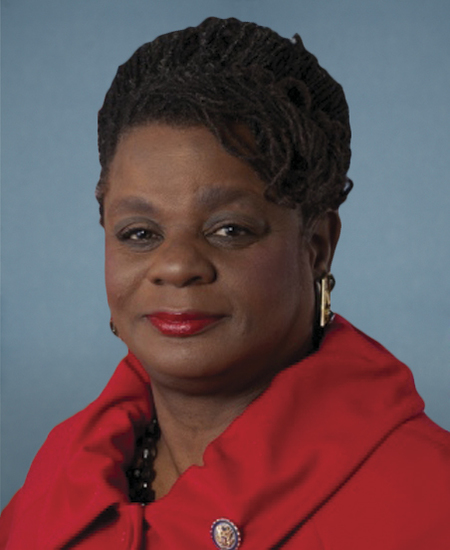
Rep. Gwen Moore
Sponsored bills
Maddy summaryHR 2381, the SCREENS for Cancer Act of 2025, reauthorizes and updates the National Breast and Cervical Cancer Early Detection Program (NBCCEDP). It directly affects low-income, uninsured, or underinsured women across all 50 states, territories, and tribal communities by expanding access to breast and cervical cancer screenings, diagnostic services, and patient navigation support. Key provisions include updating program language to emphasize prevention alongside detection and control, adding specific strategies to reduce disparities, and appropriating $235 million annually for fiscal years 2026-2030. The bill also requires a GAO study by 2027 to assess program eligibility, service trends, and barriers to screening access.
Maddy summaryThis bill would require federal firearms licensees to prohibit sales of specific high-capacity rifles and shotguns to people under 21. It targets semiautomatic centerfire rifles and shotguns capable of holding more than 5 rounds in their magazines, raising the age limit from 18 to 21 for these weapons. Exceptions apply for active military members and certain government employees authorized to carry firearms. The law directly affects gun retailers and individuals under 21 seeking to purchase these specific firearms. It modifies existing federal gun sale rules without changing age requirements for other firearms.
Maddy summaryThe WRCR Act of 2025 expands the Earned Income Tax Credit (EITC) to include qualifying students who meet specific criteria, such as receiving a Federal Pell Grant or having household income below 300% of the poverty line. It lowers the age requirement for eligibility from 25 to 18 and creates a special rule treating certain care-giving and learning activities as "compensated work" for EITC purposes. The bill increases credit percentages for certain taxpayers, modifies phaseout amounts to $4,000 (single filers) and $30,000 (joint filers), and establishes an advance payment system allowing monthly EITC payments up to 75% of the estimated credit. These changes directly affect low-income workers, students, and families with children who qualify for the EITC, with the advance payments beginning in 2026 for taxable years after 2024.
Maddy summaryThis bill authorizes the President to award Doris Miller the Medal of Honor posthumously for her heroic actions during the Pearl Harbor attack in 1941. It directly affects Miller, an African American Navy cook who was initially recognized with a Navy Cross for saving lives and operating a machine gun under fire while serving in a role typically restricted to Black sailors. The bill overrides standard time limits for awarding the Medal of Honor, enabling the upgrade from her existing Navy Cross citation. This would correct the historical oversight where Miller - unlike other Pearl Harbor heroes - was denied the Medal of Honor despite her documented valor.
Maddy summaryThe Paycheck Fairness Act strengthens equal pay protections by expanding the definition of "sex" to include pregnancy, childbirth, sexual orientation, gender identity, and sex characteristics. It modifies employer defenses for pay disparities to require proof that any pay difference is job-related, not based on sex, and accounts for the entire pay gap. The bill prohibits employers from asking about salary history, enhances penalties for violations, and requires employers with 100+ employees to collect and report detailed pay data by race, sex, and job category. It also establishes training programs for employers on eliminating pay bias and creates a National Equal Pay Enforcement Task Force to coordinate enforcement efforts. This legislation directly affects employers, particularly those with 100+ employees, and aims to address pay disparities impacting women, people of color, and other underrepresented groups.
Maddy summaryH.J. Res. 80 would declare the Equal Rights Amendment (ERA) part of the U.S. Constitution, asserting it has been ratified by 38 states (three-fourths of the states) despite the original 1972 deadline. If passed, this resolution would formally establish the ERA as a constitutional amendment, requiring all federal and state laws to align with its gender equality protections. The bill does not create new laws but confirms the ERA's status as part of the Constitution, affecting how laws are interpreted and enforced. It is a procedural step to resolve the legal dispute over the ERA's validity after decades of debate.
Maddy summaryHRES 238 is a non-binding House resolution expressing the House's position that every person has the basic right to emergency health care, including abortion care during medical emergencies. It does not create new laws or alter existing regulations but formally states the House's view that abortion restrictions in emergencies endanger patients' health and lives. The resolution specifically highlights how current abortion bans put pregnant people at risk during life-threatening conditions like hemorrhage or infection, disproportionately impacting Black, Indigenous, people of color, immigrants, and low-income individuals. It serves as a symbolic statement opposing policies that restrict emergency reproductive care access.
Maddy summaryThis resolution (HRES 195) requests the President to provide the House of Representatives with specific documents and communications related to the Social Security Administration (SSA) after January 20, 2025. It seeks information about the Department of Government Efficiency’s (DOGE) access to SSA systems, visits to SSA offices, compliance with certain executive orders, call volumes, office closures, and staff reductions. The request covers documents like IT access logs, correspondence, audit trails, and operational metrics, all to be provided within 14 days of the resolution's adoption. As a procedural oversight measure, it does not change laws but aims to gather facts about SSA operations.
Maddy summaryHRES 231 (introduced March 18, 2025) is a symbolic resolution designating March 14, 2025, as "Black Midwives Day" to honor Black midwives' historical and ongoing role in improving maternal and infant health. It recognizes how Black midwives provide culturally competent care that addresses racial disparities in maternal outcomes, particularly in communities facing maternity care deserts. The resolution does not create new laws but calls for federal, state, and local governments to support initiatives expanding access to Black midwives and removing barriers to their practice. It highlights that Black birthing people face significantly higher maternal mortality rates (50.3 deaths per 100,000 live births in 2023) compared to other groups, often due to systemic inequities. The resolution emphasizes the need for policies promoting midwifery care as part of equitable maternal health solutions.