

Maddy summaryThe Heating and Cooling Relief Act (HR 2486) expands the Low-Income Home Energy Assistance Program (LIHEAP) to help low-income households struggling with energy costs. It increases funding to cover all eligible households (those with incomes up to 250% of poverty level or 80% of State median income), sets a goal that no household should spend more than 3% of income on energy, and requires states to operate assistance programs year-round. The bill includes new protections against utility shutoffs for 2 years after assistance is received, prohibits late fees during the 6 months following assistance, and mandates weatherization and energy efficiency improvements in low-income housing. It also requires states to develop extreme heat response plans and addresses the $21 billion in residential utility arrears as of September 2024.
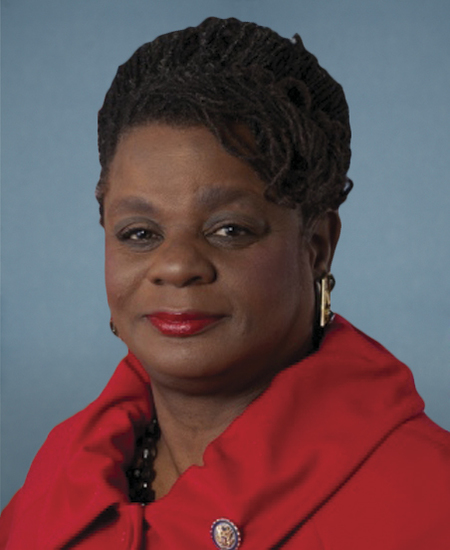
Rep. Gwen Moore
Sponsored bills
Save America's Forgotten Equines Act of 2025 or the SAFE Act of 2025 This bill permanently prohibits the slaughter of equines (e.g., horses and mules) for human consumption. (Current law prohibits the slaughter of dogs and cats for human consumption. This bill extends the prohibition to equines.) Specifically, this bill prohibits a person from knowingly (1) slaughtering an equine for human consumption; or (2) shipping, transporting, possessing, purchasing, selling, or donating an equine to be slaughtered for human consumption or equine parts for human consumption. The bill subjects a violator to a fine. The bill applies to conduct in or affecting interstate or foreign commerce or within the special maritime and territorial jurisdiction of the United States. However, it does not apply to an activity carried out by an Indian for a religious ceremony. As background, in recent years, the appropriations acts have prohibited the Department of Agriculture (USDA) from using federal funds to inspect horses before they are slaughtered for human consumption. Therefore, there are currently no USDA-inspected horse slaughter facilities in the United States.
Maddy summaryHR 2439 authorizes $50 million for fiscal year 2026 and $55 million for 2027 to fund the United Nations Population Fund (UNFPA), directly supporting its global programs. The bill specifies that these funds will help end preventable maternal deaths, address unmet contraceptive needs, combat gender-based violence, and end harmful practices like child marriage and female genital mutilation. UNFPA operates in over 150 countries, primarily aiding women and girls in developing nations and crisis zones, including those affected by conflict or natural disasters. The bill emphasizes UNFPA’s compliance with U.S. restrictions (not funding abortion) and its role in advancing U.S. strategic interests through voluntary family planning and reproductive health services.
Maddy summaryHR 2469, the Abortion DOULAS Act, mandates a study by the Secretary of Health and Human Services on abortion doula care - non-clinical support provided by trained professionals before, during, and after abortions. The study will collect data from patients, doulas, and providers to assess benefits, barriers (like cost and limited Medicaid coverage), and accessibility, especially for marginalized communities. It requires a report to Congress within 18 months, including recommendations for integrating abortion doula care into state Medicaid programs. The bill directly affects patients seeking abortion care, abortion doulas, and state Medicaid systems by focusing on evidence-based policy development. It does not alter current coverage but aims to inform future policy changes.
Maddy summaryHR 2410 creates a 20% federal tax credit for developers converting older non-residential buildings (at least 20 years old) into affordable housing. The credit applies to qualified conversion costs, requiring that 20% of units be rent-restricted for residents earning 80% or less of the area median income for 30 years. It establishes a $12 billion national credit limit, with $3 billion reserved for conversions in economically distressed areas, and mandates state-level allocation plans prioritizing projects near transit and employment. The bill directly affects developers seeking tax incentives for downtown revitalization, not tenants or local governments.
Maddy summaryHR 2467, America's Red Rock Wilderness Act, would designate approximately 1.3 million acres of public land across Utah as wilderness areas, protecting them from development and managing them for conservation. The bill specifically designates 77 wilderness areas in the Great Basin and Colorado Plateau regions, including lands within existing national monuments like Grand Staircase-Escalante and Bears Ears. It includes provisions for water rights protection, allows continued livestock grazing under certain conditions, and withdraws the designated lands from mining and mineral leasing. The bill also ensures Tribal rights are protected and requires the Secretary of the Interior to administer these areas according to wilderness management standards.
Maddy summary# Northern Rockies Ecosystem Protection Act (2023) - Summary This comprehensive environmental protection bill designates and protects vast areas across the Northern Rockies region of Idaho, Montana, Wyoming, Oregon, and Washington. ## Key Provisions 1. **Wilderness Designations**: - Creates numerous new wilderness areas totaling millions of acres across the region - Includes specific designations like Yellowstone, Glacier/Northern Continental Divide, Hells Canyon, Salmon/Selway, and Cabinet-Yaak ecosystems - Includes 108 specific wilderness areas identified in the bill (from Anaconda-Pintler to McCullough Peaks) 2. **Biological Connecting Corridors**: - Designates approximately 2.9 million acres as biological corridors - These corridors connect larger ecosystem areas to facilitate wildlife migration - Prohibits timber harvesting, mining, oil/gas development, and new road construction in these corridors 3. **Wild and Scenic Rivers**: - Adds 78 new river segments to the Wild and Scenic Rivers system - Protects rivers like the South Fork Payette, Salmon River, Yaak River, and many others - Specifies exact segments for protection 4. **Wildland Restoration**: - Designates 9 recovery areas totaling approximately 1,023,000 acres - Requires restoration of damaged lands to natural conditions - Prohibits certain activities in these recovery areas 5. **Implementation**: - Requires an interagency team to monitor and evaluate implementation - Mandates geographic information system for monitoring the Northern Rockies Bioregion - Requires annual reports to Congress on implementation progress 6. **Special Protections**: - Maintains existing water rights of the United States - Protects Indian Tribe treaty rights and cultural access to protected areas - Requires consultation with Tribes regarding management plans This bill represents a comprehensive effort to protect biodiversity, maintain ecosystem connectivity, and restore damaged lands across a significant portion of the Northern Rockies region.
Maddy summaryThis bill, HR 2411, directs the U.S. government to immediately resume funding for the United Nations Relief and Works Agency for Palestine Refugees (UNRWA) by repealing two prior funding restrictions. It requires the State Department to restart payments to UNRWA under existing authorities and mandates the President to rescind a 2025 executive order ending UNRWA support. The bill affects Palestinian refugees in Gaza, Jordan, Lebanon, Syria, and the West Bank who rely on UNRWA for humanitarian aid, as well as U.S. funding mechanisms. It also requires quarterly reports through 2028 on UNRWA’s progress implementing accountability reforms from an independent review led by Catherine Colonna.
Maddy summary# Summary of the American Housing and Economic Mobility Act of 2025 This comprehensive legislation addresses housing affordability, civil rights, financial inclusion, and tax policy through multiple titles: **Fair Housing Expansion (Title I):** - Expands protections under the Fair Housing Act to include gender identity, sexual orientation, marital status, source of income, and veteran status - Requires housing providers receiving federal assistance to comply with enhanced accessibility standards (twice as many units must be accessible) **Community Reinvestment Act Strengthening (Title II):** - Requires banks to form diverse Community Advisory Committees in each metropolitan area - Mandates regular biannual consultations between bank executives and community advisory groups - Requires detailed data collection on lending practices by demographic factors (including race, ethnicity, and disability status) - Establishes new requirements for banks to analyze and report on disparities in access to credit **Veterans' Housing Access (Title III):** - Expands eligibility for VA home loans to include direct descendants of veterans who served between June 22, 1944, and April 11, 1968, who are first-time, first-generation homebuyers **Public Housing Improvements (Title IV):** - Requires public housing agencies to analyze where participants live and develop strategies to increase access to higher-opportunity neighborhoods - Mandates regional collaboration among housing agencies to reduce disparities in access - Requires HUD to develop mapping tools to help agencies analyze neighborhood access **Estate Tax Reforms (Title V):** - Increases estate tax rates for large estates (over $13 million) - Reduces the basic exclusion amount from $13 million to $3.5 million - Imposes a 10% surtax on estates exceeding $1 billion - Increases the exclusion limit for farm real property from $750,000 to $3 million - Increases the exclusion for land subject to conservation easements from $500,000 to $2 million - Creates a new 5-8% surcharge on high-income estates and trusts **Additional Provisions:** - Strengthens credit union service to underserved areas - Raises public welfare caps for banks to increase investments in low-income communities - Requires new data collection and reporting requirements for financial institutions This legislation represents a significant expansion of housing rights, financial inclusion, and tax policy reforms aimed at reducing disparities in access to housing and financial services while reforming the estate tax system.
TAP Promotion Act This bill requires that pre-separation counseling under the Transition Assistance Program include a presentation that promotes the benefits available to veterans from the Department of Veterans Affairs (VA). The bill also requires the VA to annually report on the presentation to (1) identify veterans service organizations that participate, (2) provide the number of members of the Armed Forces who attend, and (3) provide any recommendations for changes to the presentation.