

Maddy summaryHR 4101, the Cancer Drug Parity Act of 2025, requires group health plans and insurance plans to provide equal cost-sharing (like deductibles and copays) for oral anticancer drugs as for intravenous or injected cancer drugs. This directly affects insured cancer patients prescribed oral medications, ensuring they face no higher out-of-pocket costs than for IV treatments when medically necessary. The law prohibits plans from changing benefits to increase costs for oral drugs or applying stricter limits on them compared to IV drugs. It takes effect for plan years starting January 1, 2026, and mandates a GAO study to assess the law’s impact on patient costs within two years of enactment.
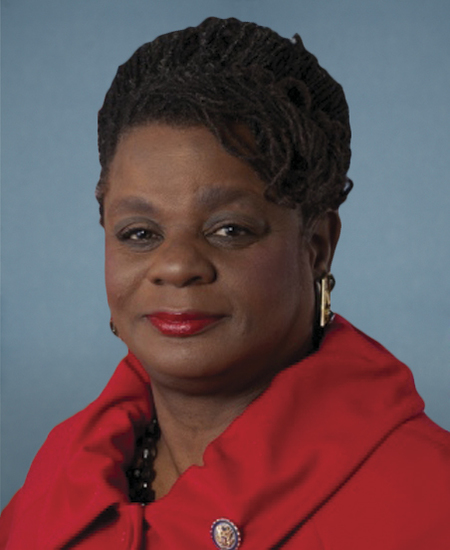
Rep. Gwen Moore
Sponsored bills
Maddy summaryHR 4104 would expand access to Medicaid, CHIP, and Affordable Care Act (ACA) health coverage for immigrants lawfully present in the U.S., including those with deferred action or pending immigration applications. It removes state-level barriers to Medicaid/CHIP eligibility for lawfully present individuals, treats Federally authorized presence as "lawfully present" for ACA subsidies, and allows states to choose to cover undocumented individuals through Medicaid or CHIP. The bill also extends these changes to Medicare Part A and Part B, ensuring lawfully present immigrants qualify for coverage and subsidies under existing programs. These provisions apply to all federally funded health programs and take effect in 2026 for most ACA-related changes.
Maddy summaryThis bill creates federal funding for community-based violence intervention programs in high-violence areas, targeting communities with 35+ homicides annually or 20+ homicides with rates double the national average. It establishes grants for community organizations to implement trauma-informed violence interruption strategies, hospital-based programs for injured patients, and job training for "opportunity youth" (16-25 year olds not in school or work). The legislation authorizes $300 million in 2026, increasing to $700 million annually through 2033, with requirements for evidence-based approaches that reduce violence without contributing to mass incarceration. It creates a National Community Violence Response Center to coordinate data collection, research, and best practices for these programs. The focus is on prevention through economic opportunity, trauma care, and community-driven interventions rather than traditional law enforcement approaches.
Maddy summaryThe Caring for Survivors Act of 2025 increases monthly dependency and indemnity compensation for surviving spouses of veterans. It changes the calculation method from a fixed $1,154 to 55% of a specific veteran compensation rate, effective six months after enactment. The bill also reduces the required continuous disability rating period for survivors from 10 years to 5 years, and provides a proportional payment for cases where the rating period is shorter than 10 years. Surviving spouses of veterans who died before January 1, 1993, receive the greater of their current benefit or the new calculation. This directly affects surviving spouses eligible for benefits under Title 38, U.S. Code, particularly those with veterans who died prior to 1993.
Maddy summaryHRES 533 is a non-binding House resolution calling on the President to lift the indefinite suspension of U.S. refugee admissions, which has left over 100,000 refugees stranded in limbo since January 2025. It specifically references Executive Order 14163 (2025) that halted refugee arrivals, citing the plight of refugees conditionally approved for resettlement, including Afghans, Rohingya, and Sudanese. The resolution reaffirms U.S. commitments under the Refugee Act of 1980 and international obligations, urging restoration of the U.S. Refugee Admissions Program to protect vulnerable refugees. It also calls for increased international cooperation, support for frontline host countries, and meeting global refugee protection pledges. The resolution does not create new law but expresses congressional intent to address the refugee crisis.
Maddy summaryHR 4083, the Marshall “Major” Taylor Congressional Gold Medal Act, authorizes the posthumous presentation of a Congressional Gold Medal to honor cyclist Marshall Walter "Major" Taylor (1878-1932), recognizing his pioneering achievements as a Black athlete who broke racial barriers in professional cycling during the late 19th and early 20th centuries. The bill directs the Secretary of the Treasury to strike the medal with his name and image, to be presented to Taylor’s great-granddaughter, Karen Donovan. It also permits the sale of bronze duplicates to cover costs, classifying all medals as national commemorative items under U.S. law. This is a ceremonial bill with no policy changes, solely focused on commemorating Taylor’s legacy.
Maddy summaryThis bill (HR 3820) renames the women's health clinic at Milwaukee's Clement J. Zablocki VA Medical Center as the "Anna Mae Robertson VA Well Woman Clinic." It directly affects the clinic's official designation and all future references to it in U.S. government documents, maps, and records. The key provision is a simple name change requiring all federal materials to update the clinic's name to honor Anna Mae Robertson, with no policy or service changes to the clinic itself.
Maddy summaryHCONRES 37 is a non-binding congressional resolution urging the President to establish a U.S. Commission on Truth, Racial Healing, and Transformation. The resolution does not create the commission itself but calls for its formation to acknowledge historical racial injustices (like discriminatory housing policies, the Chinese Exclusion Act, and forced Native American boarding schools) and catalyze efforts to eliminate racial inequities. The commission would focus on dismantling the "belief in a hierarchy of human value" and advancing racial healing, complementing ongoing efforts like H.R. 40 (the reparations study bill). It directly affects federal leadership (via the President) and aims to guide national policy, though it has no legal force.
Maddy summaryHRES 514 is a resolution commemorating the ninth anniversary of the June 12, 2016, Pulse nightclub shooting in Orlando, Florida, which killed 49 people. It honors the victims and their families, recognizes the bravery of first responders, and affirms the need for continued efforts on gun safety and mental health legislation. The resolution does not create new laws or policies but serves as a symbolic statement of remembrance and support for the affected community. It directly addresses the House of Representatives and the public, emphasizing unity in the face of hate.
Maddy summaryHR 3968, the School Violence Prevention Act, creates a federal grant program to fund school-based violence prevention programs in communities with severe gun violence. It authorizes $25 million annually (2025-2031) for grants to partnerships between state/local education agencies and community nonprofits in areas experiencing high homicide rates (e.g., 35+ homicides annually) or double the national violent crime arrest rate for youth. Grants must support evidence-based programs for K-12 students - including trauma-informed counseling, conflict resolution skills, mental health access, and community engagement - while requiring annual data collection on outcomes like graduation rates. All programs must be evaluated by grantees and independent researchers, with reports shared publicly and submitted to Congress every three years.