

Maddy summaryHRES 1201 is a symbolic House resolution supporting the designation of May 9, 2024, as "National Scam Survivor Day." It does not create new laws or funding but aims to raise awareness about scams affecting Americans, citing 2023 data showing over 2.6 million fraud reports and $10+ billion in losses. The resolution encourages public awareness, improved access to scam prevention resources, and collaboration among government, private, and nonprofit groups to support survivors and combat scams. It specifically highlights vulnerabilities among veterans, seniors, and young adults targeted by evolving scam tactics like AI-generated fraud.
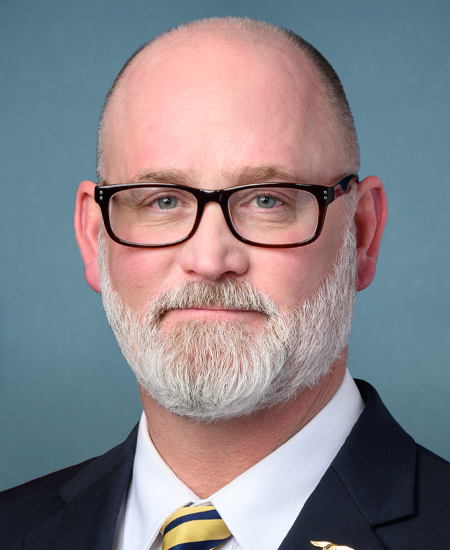
Rep. Derrick Van Orden
Sponsored bills
Maddy summaryHR 8336 amends the Transition Assistance Program (TAP) to create a dedicated counseling pathway specifically for members of the reserve components of the Armed Forces. The bill adds language to Section 1142(c)(1) of Title 10, requiring military departments to include this reserve-focused pathway within TAP services. This change directly affects reserve service members transitioning from military to civilian life by providing tailored counseling resources. The bill modifies an existing program structure without creating new benefits or funding.
Maddy summaryHRES 1207 is a resolution to formally censure Representative Ilhan Omar (D-MN) for her April 26, 2024, remarks at Columbia University describing Jewish students as "pro-genocide" and for past statements the resolution identifies as antisemitic, including a 2019 tweet about "the Benjamins" and a 2012 tweet about Israel "hypnotizing the world." The resolution cites rising antisemitism in the U.S. (per ADL and American Jewish Committee reports) as context for the censure, stating her comments could inflame violence against Jewish communities. A censure is a formal reprimand recorded in the Congressional Record but does not impose legal penalties or change laws. The resolution was introduced on May 7, 2024, and referred to the Committee on Ethics.
Maddy summaryThis bill (HR 7971) requires the Veterans Affairs (VA) Secretary to correct administrative errors that cause veterans to suffer financial loss. It changes the law to mandate that the VA "shall" provide equitable relief within 120 days of determining an error, replacing the previous "may" standard. The bill also directs the VA to immediately cancel debt collection agreements if an error in billing is confirmed, preventing veterans from being pursued for incorrect debts. This directly affects veterans who were wrongly charged due to VA mistakes, ensuring faster correction of billing errors.
Maddy summaryHR 764, the "Trust the Science Act," requires the Secretary of the Interior to reissue a specific 2020 rule removing gray wolves from the endangered species list within 60 days of the bill's enactment. This directly affects gray wolf populations by changing their federal conservation status. The bill's key provision mandates that this reissuance cannot be challenged in court, eliminating judicial review of the decision. The bill focuses solely on procedural implementation of a prior rule, not broader scientific policy.
Maddy summaryThis symbolic resolution supports designating May 2024 as Motorcycle Safety Awareness Month. It encourages all road users to share the road safely, promotes rider education and proper protective gear, and highlights motorcycles' role in transportation. The resolution does not create new laws but expresses congressional backing for safety initiatives aimed at reducing motorcycle accidents. It directly affects motorcyclists, drivers, and safety advocates by amplifying public awareness efforts.
Maddy summaryThe VETT Act modifies how the Department of Veterans Affairs (VA) reviews education programs for veterans' benefits. It requires the VA to create a central website providing regular updates on training for school certifying officials (staff at colleges who handle VA benefits paperwork). The bill also limits the VA’s ability to reject education programs solely for not providing certain forms, directing them to work "to the maximum extent practicable" toward approval. These changes directly affect schools administering veterans' education benefits and VA staff processing program approvals.
Maddy summaryHR 8147 repeals the Corporate Transparency Act, which required certain businesses (typically those with more than 20 employees) to report beneficial ownership details to the Treasury Department. This bill eliminates the requirement for companies to disclose who ultimately owns or controls them, directly affecting business owners and financial institutions that previously submitted this information. The bill also makes minor technical changes to Title 31 of the U.S. Code to remove references to the repealed provisions. The repeal would end the existing financial transparency reporting obligation for covered entities.
Maddy summaryHR 1803, the CURD Act, defines "natural cheese" in federal law to clarify labeling standards for consumers. It specifies that natural cheese must be made by curdling milk (or milk derivatives) through traditional methods without certain processed additives, while explicitly excluding pasteurized process cheeses, cheese spreads, and similar products. The bill requires that products labeled as "natural cheese" meet this new definition, updating FDA labeling rules under the Federal Food, Drug, and Cosmetic Act. This directly affects cheese manufacturers (who must comply with the definition) and consumers (who gain clearer product distinctions on labels). The change replaces vague industry terms with a consistent, science-based standard to improve transparency.
Maddy summaryHRES 1170 prohibits U.S. House Members, Delegates, and Resident Commissioners from bringing or displaying any foreign nation's flag on the House floor during sessions, except for lapel pins or flags shown during speeches under House rules. The resolution applies to all flag sizes and is enforced by the House Sergeant-at-Arms. It directly affects House members' conduct during floor proceedings but allows limited exceptions for personal accessories and official speeches. This is a procedural rule change, not a substantive policy.