

Maddy summaryHR 4382 authorizes the U.S. Mint to produce commemorative coins for the 2028 Los Angeles Olympics/Paralympics and 2034 Salt Lake City Winter Olympics/Paralympics. It specifies gold, silver, and half-dollar coin designs with defined mintage limits (e.g., up to 100,000 $5 gold coins for each event), all bearing inscriptions like "2028" or "2034" and standard coin features. A surcharge ($5-$50 per coin) is added to sales, with all funds directed to the respective Olympic committees to support event hosting and legacy programs like youth sports. The bill ensures no net cost to the government by requiring surcharge revenues to cover all design, production, and marketing expenses before funds are disbursed.
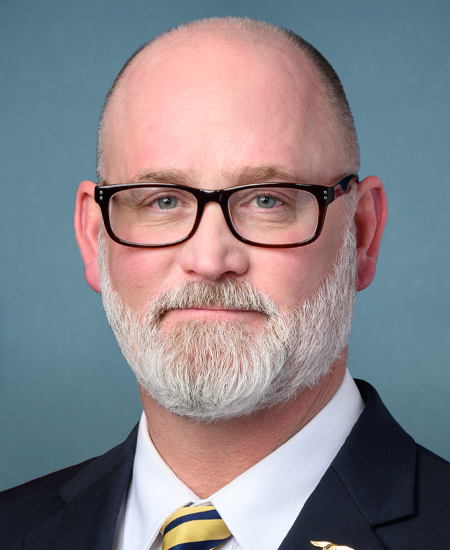
Rep. Derrick Van Orden
Sponsored bills
Maddy summaryHCONRES 43 is a non-binding congressional resolution expressing that public performances of "The Star-Spangled Banner" should use the original English lyrics written by Francis Scott Key. It encourages performers and event organizers to preserve the anthem's historical integrity by using its original English text, rather than translated or adapted versions, as a way to honor its 1814 origins and 1931 designation as the national anthem. The resolution does not create new law or impose legal requirements but formally states Congress's preference for maintaining the anthem's traditional English lyrics in public settings. It directly affects public events where the anthem is performed, such as sports games, ceremonies, and official gatherings.
Maddy summaryHRES 575 is a symbolic resolution designating July 10th as "Journeyman Lineworkers Recognition Day." It honors lineworkers who face significant risks daily - working at heights near live wires and responding to disasters like hurricanes and wildfires. The resolution specifically references Henry Miller, an early leader of the International Brotherhood of Electrical Workers, who died on July 10, 1896, while troubleshooting an outage. It encourages the public to recognize these workers' contributions but does not create new laws or allocate funding.
Maddy summaryThe PBM Reform Act of 2025 aims to increase transparency and fairness in pharmacy benefit manager (PBM) operations within Medicare Part D and Medicaid programs. The bill requires Medicare Part D plans to allow any pharmacy meeting standard terms to join their networks, establishes "essential retail pharmacies" in underserved areas (with limited pharmacy access), and mandates detailed reporting on drug pricing, rebates, and reimbursement rates. It creates a process for pharmacies to report PBM violations of reasonable contract terms and prohibits "spread pricing" in Medicaid, where PBMs retain the difference between what they pay pharmacies and what they charge plans. These provisions aim to improve pharmacy access for Medicare beneficiaries and ensure fairer reimbursement practices for pharmacies.
Maddy summaryThis bill requires online contact lens sellers to provide a secure electronic method for customers to transmit their contact lens prescriptions, directly affecting online retailers. It mandates that such electronic transmissions comply with HIPAA privacy rules and that any protected health information sent via email must be encrypted. The law updates existing rules to modernize prescription verification for online sales while maintaining privacy protections.
Maddy summaryThis bill sets a 96-month maximum for veterans' vocational rehabilitation programs (VR&E) under the Department of Veterans Affairs. It prohibits extending programs beyond 96 months without first determining "extraordinary circumstances" apply to a specific veteran and submitting written notice to Congress's Veterans' Affairs committees. The law directly affects veterans whose rehabilitation needs might otherwise lead to indefinite program extensions. Key mechanisms include the 96-month cap, the "extraordinary circumstances" requirement, and mandatory congressional notification for any extension beyond that limit.
Maddy summaryHR 4193, the Time is Money Act, updates airline passenger protections by lowering the delay threshold that triggers airline assistance. It requires the Transportation Secretary to amend federal regulations within 180 days, reducing the definition of a "significantly delayed flight" from 3 hours to 2 hours for domestic trips and from 6 hours to 5 hours for international trips. This change directly affects air travelers experiencing these shorter delays, making it easier for them to qualify for airline services like meals, accommodations, or refunds. The bill focuses on adjusting the specific delay timeframes in existing rules, not on new financial penalties or broader airline regulations.
Maddy summaryHRES 551 is a symbolic House resolution supporting the designation of "National Stop SuiSilence Day" on September 25th, during Suicide Prevention Month. It does not create new laws or policies but aims to reduce suicide stigma by encouraging open discussion about suicide prevention. The resolution cites statistics showing suicide as a leading cause of death (over 45,000 annual U.S. deaths) and emphasizes that talking about suicide can help save lives. It recognizes this day as a tool to engage communities and governments in suicide prevention efforts.
Maddy summaryThis bill makes technical corrections to the Camp Lejeune Justice Act of 2022 to streamline claims for individuals harmed by water contamination at Camp Lejeune. It clarifies the evidence required (30+ days at the base plus a link between contaminants and health harm), specifies that cases must be handled in North Carolina courts (with limited transfer options), and sets attorney fee caps (20% before suit, 25% after). These changes directly affect veterans and civilians who lived at Camp Lejeune and filed claims under the 2022 law. The bill does not create new eligibility but aims to improve the legal process for existing cases.
Maddy summaryThe GOLDEN DOME Act of 2025 establishes a comprehensive homeland missile defense system designed to protect U.S. citizens and critical infrastructure from ballistic, hypersonic, cruise, and unmanned system threats. The bill creates a new Golden Dome Direct Report Program Manager with significant authority to accelerate development, testing, and deployment of integrated missile defense capabilities across all domains (land, sea, air, space, and cyberspace). It requires a holistic strategy with all-domain awareness, mandates accelerated testing schedules including live-fire exercises, and allocates specific funding for components like space-based sensors, interceptors, and command and control systems. The legislation also includes provisions to protect the space industrial base and secure critical supply chains for missile defense systems.